

Choosing the right peptide for client performance and recovery can feel like a complex puzzle for fitness professionals. Understanding how clinical studies validate each peptide’s claims is key to separating science from marketing. Therapeutic peptides are rigorously tested through structured phases for efficacy, stability, and bioavailability, providing crucial evidence to support safe and effective recommendations. This article offers a clear overview of what truly defines a clinical study in peptide selection, giving you practical knowledge to guide client decisions confidently.
Table of Contents
- Defining Clinical Studies In Peptide Selection
- Categories Of Peptides Assessed In Trials
- How Clinical Studies Determine Peptide Efficacy
- Evaluating Safety And Adverse Event Risks
- Regulatory And Ethical Standards Governing Peptide Trials
- Limitations And Common Pitfalls In Peptide Research
Key Takeaways
| Point | Details |
|---|---|
| Importance of Clinical Studies | Clinical studies validate whether peptides deliver promised benefits, guided by strict protocols and ethical oversight. |
| Regulatory Phases | Understanding the phases of clinical trials (1 to 4) helps determine a peptide’s evidence base and safety. |
| Categories of Peptides | Recognising the functional categories of peptides is crucial for tailored client recommendations and understanding expected outcomes. |
| Understanding Safety and Efficacy | Fitness professionals should critically assess trial results for adverse events and efficacy claims, ensuring evidence is robust and applicable. |
Defining clinical studies in peptide selection
When fitness professionals evaluate peptides for client performance and recovery, understanding what constitutes a clinical study becomes essential. A clinical study in peptide selection is fundamentally a structured research investigation that tests whether a specific peptide candidate can deliver the therapeutic or performance benefits it promises. These studies aren’t casual laboratory experiments but rather systematic evaluations governed by strict protocols, ethical oversight, and regulatory requirements. Therapeutic peptides represent a distinct pharmaceutical class with molecular weights typically ranging from 50-5000 Daltons, and they’ve attracted significant attention for addressing everything from metabolic disorders to athletic performance optimisation. The clinical study framework exists specifically to validate that a peptide can achieve what researchers propose, without causing unintended harm to study participants.
The core purpose of clinical peptide studies revolves around three fundamental pillars: demonstrating therapeutic efficacy, ensuring stability throughout its lifecycle, and confirming bioavailability in human systems. When researchers conduct a clinical study, they’re essentially asking three critical questions. First, does the peptide actually work for the intended purpose? Second, will it remain chemically stable under realistic storage and physiological conditions? Third, can the human body absorb and utilise it effectively after administration? Clinical studies systematically evaluate peptide drugs by comparing their performance, safety profile, and pharmacokinetic behaviour against existing treatments or placebo controls. This comparison element is crucial because it provides context for understanding whether a new peptide truly outperforms established options. Beyond these primary considerations, researchers also examine target specificity (whether the peptide affects only the intended biological pathway), stability modification (how to keep it effective), appropriate delivery methods (injection versus oral forms), and realistic patient or athlete compliance (whether people can actually use it as prescribed).
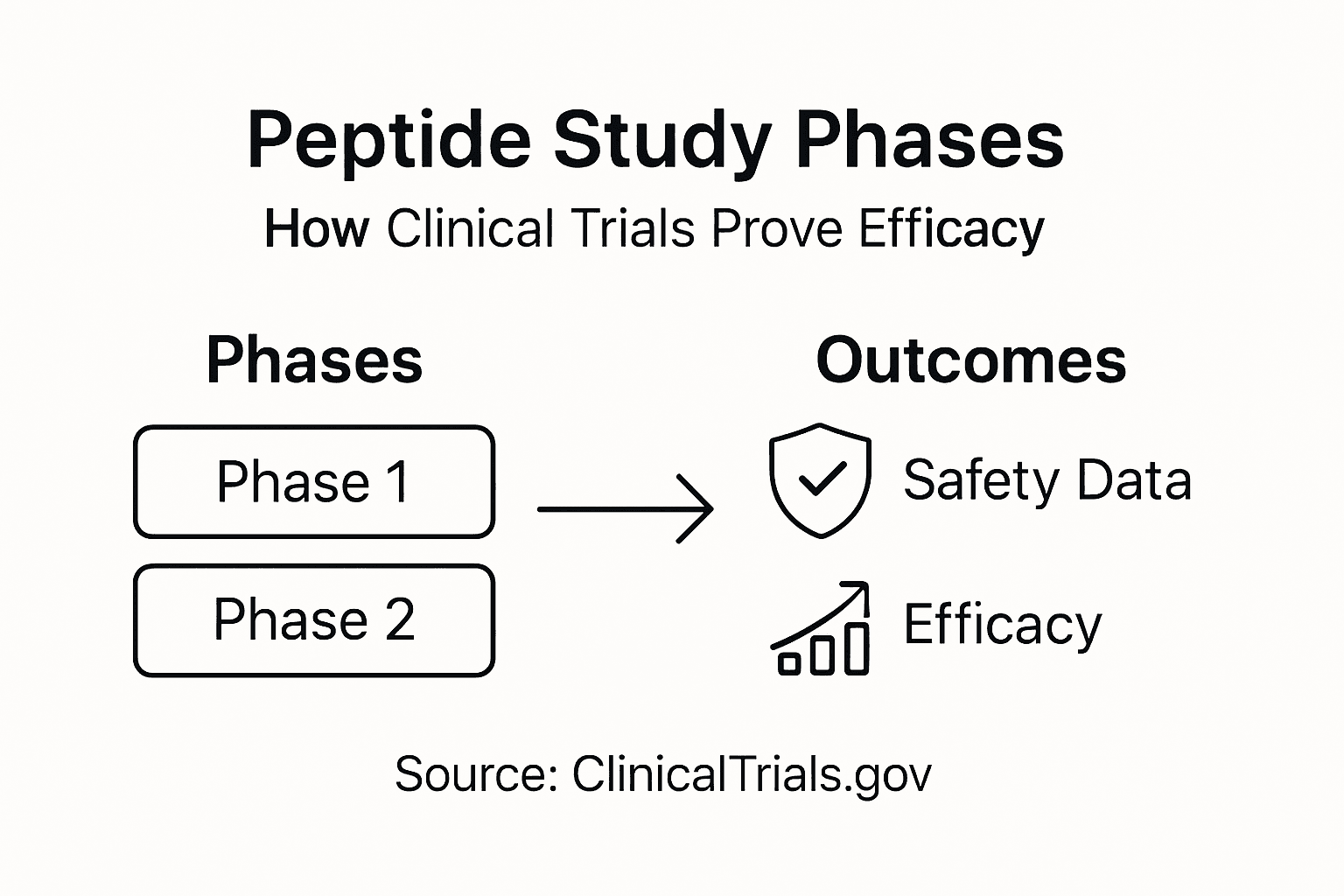
For fitness professionals recommending peptides to clients, recognising the distinction between marketing claims and actual clinical evidence becomes your strongest asset. The regulatory approval process demands that peptides clear multiple trial phases before becoming commercially available. Phase 1 trials focus on safety and dosage in small groups, Phase 2 trials assess efficacy in larger populations, Phase 3 trials compare the peptide against current standards, and Phase 4 trials monitor long-term outcomes once approved. Clinical studies face substantial challenges that matter to you directly: peptides can degrade easily, they often require injection rather than convenient oral administration, absorption rates vary between individuals, and regulatory pathways differ significantly across countries. Understanding these realities helps you communicate honestly with clients about what evidence actually supports a peptide’s use versus what remains theoretical or based on animal studies alone. The rigorous validation process exists precisely because peptides represent powerful biological tools that demand respect and evidence-based application.
Pro tip: Before recommending any peptide to clients, ask whether it has completed Phase 2 or Phase 3 clinical trials with published results in peer-reviewed journals—this single question separates evidence-backed options from experimental compounds still requiring validation.
Here’s a comparison of the main clinical trial phases for peptide studies:
| Trial Phase | Main Objective | Typical Participants | Key Outcomes |
|---|---|---|---|
| Phase 1 | Assess safety and dosage | 20-100 healthy volunteers | Dose tolerance, initial safety |
| Phase 2 | Test efficacy and side effects | 100-300 patients with target condition | Therapeutic effect, short-term safety |
| Phase 3 | Confirm effectiveness vs. standards | 300-3,000 patients, diverse backgrounds | Comparative effectiveness, risk profile |
| Phase 4 | Monitor long-term use | Thousands, real-world users | Ongoing safety, real-world impact |
Categories of peptides assessed in trials
Peptides entering clinical trials represent remarkably diverse therapeutic categories, each designed to address specific health challenges and performance goals. Understanding these categories matters significantly because they determine which peptides might benefit your clients, what outcomes to expect, and how realistic their claims actually are. The peptide drugs under investigation fall broadly into two origins: natural peptides derived from biological sources like hormones and proteins, and engineered peptides created in laboratories to enhance specific therapeutic properties. Within these origins exist multiple functional categories that define what these peptides actually accomplish in the human body. Over 80 peptide drugs have already received global regulatory approval, with hundreds more moving through various trial phases, addressing everything from infectious diseases and cancer to autoimmune conditions and metabolic regulation. This expansion reflects the growing recognition that peptides offer precision targeting unavailable with traditional small-molecule pharmaceuticals.
The primary functional categories assessed in clinical trials include hormone replacement peptides, antimicrobial peptides, anticancer peptides, and immunomodulatory peptides. Hormone replacement peptides restore or supplement hormones like growth hormone or insulin that your body produces naturally but may produce insufficiently due to age, injury, or disease. Antimicrobial peptides fight bacterial, viral, or fungal infections by disrupting pathogenic organisms without harming human cells, offering alternatives when traditional antibiotics fail. Anticancer peptides target tumour cells through multiple mechanisms including apoptosis induction, angiogenesis inhibition, or direct cytotoxicity, often designed to spare healthy tissue. Immunomodulatory peptides adjust immune function, either amplifying immune responses against pathogens or tempering autoimmune conditions where the immune system attacks healthy tissue. Beyond these core categories, researchers also evaluate peptides modified for enhanced stability and synthetic peptides engineered for precise receptor targeting, representing strategic modifications that improve how peptides perform once administered to patients or athletes.
For fitness professionals, recognising these categories provides crucial context when clients ask about peptide options. A peptide designed for cancer therapy requires entirely different expectations and safety considerations than one developed for metabolic optimisation. Performance enhancement typically involves metabolic modulating peptides or hormone replacement peptides rather than antimicrobial or anticancer varieties. The trial phase a peptide occupies within its category dramatically affects its evidence base. A hormone replacement peptide in Phase 4 trials with published long-term outcome data carries substantially more credibility than an immunomodulatory peptide still in Phase 2. Clinical trial diversity across these categories means that peptide recommendations should remain highly specific to therapeutic indication, client goals, and available evidence rather than viewing peptides as an undifferentiated category. The complexity of peptide categories also explains why regulatory pathways vary geographically and why a peptide approved in one country may remain investigational elsewhere, even if preliminary data looks promising.
Pro tip: Cross-reference any peptide your client is considering against its category and ask specifically which phase of trials it has completed—a peptide excelling in anticancer trials offers no evidence for performance enhancement, and conflating unrelated research wastes your credibility.
Below is a reference table summarising major peptide categories encountered in clinical trials:
| Peptide Category | Primary Therapeutic Goal | Sample Clinical Application |
|---|---|---|
| Hormone replacement | Restore deficient hormones | Growth hormone, insulin therapy |
| Antimicrobial | Combat infections | Resistant bacterial or viral infections |
| Anticancer | Inhibit tumour growth | Targeted cancer therapy peptides |
| Immunomodulatory | Adjust immune function | Autoimmune disease management |
| Engineered synthetic | Optimise target specificity | Enhanced receptor targeting in trials |
How clinical studies determine peptide efficacy
Determining whether a peptide actually works requires far more rigour than measuring simple outcomes. Clinical studies employ multiple complementary approaches to establish peptide efficacy, each designed to answer specific questions about performance, safety, and real-world utility. The process begins with clinical pharmacology trials that measure how the body handles the peptide (pharmacokinetics) and how the peptide affects the body (pharmacodynamics). These foundational studies occur in healthy volunteers first, minimising risk while establishing baseline safety and tolerability. Researchers then progress to single ascending dose trials, where small groups receive increasing amounts of the peptide to identify the lowest effective dose and the highest tolerable dose. This approach reveals the dose-response relationship, the mathematical correlation between how much peptide someone receives and the biological effect produced. Multiple ascending dose trials follow, testing repeated administrations to understand how the body responds to ongoing exposure and whether tolerance develops over time.
Once dose-response relationships are established, clinical efficacy studies shift focus toward bioavailability and bioequivalence assessments, comparative effectiveness testing, and measurement of clinically meaningful endpoints specific to the peptide’s intended purpose. If a peptide targets metabolic control, researchers measure markers like glucose regulation, insulin sensitivity, and weight changes. If it addresses athletic performance, testing might evaluate power output, recovery speed, or muscle protein synthesis rates. Clinical endpoints include molecular, cellular, and systemic responses that demonstrate whether the peptide produces genuine benefit beyond laboratory measurements. The distinction matters profoundly: a peptide might elevate a biomarker without improving actual client outcomes, making biomarker changes alone insufficient evidence for efficacy. Researchers also evaluate targeted delivery and cellular specificity, confirming that the peptide reaches its intended target tissue and produces effects specifically at that location rather than triggering unintended responses elsewhere in the body. This precision targeting separates effective peptides from those causing widespread, potentially harmful effects.
For fitness professionals evaluating peptide evidence, understanding the hierarchy of efficacy testing provides essential context. Phase 1 and Phase 2 trials establish proof of concept and dose response but involve small sample sizes, often in healthy subjects rather than populations that might actually use the peptide clinically. Phase 3 trials compare the peptide against standard treatments or placebo in larger, more representative populations, providing the most credible efficacy data. Phase 4 trials monitor long-term outcomes in real-world conditions after approval, revealing safety and efficacy patterns that emerge only after widespread use. A peptide showing excellent efficacy in Phase 2 might disappoint in Phase 3 when tested against established competitors or might fail Phase 3 entirely due to inadequate real-world benefit. Clinical studies also measure adverse effects systematically, categorising them by severity and frequency, which means published trial data tells you not just whether a peptide works but what risks accompany its use. Marketing materials often emphasise positive Phase 2 findings while omitting Phase 3 results that contradicted them, making your ability to distinguish trial phases critical for honest client recommendations.
Pro tip: When reviewing peptide efficacy claims, specifically ask whether the supporting evidence comes from Phase 3 trials in your client’s target population (athletes, older adults, specific sport) rather than Phase 2 trials in healthy volunteers or Phase 1 safety studies.
Evaluating safety and adverse event risks
Peptide safety evaluation represents one of the most critical yet overlooked aspects of clinical trial assessment. While efficacy captures headlines, adverse events determine whether a peptide remains viable for long-term use. Clinical trials systematically monitor safety across all phases, documenting every adverse effect from mild inconvenience to serious medical complications. The evaluation process begins during preclinical toxicology testing in laboratory and animal models, identifying potential organ-specific toxicities before human exposure. Once trials progress to human subjects, adverse event monitoring becomes continuous and comprehensive, categorising reactions by type, severity, and frequency. Common peptide-related adverse events include injection site reactions ranging from minor redness to severe tissue damage, immunogenic responses where the body develops antibodies against the peptide itself, off-target toxicity affecting unintended tissues, and systemic effects impacting multiple body systems. A peptide might demonstrate remarkable efficacy in reducing tumour size or improving metabolic markers, yet prove unacceptable for clinical use if it causes debilitating side effects in a significant percentage of users.

The types of adverse events tracked in peptide trials reveal important distinctions between peptide drugs and traditional pharmaceuticals. Safety evaluation includes monitoring injection site reactions that occur because peptides require injection rather than oral administration, creating local tissue trauma with each dose. Immunogenicity presents a unique challenge specific to peptides: because they’re protein-based, the immune system may recognise them as foreign invaders and mount an immune response that neutralises the peptide’s therapeutic effect or triggers allergic reactions. Off-target toxicity occurs when a peptide binds to unintended receptors, producing harmful effects unrelated to its intended therapeutic action. Researchers mitigate these risks through chemical peptide modifications that enhance stability, reduce immunogenicity, or extend half-life to decrease injection frequency. Extended half-lives matter significantly for fitness clients because fewer injections mean better compliance and reduced cumulative injection site trauma. Targeted delivery approaches direct peptides specifically to their intended tissues, minimising systemic exposure and reducing the likelihood of off-target effects.
For fitness professionals recommending peptides, understanding safety data requires asking specific questions about how adverse events were reported and analysed. Look for trial protocols that distinguished between serious adverse events requiring medical intervention and minor inconveniences that resolve independently. Examine dropout rates from trials, particularly whether participants discontinued due to adverse effects rather than lack of efficacy. A trial where 3 percent of participants quit due to side effects tells a different story than one where 20 percent dropped out. Safety comparisons matter tremendously: peptide drugs often demonstrate more favourable tolerability profiles than small molecule pharmaceuticals addressing the same condition, yet this advantage disappears if a particular peptide causes immunogenic reactions that small molecules avoid. Post-marketing surveillance data becomes increasingly valuable as peptides see broader real-world use in diverse populations with varied medical histories. A peptide tested primarily in healthy young adults may behave differently in older clients with multiple medications, revealing safety concerns invisible in clinical trial populations. Conversely, real-world use sometimes reveals safety profiles superior to trial predictions, as adverse effects proving problematic in tightly controlled research settings may rarely occur in actual practice.
Pro tip: Before recommending any peptide, request the complete adverse event table from Phase 3 trials and specifically calculate what percentage of participants experienced each side effect type—marketing materials often omit this data entirely, hiding safety concerns buried in trial appendices.
Regulatory and ethical standards governing peptide trials
Peptide clinical trials operate within a highly structured regulatory framework designed to protect human subjects while enabling scientific progress. Every legitimate peptide trial follows established protocols governed by national and international regulatory bodies that enforce standards for study design, participant protection, data integrity, and transparency. These standards exist because peptide research involves human volunteers who accept real risks in the name of advancing therapeutic knowledge. Understanding the regulatory landscape helps fitness professionals distinguish between rigorous, trustworthy research and questionable studies conducted without proper oversight. The regulatory framework varies by country, with major agencies including the United States Food and Drug Administration (FDA), the European Medicines Agency (EMA), and Health Canada overseeing peptide drug development in their respective regions. Each agency maintains specific requirements for clinical trial approval, but they share fundamental principles: informed consent from all participants, independent ethical review before trial initiation, continuous safety monitoring, and transparent reporting of results regardless of whether outcomes favour the investigated peptide.
Ethical standards governing peptide trials centre on several non-negotiable principles that protect vulnerable populations and ensure research integrity. Informed consent requires that every trial participant receives complete, understandable information about the study’s purpose, procedures, risks, and alternatives before agreeing to participate. Critically, consent must be truly voluntary, without coercion or undue inducement that clouds judgement. Institutional Review Boards (IRBs) or ethics committees independently review all trial protocols before human subjects can be enrolled, evaluating whether the research question justifies exposing humans to risk. These committees assess whether investigators designed the study appropriately, whether selection criteria are fair and non-discriminatory, and whether data protection safeguards exist. Blinding and randomisation protect against bias where researchers or participants unconsciously favour certain outcomes. Double-blind trials prevent both researchers and participants from knowing who receives the peptide versus placebo, eliminating the psychological effects that expectation creates. Randomisation ensures that allocation to treatment groups follows chance rather than researcher preference, preventing systematic biases. Research standards require detailed documentation of all adverse events, unblinded data monitoring, and predefined stopping rules that halt trials immediately if safety signals emerge or if efficacy becomes so clear that withholding treatment from control participants becomes ethically unjustifiable.
Regulatory pathways require peptide developers to demonstrate increasing evidence of safety and efficacy at each trial phase before advancing to the next stage. Phase 1 trials occur under strict regulatory supervision in specially licensed centres with intensive participant monitoring. Phase 2 and Phase 3 trials expand participant numbers under continued regulatory oversight, with independent Data Safety Monitoring Boards reviewing interim results to identify safety concerns invisible in smaller populations. Regulatory agencies mandate comprehensive documentation of manufacturing processes, quality control standards, and stability testing to ensure consistency between batches. Companies cannot modify peptide formulations, manufacturing processes, or storage conditions without regulatory approval and updated safety data. Post-approval, agencies conduct Phase 4 surveillance where ongoing monitoring captures long-term safety patterns in real-world populations. Geographic variation in regulatory stringency matters significantly: a peptide approved by the FDA undergoes different scrutiny than one approved only in countries with less rigorous oversight. This variation explains why some peptides marketed internationally lack credible evidence by FDA standards. For fitness professionals, regulatory approval status in your country provides one indicator of research quality, though approval in one jurisdiction does not guarantee acceptance elsewhere.
The intersection of commercialisation pressures and ethical oversight creates genuine tension in peptide research. Pharmaceutical companies funding trials naturally hope their peptides succeed, creating financial incentives that could bias researchers unconsciously. Regulatory requirements attempt to counteract this bias through mandatory trial registration in public databases before participant recruitment begins, preventing researchers from selectively reporting positive findings while suppressing negative results. Publication bias remains a persistent problem where journals preferentially accept studies with positive results, making negative findings invisible to professionals evaluating evidence. Regulatory agencies increasingly require disclosure of all trial results regardless of outcomes, though enforcement remains inconsistent internationally. Sponsorship by independent funding sources or government grants rather than pharmaceutical companies reduces bias pressure, as does researcher independence from commercial entities marketing the peptide. Understanding these dynamics helps you recognise when research appears unusually one-sided or when negative trial results mysteriously never reach publication despite being registered in trial databases.
Pro tip: Before trusting peptide trial results, verify the trial registration number in ClinicalTrials.gov, cross-reference it with published results, and note whether negative findings exist that weren’t highlighted in marketing materials—trials registered but never published suggest disappointing outcomes were suppressed.
Limitations and common pitfalls in peptide research
Peptide research, despite generating excitement about therapeutic potential, faces persistent technical and methodological limitations that often separate promising laboratory findings from clinical reality. Understanding these limitations helps fitness professionals recognise why a peptide showing remarkable results in animal studies or small Phase 2 trials might fail spectacularly in larger Phase 3 trials or real-world use. The fundamental challenge stems from peptides’ biological nature: they’re protein-based molecules that the human body naturally wants to break down and eliminate. Instability represents perhaps the most persistent problem, with peptides degrading during storage, transit, and once inside the body before reaching their target tissue. Rapid enzymatic degradation by proteases—enzymes that cut apart peptide molecules—means many peptides survive only minutes in the bloodstream. Poor oral bioavailability forces peptides into injection-only administration, a major limitation for client compliance and practical use. Peptides cannot easily cross cellular membranes, requiring sophisticated delivery technologies to penetrate tissues effectively. These aren’t minor inconveniences but fundamental biochemical realities that determine whether a peptide remains viable for clinical application.
Common research pitfalls arise when investigators fail to adequately characterise these basic properties before advancing peptides into expensive clinical trials. Inadequate characterisation of pharmacokinetics means researchers lack complete data on how the body absorbs, distributes, metabolises, and eliminates a peptide, leading to dosing errors or unexpected accumulation in tissues. Immunogenicity concerns receive insufficient attention during preclinical work, only to emerge as major problems once human trials begin. A peptide might work perfectly in animal models where the immune system ignores it, yet trigger robust immune responses in humans that neutralise the peptide’s therapeutic effect or cause allergic reactions. Underestimating delivery complexity creates another common pitfall: a peptide engineered to target a specific receptor might fail clinically because it cannot reach that receptor in meaningful concentrations, a reality invisible until human testing reveals poor bioavailability. Manufacturing and quality control present additional challenges where scaling synthesis for clinical-grade material introduces variability in peptide purity that wasn’t problematic in small laboratory batches. A batch containing 85 percent pure active peptide rather than the intended 98 percent purity undermines dose-response relationships and confounds trial results. Suboptimal dosing regimens, where researchers failed to identify the truly effective dose through adequate Phase 2 exploration, lead to trials where peptides appear ineffective simply because participants received insufficient amounts.
Incomplete safety profiling during preclinical and early clinical phases creates predictable failures. Researchers might focus intensely on one organ system while neglecting potential off-target effects in others, only to discover serious toxicity in Phase 3 when large populations receive the peptide. Trial population selection introduces another pitfall: a peptide tested exclusively in young, healthy males might behave dangerously in older female participants with multiple medications, metabolic differences, or hormonal variations. The transition from promising preclinical animal data to disappointing clinical trial results happens frequently enough that experienced researchers expect it, yet the disconnect surprises newcomers to peptide research. Animal models, particularly rodent studies, often fail to predict human peptide metabolism and immunological responses accurately. Peptides tolerated beautifully in mouse studies trigger unexpected immune responses in humans due to species differences in immune system function. Interdisciplinary gaps also undermine research quality when chemistry experts optimise molecular structure without involving pharmacologists who understand bioavailability or clinicians who understand practical administration challenges. These silos prevent holistic problem-solving where structural modifications could simultaneously improve stability, reduce immunogenicity, and enhance cellular uptake.
Pro tip: When evaluating peptide research claims, specifically ask whether preclinical studies included human blood samples to test for immunogenicity and whether Phase 2 trials adequately explored dose-response relationships across multiple dose levels rather than testing a single predetermined dose.
Unlock Evidence-Based Peptide Solutions for Fitness Success
Navigating the complex world of clinical studies in peptide selection can be challenging, especially when seeking proven options that deliver real fitness outcomes. This article highlights critical pain points including the need for peptides with demonstrated therapeutic efficacy, stability, and bioavailability confirmed by Phase 2 and Phase 3 clinical trials. Fitness professionals must differentiate between marketing claims and clinical evidence while understanding peptide categories and safety profiles to confidently recommend peptides that truly support client goals.
At Northern Peptides, we understand these challenges and offer a comprehensive selection of research peptides, chemicals, supply, and educational resources that prioritise evidence-backed compounds. Whether you are looking for peptides with published clinical data or need detailed safety and dosing information, our platform supports your informed decisions. Visit our main site to explore reliable peptides designed to meet the highest standards of clinical validation and therapeutic performance.

Take control of your peptide recommendations by partnering with trusted sources. Start exploring validated peptides today by visiting our full catalogue. Discover insights and products that align with rigorous clinical study results and transform your clients’ fitness journeys with confidence now.
Frequently Asked Questions
What are clinical studies in peptide selection?
Clinical studies in peptide selection are structured research investigations aimed at evaluating the effectiveness, stability, and bioavailability of specific peptide candidates for therapeutic or performance benefits, ensuring that they meet regulatory and ethical standards.
How do clinical trial phases impact the credibility of peptides?
Clinical trial phases are crucial for establishing a peptide’s safety and efficacy. Phase 1 trials focus on safety, Phase 2 on efficacy, and Phase 3 on comparative effectiveness against existing treatments. A peptide with positive Phase 3 results is generally more credible than one still in Phase 1 or 2.
What factors influence the efficacy of peptides in clinical studies?
The efficacy of peptides is influenced by factors such as pharmacokinetics (how the body processes the peptide), appropriate dosing, delivery methods, and the ability to maintain target specificity without causing off-target effects.
Why is it important to consider the safety profiles of peptides in clinical trials?
The safety profile of peptides is essential as it identifies potential adverse effects and tolerability issues. Comprehensive safety evaluations help determine whether the benefits of a peptide outweigh the risks, crucial for promoting its use in fitness and therapeutic contexts.