
Finding new ways to enhance health and performance is more competitive than ever for wellness professionals in North America. Peptides are emerging as a sophisticated tool, captivating both female wellness coaches and male athletes aiming to stay ahead in 2026. With their ability to facilitate precise cellular communication and support advanced therapeutic interventions, peptides offer fresh opportunities for anti-aging, metabolic regulation, and targeted performance strategies.
Table of Contents
- Peptides In 2026: Definition And Core Concepts
- Emerging Anti-Aging And Performance Peptides
- How Precision Peptide Therapy Works
- Major Legal And Safety Developments In 2026
- Practical Benefits, Risks, And Common Pitfalls
Key Takeaways
| Point | Details |
|---|---|
| Importance of Peptides | Peptides are crucial biomolecules that enhance communication in biological systems and have applications in health and therapeutic interventions. |
| Emerging Anti-Aging Research | Advanced studies on anti-aging peptides reveal their potential for targeted cellular repair and improving overall wellness. |
| Precision Peptide Therapy | This approach focuses on developing tailored molecular interventions that provide high specificity with minimal side effects. |
| Regulatory Developments | Stricter guidelines are being implemented for peptide therapies to ensure safety and standardisation in manufacturing and clinical applications. |
Peptides in 2026: Definition and Core Concepts
Peptides represent a sophisticated class of biomolecules that are rapidly transforming scientific understanding in multiple domains. These short chains of amino acids serve as critical communication molecules within biological systems, playing pivotal roles across health, research, and therapeutic interventions.
At their core, peptides are molecular structures formed by linking amino acids through peptide bonds, typically ranging from 2-50 amino acids in length. Unlike larger proteins, these compact molecules can rapidly interact with biological systems with remarkable precision and efficiency.
Key characteristics of peptides include:
- Rapid cellular signalling capabilities
- High specificity in molecular interactions
- Enhanced bioavailability compared to larger protein molecules
- Capacity to modulate complex biochemical pathways
- Low molecular weight enabling easier cellular penetration
Researchers are discovering increasingly nuanced applications for peptides across multiple disciplines. Their potential spans diverse areas including:
- Therapeutic interventions
- Metabolic regulation
- Cellular communication
- Agricultural biotechnology
- Precision medicine approaches
Peptide Generation Methods involve sophisticated biochemical processes, including:
- Translation of short open reading frames (sORFs)
- Enzymatic synthesis techniques
- Targeted protein precursor cleavage
The emerging landscape of peptide research suggests these molecules will become increasingly integral to understanding complex biological mechanisms. Their versatility and precision make them powerful tools for scientific exploration and medical innovation.
Pro tip: When exploring peptide research, focus on understanding their specific signalling mechanisms rather than treating them as generic molecular components.
Emerging Anti-Aging and Performance Peptides
The landscape of anti-aging and performance peptides is undergoing a remarkable transformation, with cutting-edge research revealing unprecedented potential for human wellness and cellular rejuvenation. Advanced peptide technologies are pioneering innovative approaches to mitigating age-related decline and enhancing physiological performance.

Recent scientific developments have demonstrated that specific peptides can target fundamental aging mechanisms with remarkable precision. These molecular interventions offer sophisticated strategies for addressing both intrinsic and extrinsic aging processes, providing wellness professionals with powerful tools for comprehensive health optimization.
Key characteristics of emerging anti-aging peptides include:
- Targeted cellular repair mechanisms
- Enhanced collagen synthesis capabilities
- Improved skin hydration and elasticity
- Reduced inflammatory responses
- Accelerated tissue regeneration potential
Clinical research highlights several promising domains for peptide applications:
- Skin rejuvenation
- Metabolic health optimization
- Muscle recovery and performance
- Neurological function enhancement
- Immune system modulation
Peptide Delivery Mechanisms are becoming increasingly sophisticated, with researchers exploring multiple administration routes:
Here’s a summary of how peptide delivery methods compare in terms of application and common uses:
| Delivery Method | Application Area | Typical Use Case |
|---|---|---|
| Oral polypeptides | Metabolic regulation | Supplement for systemic effects |
| Topical formulations | Skin rejuvenation | Creams for anti-aging skincare |
| Injectable therapies | Muscle performance | Targeted tissue repair |
| Transdermal techniques | Immune modulation | Patches for controlled release |
- Oral polypeptide formulations
- Topical skin applications
- Injectable precision therapies
- Transdermal absorption techniques
Cutting-Edge Research Insights reveal that machine learning and advanced data strategies are accelerating peptide discovery. These technological innovations enable more precise identification and development of targeted anti-aging interventions, transforming our understanding of cellular aging processes.
Peptides represent a breakthrough in personalized therapeutic approaches, offering targeted molecular interventions with minimal systemic disruption.
Pro tip: When exploring anti-aging peptides, prioritize scientifically validated compounds and consult healthcare professionals for personalized guidance.
How Precision Peptide Therapy Works
Precision peptide therapy represents a revolutionary approach to targeted molecular interventions, offering unprecedented potential for personalized medical treatments. Advanced computational design strategies are transforming how healthcare professionals develop highly specific therapeutic compounds that address intricate biological challenges.
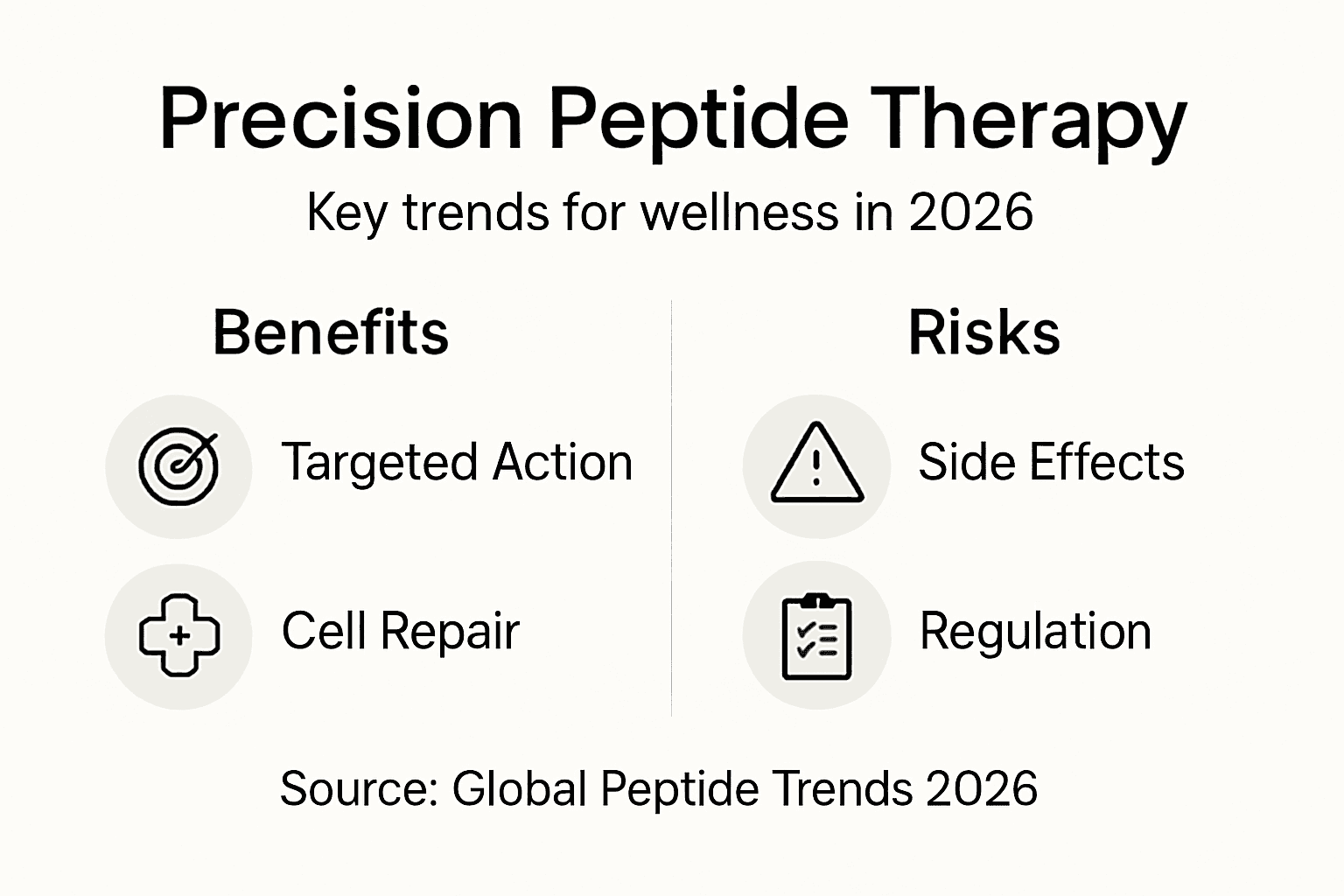
At its core, precision peptide therapy focuses on creating biologically active molecules that can interact with specific molecular targets with remarkable accuracy. These carefully engineered peptides are designed to modulate protein interactions, providing therapeutic benefits while minimizing systemic side effects and maximizing treatment efficacy.
Key characteristics of precision peptide therapy include:
- Molecular-level targeting capabilities
- Exceptional specificity in biological interactions
- Reduced systemic toxicity compared to traditional treatments
- Customizable molecular structures
- Enhanced therapeutic precision
The therapeutic mechanisms of precision peptides involve multiple sophisticated approaches:
- Protein-protein interaction modulation
- Cellular signalling pathway regulation
- Targeted molecular binding
- Immune system communication enhancement
- Selective tissue penetration
Peptide Design Strategies leverage cutting-edge technologies to optimize therapeutic potential:
- Computational molecular modeling
- Advanced synthesis techniques
- Machine learning prediction algorithms
- Structural biology insights
- Nanoscale delivery mechanism development
Technological Innovations in peptide therapy are expanding the boundaries of personalized medicine. Researchers are developing increasingly sophisticated delivery mechanisms, including:
- Peptide-drug conjugates
- Nanoparticle carrier systems
- Tumour-targeting molecular strategies
- Immunomodulatory peptide frameworks
Precision peptide therapies represent a paradigm shift in medical treatment, offering targeted interventions that can be customized to individual molecular profiles.
Pro tip: When exploring peptide therapies, always prioritize scientifically validated approaches and consult healthcare professionals for personalized guidance.
Major Legal and Safety Developments in 2026
The peptide research and therapeutic landscape is experiencing significant regulatory transformations, with global authorities implementing more rigorous oversight mechanisms. European regulatory guidelines are setting new international benchmarks for synthetic peptide development, manufacturing, and quality control standards.
These emerging regulations reflect a comprehensive approach to ensuring peptide safety, efficacy, and reproducibility across research and clinical applications. Regulatory bodies are responding to the rapid advancements in peptide technologies by establishing more sophisticated assessment protocols that address complex molecular characterization and potential therapeutic implications.
Key regulatory focus areas include:
- Enhanced quality control protocols
- Standardized manufacturing requirements
- Comprehensive impurity profiling
- Stringent stability testing procedures
- Advanced analytical validation methods
Major legal developments affecting peptide research and therapeutic development in 2026 encompass:
- Expanded documentation requirements
- More detailed molecular characterization mandates
- Stricter manufacturing process controls
- Enhanced traceability standards
- Comprehensive safety assessment frameworks
Compliance Challenges for researchers and manufacturers involve:
- Implementing advanced analytical technologies
- Developing robust documentation systems
- Maintaining rigorous quality management protocols
- Investing in continuous staff training
- Adapting to evolving regulatory frameworks
Emerging Safety Protocols are designed to address potential risks:
The following table highlights key regulatory challenges and the responses required for peptide research and manufacturing in 2026:
| Regulatory Challenge | Mandatory Response | Impact on Industry |
|---|---|---|
| Enhanced impurity profiling | Advanced analytical methods | Improved product consistency |
| Stringent stability testing | Comprehensive long-term monitoring | Greater supply reliability |
| Expanded documentation | Rigorous data management systems | Increased transparency |
| Stricter process controls | Regular quality audits | Reduced manufacturing errors |
- Detailed molecular interaction assessments
- Comprehensive toxicological screening
- Long-term stability evaluation methods
- Advanced computational risk prediction
- Systematic impurity identification techniques
Regulatory frameworks in 2026 prioritize scientific precision, patient safety, and transparent research methodologies.
Pro tip: Always maintain meticulous documentation and stay updated on the latest regulatory requirements to ensure seamless compliance.
Practical Benefits, Risks, and Common Pitfalls
Navigating the complex landscape of peptide therapies requires a nuanced understanding of both their remarkable potential and inherent challenges. Therapeutic peptides offer significant medical advantages, including unprecedented specificity and targeted molecular interactions that can revolutionize treatment approaches across multiple health domains.
The therapeutic potential of peptides spans diverse medical applications, from addressing autoimmune disorders to supporting metabolic health and cancer interventions. However, wellness professionals must carefully balance the promising benefits with potential risks and limitations inherent in peptide-based treatments.
Primary therapeutic benefits include:
- Highly targeted molecular interactions
- Enhanced tissue penetration capabilities
- Low systemic toxicity potential
- Precise signalling mechanism support
- Customizable molecular design
Critical risks and considerations involve:
- Potential rapid molecular degradation
- Limited oral bioavailability challenges
- Possible immunogenic responses
- Inconsistent product quality
- Complex administration requirements
Common Pitfalls for Wellness Professionals encompass:
- Overlooking product purity standards
- Inappropriate dosage selection
- Insufficient clinical supervision
- Neglecting individual patient variability
- Unrealistic treatment expectations
Peptide Usage Precautions require careful attention to:
- Comprehensive medical history assessment
- Rigorous product source verification
- Regular clinical monitoring
- Understanding individual metabolic responses
- Maintaining realistic therapeutic expectations
Successful peptide therapy demands a balanced approach combining scientific understanding, clinical expertise, and patient-specific considerations.
Pro tip: Always prioritize well-researched peptides, maintain strict clinical oversight, and approach experimental treatments with measured scientific skepticism.
Unlock the Future of Peptide Wellness with Northern Peptides
The article highlights critical challenges facing wellness professionals today, including navigating the evolving regulatory landscape and mastering precision peptide therapies while managing risks like product purity and administration complexities. If you want to stay ahead in this rapidly changing field and support your clients with the latest scientifically validated peptides, understanding key concepts such as therapeutic specificity, enhanced bioavailability, and advanced peptide delivery methods is essential.

Explore our comprehensive resources and research peptides at Northern Peptides. Our Uncategorized – Northern peptides category offers a broad selection of quality compounds and educational insights designed to help wellness pros overcome compliance challenges and deliver maximum benefits safely. Take action now to integrate cutting-edge peptide solutions into your practice and transform how you elevate health outcomes.
Frequently Asked Questions
What are peptides and how do they function in the body?
Peptides are short chains of amino acids that act as communication molecules within biological systems, playing essential roles in cellular signaling, metabolic regulation, and various therapeutic interventions.
What are the benefits of using anti-aging peptides?
Anti-aging peptides promote targeted cellular repair, enhance collagen synthesis, improve skin hydration, reduce inflammation, and accelerate tissue regeneration, making them valuable tools in wellness and skincare.
How does precision peptide therapy differ from traditional therapies?
Precision peptide therapy focuses on creating highly specific molecules that target particular biological pathways, thereby reducing systemic side effects and increasing the efficacy of treatment compared to traditional methods.
What precautions should wellness professionals take when using peptides in treatments?
Wellness professionals should ensure product purity, monitor patient responses, understand dosage requirements, and maintain realistic expectations regarding the outcomes of peptide therapies.