Temperature swings, light exposure, and humidity can quietly turn your investment in peptides into wasted potential long before you notice. For fitness trainers and performance-driven individuals, protecting these compounds is a must—not a luxury. By mastering the real science of peptide storage and separating common myths from fact, you gain confidence that your efforts yield results, not disappointing setbacks. This guide brings clarity and actionable advice for keeping peptides stable, effective, and ready for every training cycle.
Table of Contents
- Defining Peptide Storage and Common Myths
- Types of Peptides and Storage Needs
- Temperature, Light, and Moisture Control
- Risks of Improper Storage and Safety Steps
- Avoiding Common Mistakes in Peptide Handling
Key Takeaways
| Point | Details |
|---|---|
| Proper Storage is Crucial | Peptides require specific environmental conditions; temperature, light, and moisture control are essential to maintaining potency. |
| Debunking Storage Myths | Common misconceptions like using household freezers or sealed containers can lead to significant degradation of peptides. |
| Documentation is Vital | Accurate record-keeping of storage conditions and handling practices is necessary to prevent liability and ensure client safety. |
| Different Peptide Types Demand Different Storage | Each peptide has unique storage requirements; understanding these differences is key to maintaining their efficacy. |
Defining Peptide Storage and Common Myths
Peptide storage sounds simple until you realize temperature fluctuations, light exposure, and humidity can destroy months of investment in days. Understanding what proper storage actually means separates serious fitness enthusiasts from those wasting money on degraded compounds.
What peptide storage really means is maintaining the structural integrity of amino acid chains under specific environmental conditions. Unlike storing protein powder in your kitchen cupboard, peptides require precision. Temperature, humidity, and light protection aren’t optional considerations—they’re non-negotiable requirements.
The Reality of Peptide Degradation
Peptides degrade through several mechanisms. Hydrolysis occurs when water molecules break peptide bonds, especially at warmer temperatures. Oxidation happens when peptides interact with oxygen, forming unstable compounds that no longer produce desired results. Freezer burn and crystallisation damage the molecular structure even in cold storage.
Your $200 vial of research peptides can lose 50% potency in three weeks if stored incorrectly—even if sealed and refrigerated improperly.
Common Storage Myths Debunked
Fitness trainers often encounter persistent misconceptions about peptide preservation:
-
“Freezer is good enough” – Standard home freezers maintain inconsistent temperatures. Your freezer cycles between minus 18°C and minus 5°C. Peptides need stable ultra-low conditions or proper lyophilisation.
-
“Airtight containers prevent all degradation” – Sealing containers helps, but doesn’t eliminate oxygen already present or moisture infiltration over months.
-
“Room temperature storage works if sealed” – This accelerates degradation exponentially. Every 10°C increase roughly doubles the rate of peptide breakdown.
-
“Colour changes indicate potency loss” – While colour changes suggest oxidation, peptides can degrade completely without visible changes.
-
“Once reconstituted, peptides last weeks in the fridge” – Reconstituted solutions degrade rapidly. Most remain viable 24 to 72 hours maximum, even refrigerated.
Proper peptide storage isn’t luxury—it’s the foundation of effective research and reliable results.
What Proper Storage Actually Requires
Understanding research peptide terminology helps you identify quality preservation standards. Storage requirements depend on whether peptides arrive lyophilised (freeze-dried) or in solution.
Lyophilised peptides stored at minus 20°C in sealed vials maintain stability for 12 to 24 months. Ultra-low freezers (minus 70°C or colder) extend viability significantly longer. Reconstituted peptides in sterile saline solution typically last 72 hours refrigerated before degradation becomes substantial.
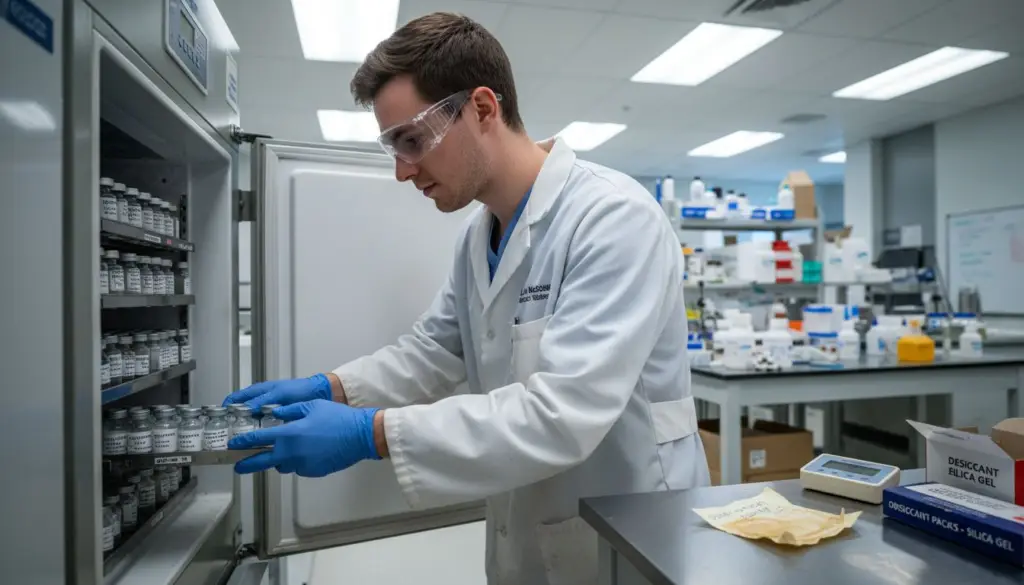
Desiccant packs, vacuum seals, and nitrogen-flushed vials aren’t marketing gimmicks—they actively prevent moisture and oxygen interaction.
Pro tip: Invest in an ultra-low freezer or medical-grade storage solution if you’re serious about peptide research. The $500 to $1500 cost pays for itself within three to four vials by preventing potency loss.
Types of Peptides and Storage Needs
Not all peptides behave the same way. Growth hormone releasing peptides, insulin-like growth factors, and collagen synthesis stimulators each have unique molecular structures that demand different preservation strategies. Treating them identically is like storing fresh fish the same way you store frozen vegetables—you’ll ruin both.
Peptide type directly determines storage temperature, humidity tolerance, and shelf life. Understanding these differences prevents expensive waste and ensures research compounds maintain potency throughout your training cycles.
Growth Hormone Releasing Peptides
Growth hormone releasing peptides (GHRPs) like GHRP-2 and GHRP-6 respond aggressively to temperature fluctuations. These peptides require ultra-low freezer storage at minus 70°C or lower when in lyophilised powder form. Even brief exposure to room temperature accelerates degradation.
Once reconstituted, GHRPs remain stable for 24 to 48 hours in refrigeration at 2°C to 8°C. Reconstituted vials stored at room temperature become ineffective within hours. Many fitness trainers underestimate how rapidly reconstituted GHRPs degrade.
GHRPs in solution require sterile, bacteriostatic water or saline. Contamination ruins batches instantly. Store reconstituted solutions separately from other peptides to prevent cross-contamination and bacterial growth.
Collagen-Stimulating Peptides
Collagen synthesis peptides like BPC-157 tolerate slightly warmer conditions than GHRPs. Standard minus 20°C freezer storage works adequately for lyophilised powder. However, stability extends significantly with ultra-low freezer use.
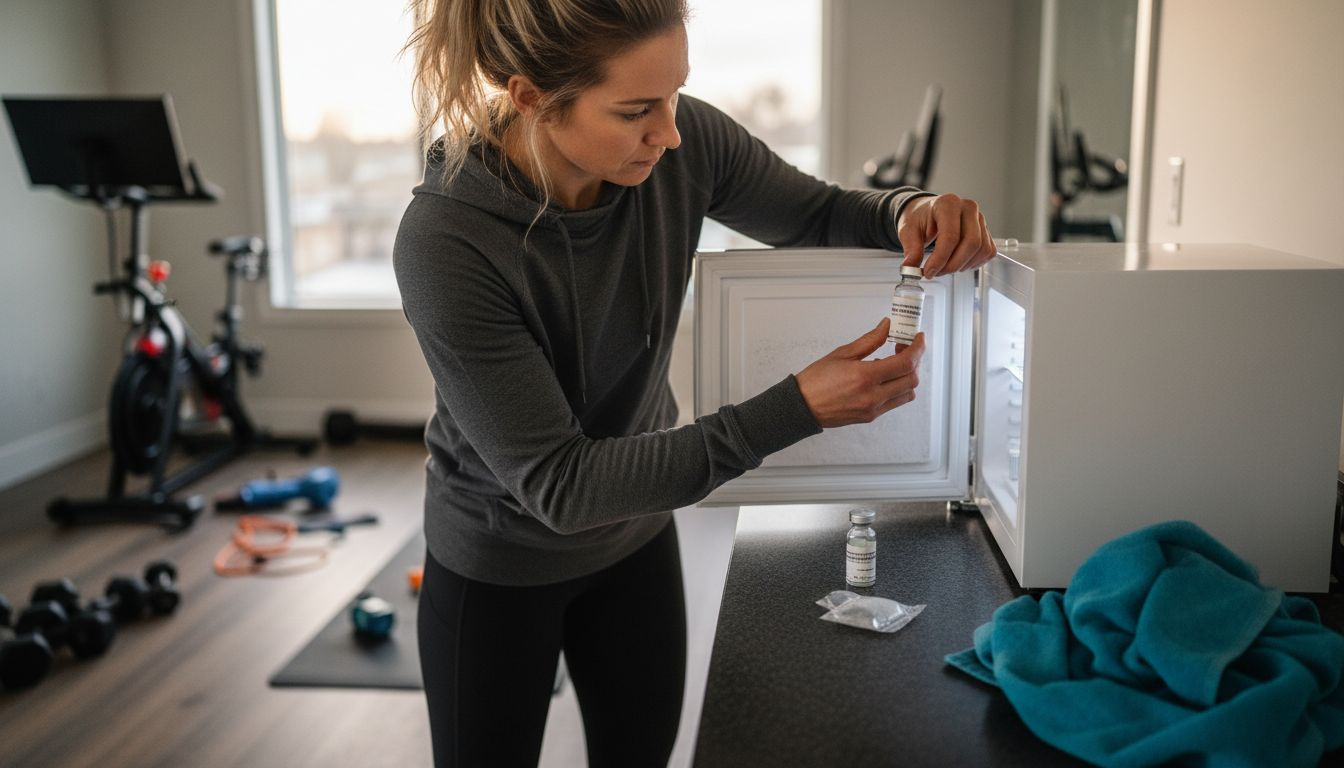
These peptides support recovery and connective tissue adaptation—critical for trainers managing joint stress. Degraded collagen peptides lose bioavailability, making recovery protocols ineffective. Proper storage directly impacts your clients’ injury prevention outcomes.
Insulin-Like Growth Factor Peptides
IGF-1 and similar growth factors represent the most temperature-sensitive category. These peptides require minus 20°C minimum for standard storage, with minus 70°C preferred for extended stability beyond 12 months.
IGF peptides degrade rapidly in solution. Even reconstituted preparations lose 15% to 20% potency weekly at standard refrigeration temperatures. Ultra-cold storage becomes non-negotiable if you’re managing expensive research protocols.
Quick Storage Comparison
| Peptide Type | Lyophilised Storage | Solution Storage | Typical Shelf Life |
|---|---|---|---|
| Growth hormone releasing peptides | Minus 70°C to minus 20°C | Refrigerated 2°C to 8°C | 24-48 hours reconstituted |
| Collagen-stimulating peptides | Minus 20°C or below | Refrigerated 2°C to 8°C | 3-5 days reconstituted |
| Insulin-like growth factors | Minus 70°C preferred | Refrigerated 2°C to 8°C | 7-14 days reconstituted |
Following peptide safety best practices ensures your storage protocols protect peptide integrity alongside research compliance.
Different peptides demand different conditions—one-size-fits-all storage strategies guarantee potency loss and wasted investment.
Pro tip: Label reconstituted vials with exact preparation dates and storage temperatures. This simple practice tracks potency degradation patterns and helps you optimize storage timing for your specific peptide selection.
Temperature, Light, and Moisture Control
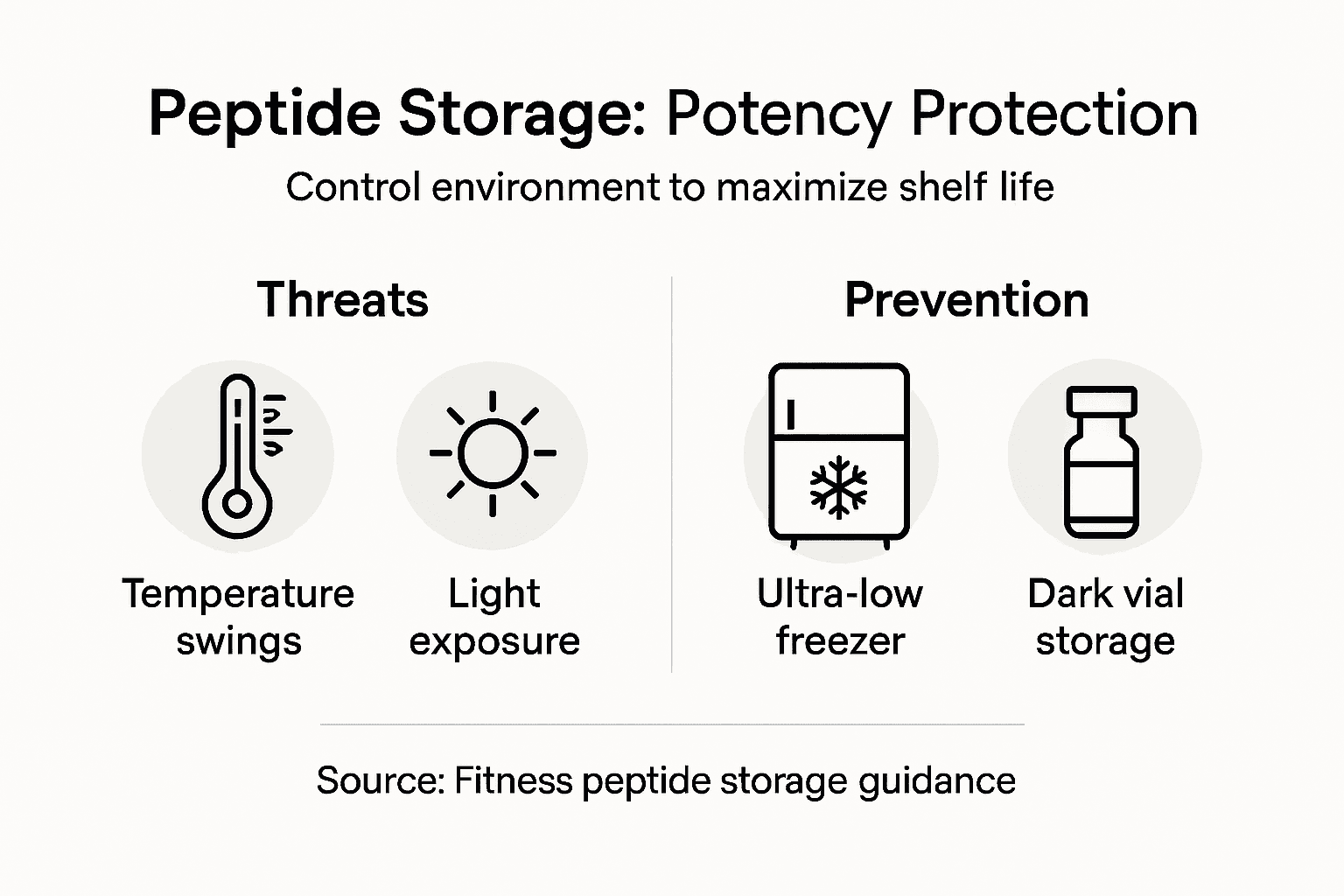
Three environmental factors destroy peptide potency faster than anything else: temperature swings, light exposure, and moisture infiltration. Control these three variables, and your peptides remain viable. Neglect them, and you’re watching money evaporate week after week.
These aren’t theoretical concerns. One mistake in any category can obliterate months of research investment before you even reconstitute your first vial.
Here is an at-a-glance summary of the main peptide degradation threats and their prevention methods:
| Threat Factor | How It Damages Peptides | Key Prevention Strategy |
|---|---|---|
| Temperature fluctuation | Breaks peptide chains, reduces potency | Use ultra-low, stable freezers |
| Light exposure | Triggers oxidation, alters molecules | Store in amber or opaque vials |
| Moisture/humidity | Causes hydrolysis and bacterial growth | Include desiccants, seal vials tightly |
Temperature Control Is Non-Negotiable
Temperature stability matters more than absolute cold. Peptides tolerate minus 20°C consistently better than minus 70°C with temperature fluctuations. Your home freezer cycles constantly, creating unstable conditions.
Peptide handling and storage guidance confirms that minus 20°C works for short-term storage while minus 80°C ensures extended stability beyond 12 months. Many fitness trainers miss this distinction—they assume colder is always better without considering temperature cycling damage.
Freeze-thaw cycles are particularly destructive. Each time you remove a vial and return it to freezing, ice crystals form and damage peptide chains. Minimise retrieval frequency by portioning vials into smaller aliquots before initial freezing.
Light Exposure Accelerates Oxidation
Light-sensitive amino acids like tryptophan and tyrosine degrade rapidly under UV and visible light exposure. Store peptides in amber or opaque vials, never clear containers. A peptide sitting in sunlight for three hours loses measurable potency.
This explains why research-grade peptides arrive in dark bottles. That packaging isn’t decorative—it’s essential protection.
Even indoor lighting matters over extended storage periods. Keep freezers in dark areas, away from windows. If your freezer has an interior light, consider whether you really need it activated during storage.
Moisture Control Prevents Hydrolysis
Moisture infiltration triggers hydrolysis, where water molecules break peptide bonds. Proper equilibration before opening vials prevents condensation from forming inside containers. Never open frozen vials in humid environments.
Key moisture prevention strategies include:
- Store desiccant packs inside storage containers alongside peptide vials
- Use vacuum-sealed bags as secondary protection around vials
- Maintain freezer humidity below 40% relative humidity when possible
- Allow vials to reach room temperature gradually before opening
- Work in low-humidity environments when reconstituting peptides
Environmental control determines potency loss or preservation—there’s no middle ground.
Real-World Storage Setup
Optimal peptide storage combines three protective layers:
- Individual vials in amber, vacuum-sealed packaging
- Vials grouped in desiccant-containing containers
- Containers stored in stable minus 20°C or minus 80°C freezers
This layered approach addresses all three degradation pathways simultaneously. Most trainers skip this complexity and wonder why peptides underperform.
Pro tip: Invest in a dedicated freezer with temperature monitoring. Pharmaceutical-grade freezers cost more upfront but eliminate temperature cycling completely, protecting expensive peptide batches for years rather than months.
Risks of Improper Storage and Safety Steps
Improper peptide storage creates cascading problems beyond wasted money. Degraded peptides lose efficacy, contaminated batches introduce safety risks, and poor documentation masks these issues until clients report failed results. Understanding what goes wrong helps you avoid preventable disasters.
Safety isn’t optional when handling research compounds. One contaminated vial can compromise entire protocols and undermine client trust.
What Happens With Degraded Peptides
Degraded peptides don’t just become inactive—they can become harmful. Oxidised peptides form unstable compounds that trigger unexpected immune responses. Contaminated solutions introduce bacterial endotoxins that cause inflammation rather than the desired recovery response.
Clients using degraded peptides report inconsistent results, increased inflammation, or unexpected side effects. You can’t trace these problems back to storage failure because the connection isn’t obvious. By then, your reputation has already suffered.
This is why trainers managing peptide protocols must treat storage as seriously as dosing accuracy. Both directly impact client safety and outcomes.
Contamination Risks From Poor Storage
Bacterial and fungal growth thrives in warm, moist conditions. Reconstituted peptides stored improperly become breeding grounds for pathogens. Even sterile technique during reconstitution fails if you return vials to contaminated storage environments.
Common contamination sources include:
- Freezers with frost buildup harbouring bacterial colonies
- Non-sterile water used for reconstitution
- Vials opened in humid or unclean environments
- Cross-contamination from sharing storage containers
- Temperature cycling allowing condensation inside vials
Once contamination occurs, the entire batch becomes unusable. Prevention costs far less than losing multiple vials.
Documentation Failures Create Liability
Poor record-keeping hides storage problems until they surface as client complaints. Without documented storage temperatures, humidity levels, and preparation dates, you can’t identify where failures occurred.
Implement basic tracking:
- Record freezer temperature daily using reliable monitoring devices
- Label every vial with preparation date, storage temperature, and expiration timeline
- Document any temperature fluctuations or equipment malfunctions
- Track client outcomes against specific peptide batches
- Keep batch records separated from client files for audit compliance
This documentation protects both your clients and your business by creating accountability.
Use this quick reference to improve documentation and batch accountability:
| Critical Record | Why It Matters | Best Practice |
|---|---|---|
| Storage temperature logs | Trace potency loss to temperature events | Check twice daily, note fluctuations |
| Reconstitution date | Matches solution age with potency risks | Label vials immediately upon prep |
| Client outcome notes | Links results to storage/handling | Compare client responses by batch |
Degraded peptides undermine protocols silently—proper storage and documentation prevent failures before they happen.
Safety Steps for Reliable Storage
Following peptide safety essential tips ensures comprehensive protection across handling and storage. Core safety practices include:
- Verify freezer temperatures twice daily using calibrated thermometers
- Use dedicated freezers that don’t cycle through warming phases
- Maintain written storage protocols for all staff members
- Inspect vials for visible degradation before use
- Store peptides away from cleaning chemicals and volatile compounds
- Conduct quarterly equipment maintenance and temperature verification
Pro tip: Implement an automated temperature monitoring system with email alerts. For under $300, you gain real-time freezer status and historical temperature logs, catching problems before they destroy peptide batches.
Avoiding Common Mistakes in Peptide Handling
One wrong move during peptide handling can undo months of proper storage. Even when you’ve maintained perfect freezer conditions, careless reconstitution or aggressive handling destroys potency in minutes. The mistakes are predictable—and completely avoidable.
Most fitness trainers repeat the same handling errors because nobody explained why they matter. Understanding the mechanics prevents expensive waste.
Reconstitution Errors Destroy Potency Immediately
Choosing the wrong solvent is the most common reconstitution mistake. Bacteriostatic water is standard, but some trainers substitute regular distilled water or saline solutions. These alternatives introduce contaminants or alter peptide stability.
Peptide handling mistakes and best practices emphasise using manufacturer-recommended solvents exclusively. Temperature of the solvent matters too—room temperature water is acceptable, but never use hot water or microwaved liquids. Heat denatures peptides instantly.
Mixing technique is equally critical. Aggressive shaking or vortexing creates air bubbles and oxidation. Instead, gently swirl vials or use slow rotation mixing. Patience takes 30 seconds; rushing takes $200 vials.
Freeze-Thaw Cycles Are Silent Killers
Repeated freezing and thawing causes ice crystal formation that physically damages peptide chains. Each cycle reduces potency by 5% to 15%, depending on peptide type. After three to four thaw cycles, your peptide batch has lost 20% to 60% efficacy.
Most trainers don’t realise how many thaw cycles they’re creating. Removing a vial from minus 80°C storage, letting it warm to room temperature, then refreezing—that’s one cycle. Do this weekly for a month, and you’ve wasted the vial.
The solution? Aliquot peptides into smaller portions before initial freezing. Use one aliquot, discard it, never refreeze. This costs slightly more upfront but eliminates the freeze-thaw problem entirely.
Documentation Gaps Hide Expensive Mistakes
Poor record-keeping makes it impossible to identify which storage or handling mistakes caused failures. Without documented reconstitution dates, solvent types, and storage temperatures, you’re flying blind.
Essential documentation includes:
- Reconstitution date and exact solvent used
- Storage temperature immediately after reconstitution
- Any temperature fluctuations during storage
- Client outcome responses correlated with batch numbers
- Physical condition observations (colour, clarity, unusual odours)
This simple tracking catches patterns. You’ll notice specific storage conditions correlate with poor client results, allowing you to adjust protocols.
Sloppy handling erases months of perfect storage—one reconstitution mistake wastes everything.
Handling Best Practices
Avoid these common mistakes during every peptide interaction:
- Never use aggressive mixing methods—swirl gently for 20 to 30 seconds
- Allow frozen vials to reach room temperature naturally before opening
- Work in clean, cool environments away from direct sunlight
- Use sterile techniques consistently, every single time
- Never share vials between clients—use individual aliquots
- Inspect vials for discolouration before reconstitution
- Document everything before you forget details
Following peptide safety protocols ensures comprehensive protection across storage, handling, and documentation.
Pro tip: Create a simple checklist laminated and posted at your storage area. Before handling any peptide vial, complete the checklist: temperature checked, solvent verified, gloves on, documentation ready. This takes 60 seconds and prevents 90% of handling mistakes.
Secure Your Peptides’ Potency with Expert Storage Solutions
Peptide storage is more than just chilling your compounds It requires precise temperature control, moisture management, and light protection to preserve their full potency for your fitness goals Understanding the risks of peptide degradation and proper handling can save you from costly losses and ineffective results Our resources are designed to guide you through these challenges with clear strategies based on the latest research peptide terminology
Explore how to protect your investment with airtight packaging methods and ultra-low temperature systems Learn more about peptide safety and maximize your results by visiting Uncategorized – Northern peptides where detailed insights meet practical advice

Take control of your peptide storage today Access trusted supplies, chemicals, and expert educational resources at Northern Peptides Begin implementing consistent storage protocols that will safeguard your research and deliver reliable outcomes Don’t wait for degradation to cost you—start optimizing your peptide strategy now and elevate your fitness performance
Frequently Asked Questions
What are the best storage conditions for lyophilised peptides?
Lyophilised peptides should be stored at minus 20°C or lower in sealed vials to maintain stability for 12 to 24 months.
How long can reconstituted peptides remain effective in the refrigerator?
Reconstituted peptides typically last 24 to 72 hours when refrigerated, with many becoming ineffective after just 48 hours.
What factors can lead to peptide degradation?
Temperature fluctuations, light exposure, and moisture infiltration are the primary factors that can lead to peptide degradation.
Why is it important to avoid freeze-thaw cycles with peptide storage?
Freeze-thaw cycles can physically damage peptide chains, reducing potency by 5% to 15% with each cycle, which can result in significant loss of efficacy over time.