

Peptides aren’t steroids, contrary to popular belief. While steroids replace hormones directly, peptides stimulate your body’s natural production pathways. Off-label peptide use has surged among fitness professionals seeking enhanced recovery and performance, yet regulatory bodies warn about safety risks and quality inconsistencies. This guide clarifies what off-label peptides are, how they work, their regulatory status, and practical evaluation frameworks to help you make informed decisions.
Table of Contents
- What Is Off-Label Peptide Use?
- Common Peptides Used Off-Label In Fitness
- How Off-Label Peptides Work: Physiological Mechanisms
- Safety, Regulatory, And Ethical Considerations
- Common Misconceptions And Myths About Off-Label Peptides
- Framework For Evaluating And Using Off-Label Peptides In Fitness
- Explore Safe Peptide Resources And Tools
- Frequently Asked Questions
Key takeaways
| Point | Details |
|---|---|
| Off-label use means employing peptides beyond approved medical indications | Fitness professionals use research peptides primarily for recovery and growth without clinical approval. |
| Popular peptides include BPC-157, TB-500, and GHRPs | None possess FDA approval for athletic enhancement despite widespread use. |
| Peptides stimulate natural hormone pathways | They trigger growth hormone release and tissue repair mechanisms rather than hormone replacement. |
| Regulatory warnings highlight safety concerns | Lack of approval, inconsistent quality, and uncertain long-term effects pose risks. |
| Critical evaluation frameworks enable informed decisions | Assess regulatory status, evidence quality, purity, and medical supervision before use. |
What is off-label peptide use?
Peptides are short chains of amino acids that function as signalling molecules in your body. They regulate countless biological processes from muscle growth to tissue repair. Off-label peptide use means using peptides beyond their FDA-approved indications, often for fitness goals like enhanced recovery and muscle growth without formal clinical approval.
The distinction between FDA-approved peptide drugs and research peptides is crucial. Approved peptides undergo rigorous testing for safety and efficacy. Research peptides sold for off-label use lack this validation. They’re often marketed as “research chemicals” or “not for human consumption” to circumvent regulatory oversight.
Fitness professionals find peptides appealing for several reasons:
- Targeted recovery enhancement following intense training
- Potential muscle growth acceleration beyond natural limits
- Performance optimisation through hormone pathway stimulation
- Perceived safety advantage over traditional anabolic compounds
No official dosing guidelines exist for fitness applications. Users typically rely on anecdotal reports and community wisdom rather than clinical protocols. This regulatory gap creates substantial uncertainty around proper administration, cycling, and long-term safety. Understanding fitness peptides safe use protocols becomes essential before considering these compounds.
Common peptides used off-label in fitness
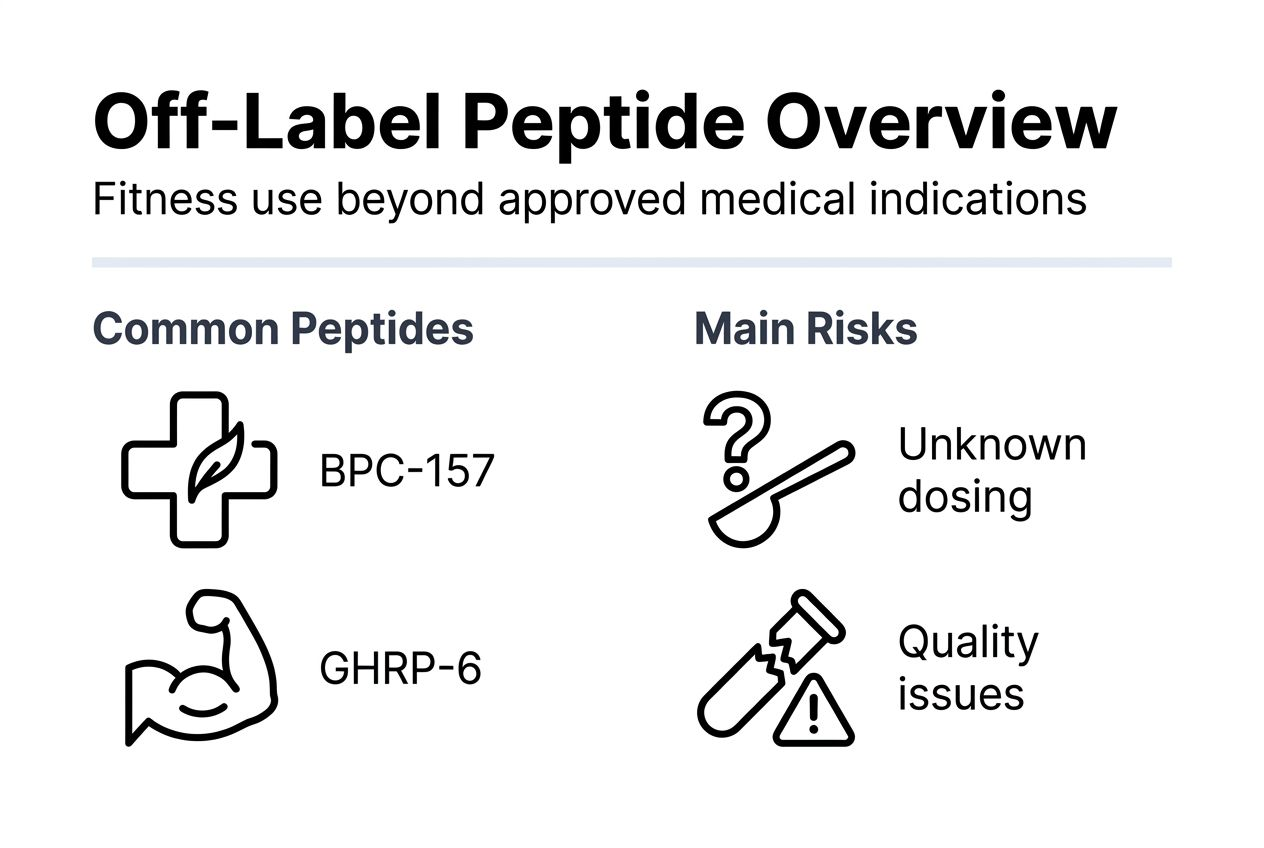
Several peptides dominate off-label fitness use, each with distinct origins and purported benefits. Peptides like BPC-157 and TB-500 are popular off-label peptides in fitness but lack FDA approval and robust human clinical data for injury recovery.
BPC-157, derived from a protective stomach protein, gained attention for potential tissue healing properties. Athletes use it hoping to accelerate injury recovery, though human trials remain limited. TB-500, a synthetic version of thymosin beta-4, targets similar recovery goals with claimed anti-inflammatory effects.
Growth hormone-releasing peptides (GHRPs) like GHRP-6 and Ipamorelin stimulate natural growth hormone production. CJC-1295 extends growth hormone pulses by mimicking growth hormone-releasing hormone. These compounds appeal to those seeking muscle growth and fat reduction without direct hormone injection.
| Peptide | Primary Source | Main Effects | FDA Status | Fitness Goal |
|---|---|---|---|---|
| BPC-157 | Gastric protein sequence | Tissue repair, inflammation reduction | Not approved | Injury recovery |
| TB-500 | Thymosin beta-4 synthetic | Healing acceleration, flexibility | Not approved | Recovery, mobility |
| GHRP-6 | Synthetic | GH release stimulation | Not approved | Muscle growth |
| CJC-1295 | GHRH analogue | Extended GH pulses | Not approved | Lean mass gains |
| Ipamorelin | Synthetic | Selective GH release | Not approved | Fat reduction |
Current evidence remains predominantly preclinical. Animal studies show promise, but translating these findings to human performance enhancement requires proper clinical validation. Exploring peptides for muscle recovery and reviewing best research peptides 2026 helps contextualise these compounds within broader recovery strategies.
How off-label peptides work: physiological mechanisms
Peptides function as biological messengers that activate specific cellular pathways. Understanding these mechanisms clarifies both their appeal and limitations for fitness applications.
The growth hormone axis represents a primary target. Rather than introducing synthetic growth hormone directly, peptides stimulate your pituitary gland to release endogenous growth hormone. This triggers downstream effects including increased Insulin-like Growth Factor 1 (IGF-1) production, which drives tissue growth and regeneration.
Key physiological processes influenced by peptides:
- Growth hormone secretion amplification through hypothalamic-pituitary signalling
- IGF-1 upregulation promoting protein synthesis and cellular proliferation
- Inflammation modulation via cytokine pathway regulation
- Angiogenesis stimulation supporting tissue repair and nutrient delivery
- Collagen production enhancement for connective tissue strengthening
Peptides like BPC-157 have shown promising anti-inflammatory effects and healing effects in animal models but human clinical data remains limited and mixed. Cellular studies demonstrate receptor binding and signalling cascade activation, yet translating these mechanisms to tangible human performance benefits requires substantial clinical validation.
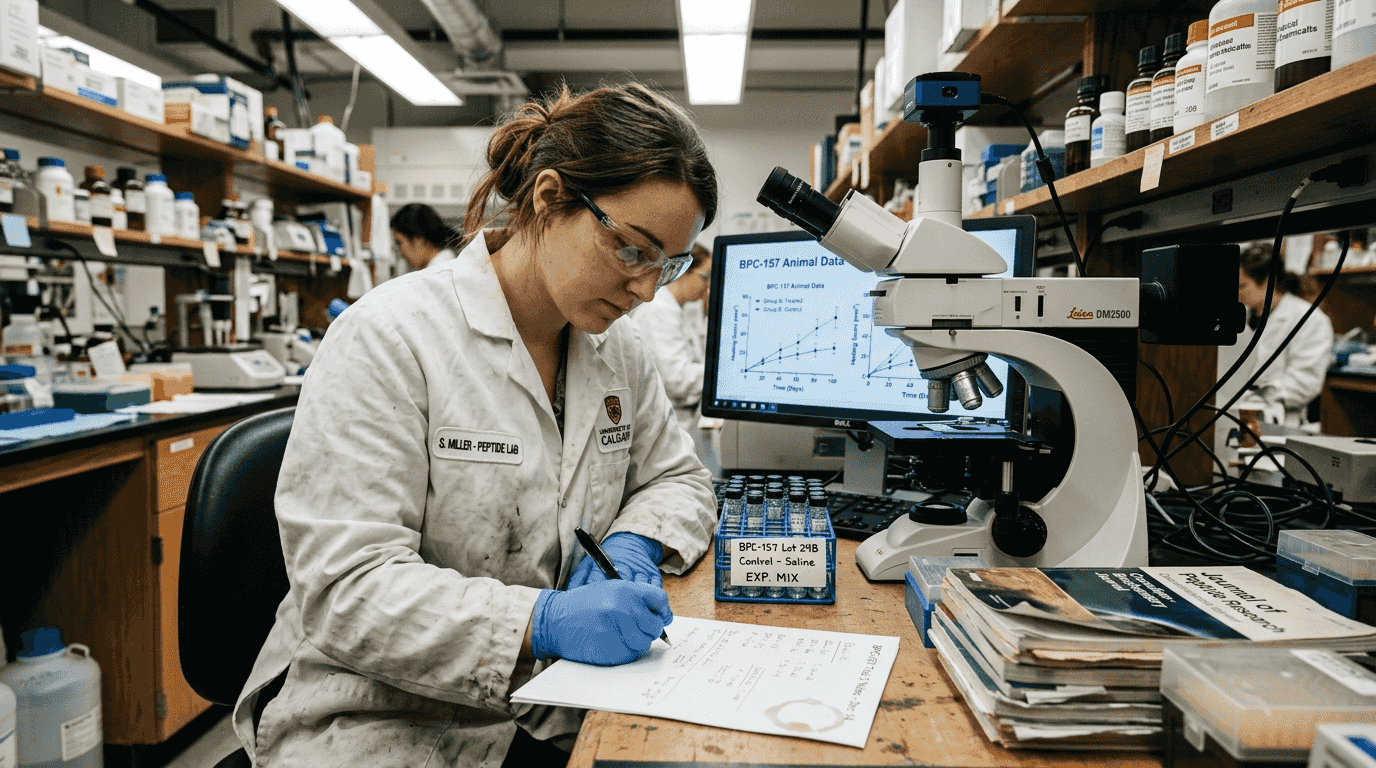
Pro Tip: Preclinical positive effects don’t guarantee human outcomes. Animal models respond differently to compounds than humans, and controlled laboratory conditions differ vastly from real-world training environments. Always prioritise human clinical evidence when evaluating peptide claims.
Exploring peptide therapy mechanisms and peptides injury repair provides deeper insight into how these pathways might support athletic performance when properly understood.
Safety, regulatory, and ethical considerations
Off-label peptide use carries significant risks that fitness professionals must carefully weigh. Regulatory bodies have issued clear warnings about these compounds.
The FDA has issued warnings against off-label peptide use for athletic enhancement due to the lack of approval, inconsistent product quality, and safety concerns. The primary issues include:
- Product contamination from unregulated manufacturing processes
- Inaccurate dosing due to inconsistent peptide concentrations
- Unknown long-term health effects from chronic use
- Potential hormone disruption affecting natural production
- Adverse reactions ranging from injection site issues to systemic effects
The lack of quality control creates substantial risk. Research peptides bypass pharmaceutical manufacturing standards. Purity testing may be absent or unreliable. Contamination with bacteria, heavy metals, or incorrect compounds can occur.
Hormone disruption represents another concern. Chronic stimulation of growth hormone pathways might suppress natural production over time. Your body’s feedback mechanisms could adapt, potentially creating dependence or reducing natural hormone output when peptides are discontinued.
“FDA regulatory actions consistently emphasise that peptides marketed for athletic enhancement lack approval for these uses, pose unknown safety risks, and violate federal regulations when sold for human consumption outside approved medical contexts.”
Ethical considerations extend beyond personal health. Many sporting organisations classify peptides as prohibited substances. Using them violates anti-doping rules and competitive fair play principles. Even in non-competitive contexts, promoting unproven interventions raises professional responsibility questions.
Understanding peptide safety explained helps contextualise these risks within responsible usage frameworks when properly supervised.
Common misconceptions and myths about off-label peptides
Misunderstandings about peptides lead to unrealistic expectations and potentially dangerous practices. Clarifying these myths supports informed decision-making.
Peptides are not steroids but natural hormone stimulators; fitness benefits are not universally supported by evidence; off-label use involves self-experimentation with medical risks. The fundamental difference lies in mechanism. Steroids directly introduce synthetic hormones that replace your natural production. Peptides stimulate your existing hormone-producing glands.
Common myths include:
- Peptides guarantee rapid muscle gains equivalent to anabolic steroids
- All peptides are inherently safer than traditional performance enhancers
- Research peptide labelling means they’re approved for experimental personal use
- Anecdotal success stories substitute for clinical evidence
- Natural hormone stimulation eliminates health risks
Reality proves more nuanced. Most fitness peptide benefits stem from incomplete human research. Animal studies and in-vitro experiments dominate the evidence base. Translating these findings to training outcomes requires substantial clinical validation that hasn’t occurred for performance applications.
Unsupervised self-experimentation compounds risks. Without medical oversight, users cannot properly monitor hormone levels, assess organ function, or identify adverse reactions early. Dosing becomes guesswork based on internet forums rather than individualised medical protocols.
Pro Tip: Approach peptide claims with critical scepticism. Demand human clinical trial evidence for specific fitness outcomes before considering use. Extraordinary claims require extraordinary evidence, and most peptide performance benefits lack rigorous scientific support.
Consulting a safe peptide selection guide helps navigate marketing hype and identify evidence-backed options when they exist.
Framework for evaluating and using off-label peptides in fitness
A systematic evaluation process helps fitness professionals make informed peptide decisions. Follow these steps:
- Research FDA approval and legal status for your jurisdiction
- Review scientific literature and clinical trial evidence rigorously
- Verify product purity and sourcing credentials from suppliers
- Consult healthcare professionals for medical supervision
- Monitor bodily responses and adjust usage based on objective markers
Practical evaluation includes researching regulatory status, evidence quality, peptide purity, medical supervision, and monitoring for safety. Each criterion provides essential risk assessment information.
| Evaluation Criteria | Key Considerations | Risk Level |
|---|---|---|
| Regulatory Status | FDA approval, legal standing, sporting regulations | High if not approved |
| Evidence Quality | Human trials, sample size, peer review | High if lacking |
| Product Purity | Certificates of analysis, third-party testing | High without verification |
| Medical Supervision | Healthcare provider involvement, monitoring | High if self-administered |
| Dosing Protocols | Evidence-based guidelines vs anecdotal | Moderate to high |
Common pitfalls to avoid:
- Purchasing from unverified suppliers lacking transparency
- Ignoring legal regulations and sporting organisation rules
- Skipping medical consultation and independent health monitoring
- Relying exclusively on anecdotal reports for dosing guidance
- Failing to verify certificates of analysis or purity testing
Pro Tip: Always prioritise peptides from verified suppliers with certificates of analysis demonstrating purity above 98%. Third-party testing provides essential quality assurance that seller claims alone cannot guarantee.
Exploring peptide purity explained and reviewing clinical evidence for peptides strengthens your evaluation capabilities and supports evidence-based decisions.
Explore safe peptide resources and tools
Navigating off-label peptide use requires reliable information and practical tools. The Northern peptides information page offers comprehensive educational resources covering purity standards, safety protocols, and evidence evaluation frameworks tailored for fitness professionals.

Precise dosing represents a critical safety factor. The peptide concentration calculator provides accurate reconstitution guidance, eliminating dosing errors that compromise both safety and effectiveness. Understanding peptide purity explained helps you interpret certificates of analysis and make informed sourcing decisions. These expert-backed materials support responsible peptide exploration grounded in current evidence and best practices.
Frequently asked questions
What is the difference between peptides and steroids?
Peptides stimulate your body’s natural hormone production pathways, while steroids introduce synthetic hormones directly. Peptides generally modulate signalling rather than replace hormones, leading to different physiological effects and risk profiles. This fundamental mechanism distinction explains why peptides cannot be equated with anabolic steroids despite both being used for performance goals.
Are off-label peptides safe for fitness enhancement?
Off-label peptides carry risks due to lack of FDA approval for fitness use and inconsistent product quality. Long-term safety data remains limited, with most evidence coming from animal studies rather than human clinical trials. Consulting healthcare professionals and proceeding with medical supervision is strongly recommended if considering these compounds.
How can fitness professionals verify peptide product quality?
Check for reputable suppliers that provide certificates of analysis and third-party purity testing results. Avoid products from unverified sources due to contamination risks and dosing inaccuracies. Look for purity levels above 98% and verification of peptide identity through mass spectrometry or similar analytical methods.
Is medical supervision necessary when using off-label peptides?
Medical supervision helps ensure proper dosing, monitors potential side effects, and reduces health risks through regular blood work and organ function assessment. It represents best practice especially given limited clinical guidance for off-label peptide use. Healthcare providers can identify contraindications and adjust protocols based on individual responses.