Peptide research presents unique challenges for scientists and fitness professionals seeking reliable data on performance, recovery, and anti-aging applications. The complexity of designing, synthesising, and validating peptides requires systematic approaches that many researchers struggle to navigate. Without proper methodology, studies yield inconsistent results that undermine therapeutic potential. This guide walks you through proven research techniques from sequence design through clinical validation, equipping you with frameworks to conduct rigorous peptide investigations that deliver actionable insights for real-world applications.
Table of Contents
- Prepare Your Peptide Research: Design And Synthesis Principles
- Validate Peptide Quality And Purity With Analytical Methods
- Execute Functional Testing With In Vitro And In Vivo Models
- Apply Research Insights To Fitness And Anti-Aging Peptides
- Explore Quality Peptides And Resources At Northern Peptides
- Frequently Asked Questions
Key takeaways
| Point | Details |
|---|---|
| Design foundation | Peptide research starts with strategic sequence selection and synthesis planning using protecting group chemistry |
| Quality validation | RP-HPLC, mass spectrometry, and amino acid analysis verify purity levels of 95-99% essential for reliable results |
| Functional testing | Phage display, co-culture models, and animal studies validate biological activity and therapeutic mechanisms |
| Clinical applications | BPC-157, TB-500, and collagen peptides demonstrate measurable benefits in recovery while anti-aging peptides outperform retinol |
| Research gaps | Most fitness peptides lack Phase 3 human trials despite promising preclinical data |
Prepare your peptide research: design and synthesis principles
Every successful peptide investigation begins with thoughtful sequence design aligned to your research objectives. You need to identify target receptors, binding sites, or biological pathways before selecting amino acid sequences that interact with those targets. Bioactivity predictions using computational modelling help narrow candidate sequences, saving time and resources during synthesis.
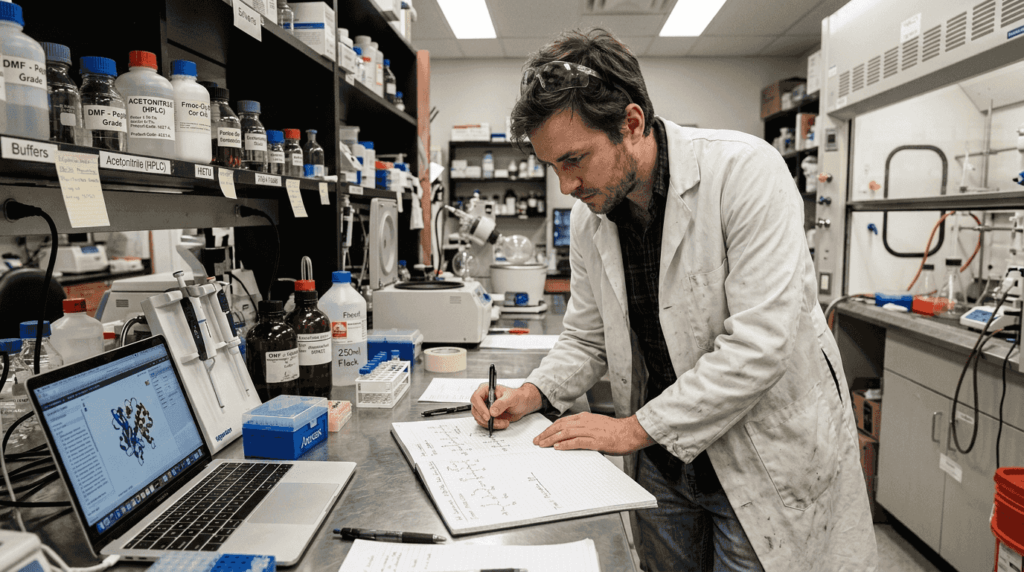
Once you’ve selected your sequence, peptide research begins with design principles focusing on sequence selection, protecting groups, and synthesis strategies through solid-phase peptide synthesis (SPPS). This method assembles amino acid chains from the carboxyl terminus to the N-terminus whilst the growing peptide remains attached to a solid resin. Protecting groups, either Fmoc (fluorenylmethyloxycarbonyl) or Boc (tert-butyloxycarbonyl), temporarily block reactive sites during coupling reactions, preventing unwanted side reactions that compromise sequence accuracy.
The choice between Fmoc and Boc strategies impacts your workflow significantly:
| Strategy | Deprotection method | Advantages | Limitations |
|---|---|---|---|
| Fmoc | Mild base (piperidine) | Faster cycles, room temperature, less peptide damage | More expensive reagents, sensitive to moisture |
| Boc | Strong acid (TFA) | Lower reagent costs, stable storage | Harsher conditions risk side-chain modifications |
For most research applications, Fmoc synthesis offers superior results because the mild deprotection conditions preserve delicate amino acids like tryptophan and methionine. The step by step peptide synthesis guide provides detailed protocols for both approaches.
Essential SPPS materials and equipment:
- Solid support resin (polystyrene or polyethylene glycol based)
- Protected amino acid derivatives with activating groups
- Coupling reagents (HBTU, DIC, or HATU)
- Deprotection solution (20% piperidine for Fmoc)
- Automated peptide synthesiser or manual reaction vessel
- Cleavage cocktail (TFA with scavengers)
Pro Tip: Minimise synthesis errors by implementing double coupling for difficult sequences and monitoring resin loading through quantitative ninhydrin tests after each coupling cycle.
Successful synthesis yields crude peptide that requires purification before biological testing. High purity peptides eliminate confounding variables in downstream assays, making quality control your next critical research phase.
Validate peptide quality and purity with analytical methods
Purity verification separates reliable research from questionable findings. Even minor impurities alter biological activity, pharmacokinetics, and toxicity profiles in ways that invalidate experimental conclusions. You must confirm both identity and purity through complementary analytical techniques before investing time in functional assays.
Reversed-phase high-performance liquid chromatography (RP-HPLC) serves as the industry standard for peptide purity analysis. This technique separates peptides based on hydrophobicity as they interact with a nonpolar stationary phase. Your target peptide elutes at a characteristic retention time, producing a peak whose area correlates with concentration. Purity analysis uses RP-HPLC, MS, AAA; aim for high purity levels of 95-99% to ensure experimental reproducibility.
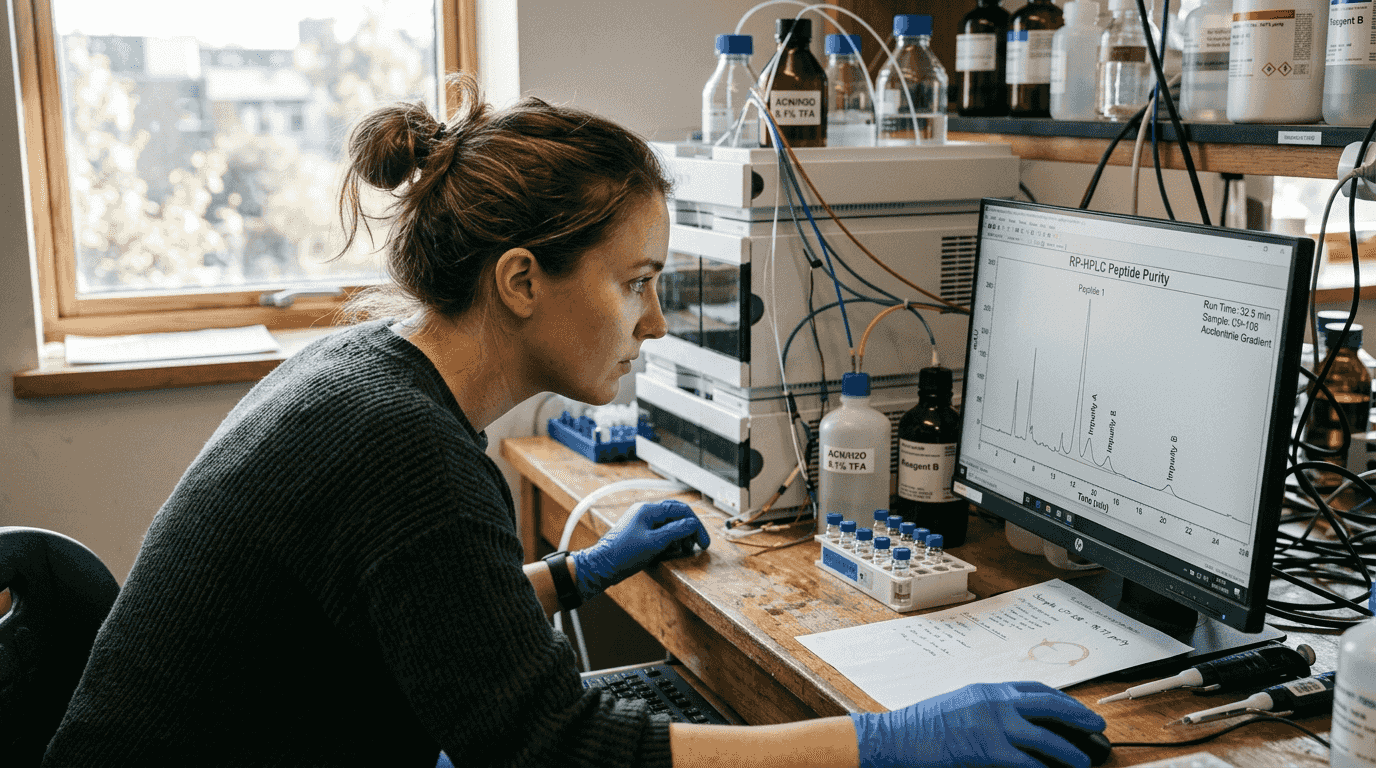
Mass spectrometry, particularly MALDI-TOF (matrix-assisted laser desorption/ionisation time of flight), confirms molecular weight with precision under 0.1%. This verification catches synthesis errors like missed couplings, incomplete deprotection, or unexpected modifications. When your observed mass matches the calculated mass within instrument tolerance, you’ve confirmed sequence accuracy.
Amino acid analysis (AAA) provides compositional verification by hydrolysing the peptide and quantifying individual amino acids through ion exchange chromatography. This technique catches substitution errors and verifies stoichiometry, complementing mass spectrometry data. The peptide purity explained quality resource explores how these methods work together.
| Method | Primary function | Sensitivity | Limitations |
|---|---|---|---|
| RP-HPLC | Purity quantification | Detects 1-2% impurities | Cannot identify unknown contaminants |
| Mass spectrometry | Molecular weight confirmation | 0.01% mass accuracy | Struggles with large peptides over 10 kDa |
| Amino acid analysis | Compositional verification | Nanomole quantities | Destroys sample, cannot detect modifications |
Common impurities and detection strategies:
- Deletion sequences (missing amino acids): detected by mass spectrometry showing peaks at lower molecular weights
- Incomplete deprotection products: identified through HPLC as earlier eluting peaks with higher hydrophobicity
- Oxidised methionine or cysteine: revealed by mass shifts of +16 or +32 Da in MS analysis
- Salts and small molecule contaminants: shown as baseline disturbances in HPLC chromatograms
- Aggregated peptides: appear as high molecular weight peaks in size exclusion chromatography
Pro Tip: Maintain consistent sample preparation protocols including identical dissolution solvents, concentrations, and injection volumes to reduce analytical variability and eliminate false negative purity assessments.
The peptide quality control standards establish benchmarks for research-grade materials. Once you’ve confirmed purity and identity, your peptide is ready for biological validation through functional testing.
Execute functional testing with in vitro and in vivo models
Analytical purity means nothing without biological activity. Functional testing reveals whether your peptide binds intended targets, triggers desired cellular responses, and produces therapeutic effects in living systems. This phase bridges synthetic chemistry and practical applications through systematic experimental models.

Phage display technology screens massive peptide libraries (up to 10^9 variants) for target binding specificity. Bacteriophages display random peptide sequences on their surface proteins whilst carrying DNA encoding those sequences. Phage display and animal models for peptide targeting research demonstrates multi-round selection that enriches high-affinity binders through repeated exposure to your target molecule.
Stepwise phage display screening protocol:
- Incubate phage library with immobilised target protein for 1-2 hours at room temperature
- Wash unbound phages extensively with buffer containing mild detergent
- Elute specifically bound phages using low pH or competitive ligand
- Amplify recovered phages in bacterial culture to generate enriched library
- Repeat binding and amplification for 3-5 rounds to achieve 1000-fold enrichment
- Sequence individual phage clones to identify consensus binding motifs
- Synthesise candidate peptides for validation in secondary assays
Co-culture cellular models test functional activity in controlled environments that mimic physiological conditions. For example, tumour-conditioned endothelial cells grown alongside cancer cells reveal how peptides affect angiogenesis, cell migration, or inflammatory signalling. These systems provide mechanistic insights before expensive animal studies.
Animal models validate in vivo efficacy, pharmacokinetics, and safety profiles essential for therapeutic development. The DSS-induced colitis model tests anti-inflammatory peptides like KPV by measuring disease activity indices, histological damage, and cytokine profiles. Wound healing models assess peptides like BPC-157 through measuring closure rates, collagen deposition, and vascular density.
Screening specificity determines research validity. Always include negative selection rounds against unrelated proteins to eliminate non-specific binders, and validate top candidates in multiple independent assays before drawing conclusions about therapeutic potential.
Ethical considerations and methodological rigour matter tremendously. Use the minimum number of animals necessary for statistical power, implement humane endpoints, and follow institutional animal care guidelines. The peptides injury repair athletes recovery page discusses how these validation steps inform clinical applications.
Proper controls separate real effects from experimental artefacts. Include vehicle-treated groups, positive control compounds with known activity, and dose-response experiments to establish therapeutic windows. Document everything meticulously because reproducibility defines credible research. For additional methodologies and case studies, explore the peptide research blog regularly.
Apply research insights to fitness and anti-aging peptides
Rigorous research methodologies reveal how specific peptides deliver measurable benefits for athletic performance, injury recovery, and age-related decline. Understanding mechanisms and clinical evidence helps you evaluate peptides critically and design better experimental protocols.
BPC-157 promotes angiogenesis and accelerates healing through upregulating growth factors like VEGF whilst stabilising nitric oxide synthase. TB-500, the active fragment of thymosin beta-4, enhances cell migration and reduces inflammation by modulating actin polymerisation. Ipamorelin stimulates growth hormone release without affecting cortisol or prolactin, supporting muscle growth and fat metabolism. Fitness and anti-aging peptides empirical data and synergy shows these peptides work synergistically when combined strategically.
Randomised controlled trials demonstrate that collagen peptides significantly accelerate muscle recovery compared to placebo. Athletes consuming 15-20 grams daily show reduced muscle soreness, faster strength restoration, and improved connective tissue repair following intense training. The peptides muscle recovery athletes 2026 resource compiles current evidence for performance applications.
Anti-aging research reveals impressive clinical outcomes for topical and systemic peptides. Cyclized hexapeptide-9 reduces wrinkle depth by 23-31% over 12 weeks, outperforming retinol in head-to-head comparisons. OS-01 peptide improves skin elasticity markers and reduces senescent cell burden in human trials. These results stem from stimulating collagen synthesis, enhancing cellular autophagy, and reducing oxidative stress.
| Peptide | Primary mechanism | Clinical evidence | Research limitations |
|---|---|---|---|
| BPC-157 | Angiogenesis, VEGF upregulation | Animal studies show accelerated healing | No Phase 3 human trials |
| TB-500 | Cell migration, actin regulation | Reduces inflammation in multiple models | Limited human safety data |
| Collagen peptides | Connective tissue synthesis | RCTs confirm muscle recovery benefits | Optimal dosing protocols unclear |
| Ipamorelin | Growth hormone secretagogue | Increases GH without cortisol spike | Long-term effects unknown |
| Hexapeptide-9 | Collagen stimulation | 23-31% wrinkle reduction in trials | Topical delivery limits systemic effects |
| OS-01 | Senolytic activity | Improves skin elasticity markers | Expensive, limited availability |
Peptide stack benefits and research status:
- BPC-157 plus TB-500 synergistically enhance tissue repair through complementary mechanisms
- Collagen peptides combined with vitamin C optimise hydroxylation for stronger connective tissue
- Ipamorelin stacked with CJC-1295 extends growth hormone elevation for enhanced recovery
- Most fitness peptide combinations lack formal interaction studies in humans
- Phase 3 clinical trials remain absent for popular performance peptides
- Regulatory status varies globally with many peptides classified as research chemicals
Pro Tip: Carefully review purity certificates and third-party testing when selecting peptides for fitness research, as impurities dramatically affect both safety and efficacy in biological systems.
The role of peptides in anti aging science 2026 explores emerging mechanisms, whilst peptide therapy anti aging recovery discusses practical implementation strategies. Despite promising preclinical data, remember that absence of Phase 3 trials means long-term safety profiles remain incompletely characterised.
Explore quality peptides and resources at northern peptides
Conducting rigorous peptide research requires access to high-purity compounds and reliable educational resources that support your experimental design. Northern Peptides provides researchers with a comprehensive research peptide catalogue featuring quality-tested compounds with detailed purity certificates. Each product undergoes analytical verification to meet the standards discussed throughout this guide.

Beyond supplying research materials, the information page offers extensive educational content covering synthesis techniques, quality control protocols, and experimental methodologies. Practical tools like the peptide concentration calculator help you accurately prepare stock solutions and working dilutions for consistent experimental conditions. These resources streamline your research workflow whilst ensuring methodological rigour.
Frequently asked questions
What is solid-phase peptide synthesis (SPPS)?
SPPS is a method for assembling peptides by sequentially adding amino acids to a solid resin support. It allows precise control of peptide length and sequence through protecting group chemistry that prevents unwanted reactions. The step by step peptide synthesis guide provides detailed protocols for implementing SPPS in your laboratory.
How do researchers verify peptide purity?
Researchers use RP-HPLC to separate and quantify peptide purity, mass spectrometry to confirm molecular weight, and amino acid analysis to verify composition. Purity of 95-99% is ideal to avoid misleading results in biological assays. The peptide purity explained quality resource explains how these complementary techniques work together.
What are common functional tests for peptides?
Phage display screens massive libraries for binding specificity through iterative selection rounds. Co-culture cell models test bioactivity in controlled environments that mimic physiological conditions. Animal models assess therapeutic efficacy, pharmacokinetics, and safety in living systems. The peptides injury repair athletes recovery page discusses how these validation steps inform clinical applications.
Which peptides are most researched for fitness and anti-aging?
BPC-157 and TB-500 aid healing through angiogenesis and cell migration mechanisms. Collagen peptides assist muscle recovery with demonstrated benefits in randomised controlled trials. Cyclized hexapeptide-9 and OS-01 show clinically proven anti-aging benefits including wrinkle reduction and improved skin elasticity. The role of peptides in anti aging science 2026 explores current evidence for these applications.