

You’re looking into the world of growth hormone secretagogues, specifically the hexapeptides GHRP-2 and GHRP-6, and you want to understand the core differences. It’s a common point of confusion, and frankly, a warranted one given their similar names and origins. You’re not alone in wanting to dissect what makes them distinct beyond anecdotal claims.
This exploration will equip you with a foundational understanding of their mechanisms, effects, and considerations, allowing you to make a more informed assessment of their role.
Before delving into their effects, it’s crucial to grasp what you’re dealing with at a fundamental level. Both GHRP-2 and GHRP-6 belong to a class of compounds known as Growth Hormone Releasing Peptides. Their primary function is to stimulate the pituitary gland to release growth hormone. However, their molecular structures, while similar, possess subtle differences that can influence their interaction with the body’s systems.
GHRP-2: A Closer Look at its Amino Acid Sequence
GHRP-2, also known by its more technical designation of Pralmorelin, is a synthetic hexapeptide. This means it’s comprised of six amino acids linked together in a specific sequence. You’ll find its sequence to be D-Ala-D-2-Nal-Ala-Trp-D-Phe-Lys-NH2. The inclusion of D-amino acids (indicated by “D-“) and the unnatural amino acid 2-Naphthylalanine (2-Nal) are significant. These modifications are often employed in peptide design to enhance stability and alter pharmacokinetic properties, meaning how the body absorbs, distributes, metabolizes, and excretes the compound. This structural resilience can contribute to a longer duration of action and potentially different receptor binding characteristics compared to peptides made solely of naturally occurring L-amino acids.
GHRP-6: The Original Hexapeptide
GHRP-6, on the other hand, was one of the earlier peptides in this class. Its amino acid sequence is His-D-Trp-Ala-Trp-D-Phe-Lys-NH2. Notice the presence of two Tryptophan (Trp) residues and the same D-amino acid substitutions as seen in GHRP-2, along with the final lysine amide. Comparing the two, you can see that GHRP-6 has a Histidine (His) at the N-terminus and a second Tryptophan in its chain where GHRP-2 has a D-Alanine (D-Ala) and a 2-Naphthylalanine (2-Nal). These variations in amino acid composition are the foundation for their differing behaviors within the body.
In the ongoing discussion about the efficacy and safety of growth hormone-releasing peptides, a related article titled “Risks of Unregulated Peptides for Health Enthusiasts” provides valuable insights into the potential dangers associated with the use of these substances. This article highlights the importance of understanding the implications of using peptides like GHRP-2 and GHRP-6 without proper regulation and guidance. For more information, you can read the article here: Risks of Unregulated Peptides for Health Enthusiasts.
The Mechanism of Action: How They Signal for Growth Hormone Release
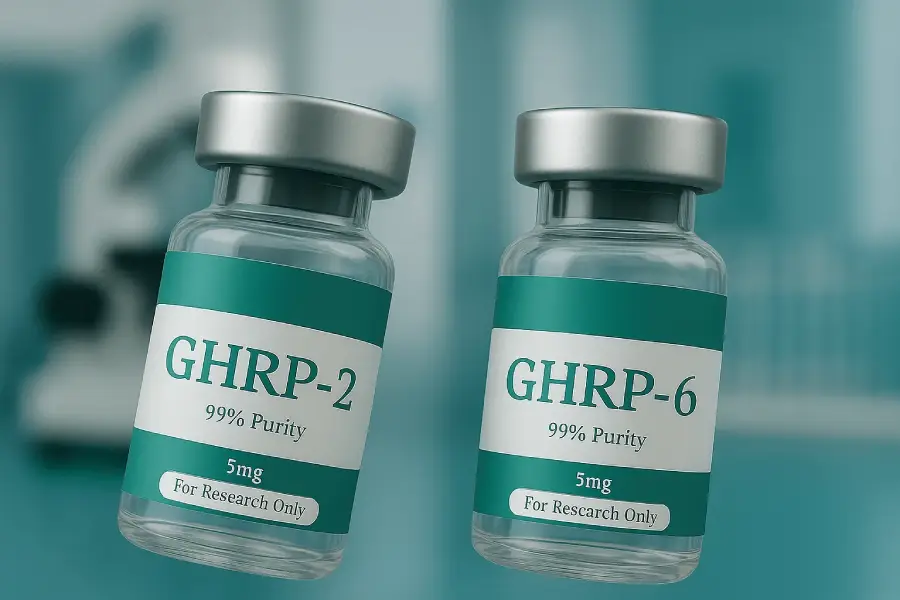
Both peptides operate through a common pathway, targeting a specific receptor in the hypothalamus and pituitary gland. However, the nuances of their interaction with this receptor and secondary effects can lead to distinct outcomes.
The Ghrelin Receptor: The Primary Target
The primary mechanism of action for both GHRP-2 and GHRP-6 involves binding to the growth hormone secretagogue receptor (GHSR), also commonly known as the ghrelin receptor. Ghrelin is an endogenous hormone produced primarily in the stomach that plays a crucial role in regulating appetite and also stimulates growth hormone release. By mimicking ghrelin’s action at this receptor, these synthetic peptides essentially trick the body into believing it needs to release more growth hormone.
Intracellular Signaling Cascade: The Chain Reaction
Upon binding to the GHSR, a cascade of intracellular events is initiated. This typically involves the activation of Gq protein, which in turn activates phospholipase C. This enzyme then catalyzes the production of inositol trisphosphate (IP3) and diacylglycerol (DAG). IP3 leads to the release of intracellular calcium ions, which are essential for triggering the release of growth hormone from the somatotroph cells in the anterior pituitary. DAG activates protein kinase C, further amplifying the signaling pathway. While this basic pathway is shared, subtle differences in binding affinity or the efficacy of activation at the receptor can influence the overall magnitude and duration of growth hormone release.
Potential Off-Target Effects: More Than Just Growth Hormone
While their primary purpose is GH release, it’s important to consider that receptors often have multiple ligands and can be found in various tissues. GHSR, for instance, is found not only in the hypothalamus and pituitary but also in the gastrointestinal tract, heart, and brain. This means that besides stimulating GH release, these peptides might elicit other physiological responses. Some research suggests that GHRP-6, in particular, might have a more pronounced effect on appetite stimulation compared to GHRP-2, likely due to its closer structural similarity to ghrelin itself.
Physiological Effects: What You Might Expect to Observe
The ultimate goal of using these peptides is generally to elicit specific physiological responses, primarily related to growth hormone levels. However, how each peptide achieves this, and the accompanying observable effects, can differ.
Growth Hormone Pulses: The Primary Outcome
The most anticipated effect of both GHRP-2 and GHRP-6 is an increase in the pulsatile release of growth hormone. This essentially means causing the pituitary gland to secrete larger amounts of GH in spurts. This is distinct from a constant elevation, as the body naturally releases GH in pulses, typically during sleep and in response to certain stimuli. Both peptides aim to amplify these natural pulses. The intensity and frequency of these amplified pulses can vary between GHRP-2 and GHRP-6, influencing the overall increase in circulating growth hormone.
Effects on Body Composition: Muscle and Fat
Elevated growth hormone levels, when sustained and in conjunction with proper training and nutrition, are often associated with potential benefits in body composition. This can manifest as increased muscle protein synthesis, which could theoretically lead to enhanced muscle growth, and lipolysis, the breakdown of fat. The extent to which GHRP-2 and GHRP-6 contribute to these changes is a subject of ongoing discussion and research. Some individuals report that GHRP-6 might have a more noticeable effect on appetite, which could indirectly influence muscle gain due to increased caloric intake. Conversely, others suggest GHRP-2 might be more direct in its lean mass promoting effects.
Impact on Appetite and Hunger: A Notable Distinction
One of the most frequently cited differences between GHRP-2 and GHRP-6 is their impact on appetite. GHRP-6 is widely recognized for its potent stimulatory effect on hunger. This is thought to be a direct result of its interaction with ghrelin receptors in the brain, which are heavily involved in appetite regulation. This increased hunger can be a desirable effect for individuals aiming to increase their caloric intake for muscle growth, but it can also be a challenge for those looking to manage their appetite or reduce body fat. GHRP-2, while it can also influence appetite, is generally considered to have a less pronounced effect compared to GHRP-6. This makes it a potentially more appealing option for individuals who want to avoid significant hunger increases.
Sleep Quality and Recovery: Indirect Influences
Growth hormone plays a role in cellular repair and regeneration, which are critical processes during sleep. As such, improvements in sleep quality and enhanced recovery from physical exertion are often anecdotally reported benefits associated with increased growth hormone levels from pulsed secretagogues. It’s difficult to definitively attribute these effects solely to either GHRP-2 or GHRP-6, as they are likely a consequence of the overall increase in growth hormone. However, individual responses can vary, and some may find one peptide more conducive to improved sleep than the other.
GHRP-2 vs. GHRP-6 Dosage and Administration: Practical Considerations
Understanding how to use these peptides effectively and safely involves grasping crucial details about their delivery and recommended protocols.
Subcutaneous Injection: The Standard Method
The most common and generally accepted method of administration for both GHRP-2 and GHRP-6 is via subcutaneous injection. This involves injecting the peptide solution just beneath the skin, typically in areas like the abdomen, thigh, or upper arm. This method allows for relatively rapid absorption into the bloodstream, bypassing the digestive system where peptides would otherwise be broken down and rendered ineffective. You’ll need to carefully reconstitute lyophilized (freeze-dried) peptide powder with bacteriostatic water before injection.
Reconstitution and Storage: Maintaining Potency
Proper reconstitution and storage are paramount to maintaining the efficacy and shelf-life of these peptides. After reconstituting, you should store the solution in a cool, dark place, typically the refrigerator. Avoid repeated freeze-thawing cycles, as this can degrade the peptide. The duration of stability after reconstitution can vary, so it’s important to follow any manufacturer guidelines or consult reliable resources.
Typical Dosing Protocols: What to Expect
Dosing protocols for GHRP-2 and GHRP-6 can vary significantly based on individual goals, experience, and tolerance. However, common protocols often involve daily injections, with frequencies ranging from once to multiple times per day. Doses are typically measured in micrograms (mcg). For GHRP-2, common daily doses might range from 100 mcg to 600 mcg, often split into multiple administrations. GHRP-6 might see similar daily dosage ranges, though some protocols might favor slightly higher doses due to its perceived anabolic potential and appetite effects. It is crucial to emphasize that these are general ranges, and individual responses dictate optimal dosing.
Cycling and Stacking: Advanced Considerations
Experienced users might consider cycling these peptides, meaning using them for specific periods followed by breaks. This is often done to mitigate potential desensitization of the growth hormone secretagogue receptors over time. Additionally, stacking GHRP-2 or GHRP-6 with other compounds, such as growth hormone releasing hormone (GHRH) analogs like CJC-1295 or Mod GRF 1-29, is a common practice. The synergistic effect of stimulating both GHRH and GHRP pathways can lead to a more pronounced release of growth hormone. When considering stacking, you must thoroughly research potential interactions and cycles to ensure safety and efficacy.
In the ongoing discussion about the effectiveness of GHRP-2 versus GHRP-6, it’s essential to consider various factors that influence their performance and applications. For those looking to deepen their understanding of peptide terminology and related concepts, a valuable resource can be found in an article that explores the nuances of research peptides. You can read more about this topic in the article available at this link. This information can provide additional context for anyone interested in the comparative aspects of these growth hormone-releasing peptides.
Potential Side Effects and Risks: What to Be Aware Of
| Metrics | GHRP-2 | GHRP-6 |
|---|---|---|
| Effectiveness in increasing growth hormone levels | High | High |
| Stimulation of appetite | Moderate | High |
| Side effects | Less likely to cause water retention and bloating | More likely to cause water retention and bloating |
| Cost | More expensive | Less expensive |
While the intended effects are often the focus, it’s equally important to understand the potential downsides and risks associated with using GHRP-2 and GHRP-6.
Water Retention and Edema: A Common Concern
One of the most frequently reported side effects, particularly with GHRP-6, is a mild to moderate degree of water retention or edema. This can manifest as a feeling of puffiness, particularly in the extremities, and a slight increase in body weight due to fluid accumulation. This is likely related to the influence of growth hormone on sodium and water balance. While generally not severe, it can be an undesired effect for some individuals seeking definition.
Temporary Increases in Blood Pressure and Heart Rate: Observe Closely
Some users report experiencing temporary increases in blood pressure and heart rate after administration, especially with GHRP-6. This is likely tied to the broader effects of ghrelin receptor activation, which can influence the cardiovascular system. It is crucial to monitor your blood pressure and heart rate closely if you experience these effects and discontinue use if they become concerning or persistent. Individuals with pre-existing cardiovascular conditions should exercise extreme caution.
Mood Changes and Lethargy: Subjective Experiences
While not universally experienced, some individuals report subjective changes in mood, including temporary periods of lethargy or fatigue. This can be influenced by a multitude of factors, including the endocrine system’s complex interactions. It’s important to note that individual responses to hormonal fluctuations are highly variable. If you experience significant or persistent mood disturbances, it is advisable to consult with a healthcare professional.
Risks Associated with Unregulated Sources: The Ultimate Caution
Perhaps the most significant risk associated with GHRP-2 and GHRP-6, and indeed many performance-enhancing peptides, stems from their unregulated status in many regions. This means that products purchased from the open market may not contain the advertised active ingredient, may be impure, or could contain harmful contaminants. You are taking a gamble on product quality and safety when sourcing from non-pharmaceutical vendors. Thorough research into reputable suppliers and understanding the importance of third-party testing is essential to mitigate this inherent risk. Relying solely on anecdotal claims without verifying product integrity is ill-advised.
FAQs
1. What are GHRP-2 and GHRP-6?
GHRP-2 and GHRP-6 are synthetic peptides that stimulate the release of growth hormone in the body. They are commonly used in research and clinical settings to study growth hormone secretion and its effects on the body.
2. How do GHRP-2 and GHRP-6 differ?
GHRP-2 and GHRP-6 differ in their chemical structure and potency. GHRP-2 is known for its ability to stimulate a more pronounced release of growth hormone compared to GHRP-6. Additionally, GHRP-2 has been shown to have a more potent effect on appetite stimulation.
3. What are the potential benefits of GHRP-2 and GHRP-6?
Both GHRP-2 and GHRP-6 have been studied for their potential benefits in promoting muscle growth, reducing body fat, improving recovery from injuries, and enhancing overall well-being. They are also being researched for their potential anti-aging effects.
4. Are there any side effects associated with GHRP-2 and GHRP-6?
Common side effects of GHRP-2 and GHRP-6 may include increased hunger, water retention, and potential effects on insulin sensitivity. It is important to use these peptides under the guidance of a qualified healthcare professional.
5. How are GHRP-2 and GHRP-6 typically administered?
GHRP-2 and GHRP-6 are typically administered via subcutaneous injection. The dosage and frequency of administration may vary depending on the specific research or clinical goals. It is important to follow proper dosing guidelines and consult with a healthcare professional.