Description
NAD+ 500mg Research Overview
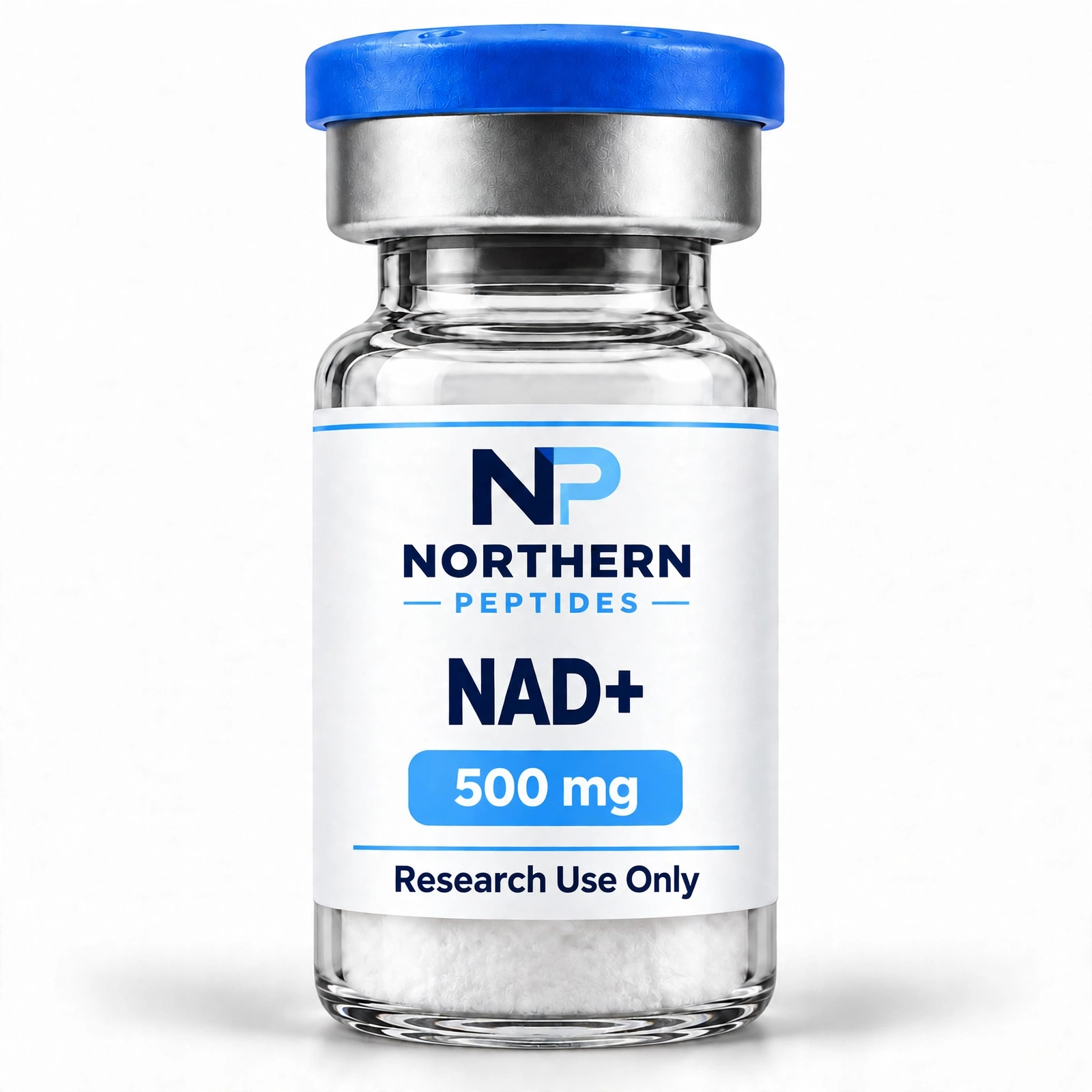
NAD+ 500mg is supplied as 500mg of lyophilized research material in a clearly labelled Northern Peptides vial. This catalog entry is intended to support accurate product identification and controlled laboratory planning. If you’re looking to buy NAD+ online, NAD+ 500mg is a coenzyme researched for its role in cellular energy metabolism and redox reactions. Supplied as a lyophilized research vial with straightforward handling. The information below describes research context and documentation practices only; it is not a treatment guide or a statement of personal benefit.
Research Context and Analytical Questions
A well-designed NAD+ 500mg project begins with a narrow scientific question and a written protocol. Supplied as a 500mg lyophilized vial, NAD+ (nicotinamide adenine dinucleotide) is studied in research models exploring aging biology, metabolic function, and sirtuin-related pathways. Every conclusion should remain limited to what the selected model directly measures.
Experimental variables can include concentration, observation interval, temperature, buffer composition, sample preparation and analytical platform. Qualified personnel should define these variables before data collection, identify suitable positive and negative controls and document acceptance criteria. Repeated observations and calibrated equipment help distinguish a meaningful result from handling variation or instrument noise.
NAD+ 500mg Product Specifications
- Catalog name: NAD+ 500mg
- Labelled quantity: 500mg
- Format: lyophilized research material
- Packaging: sealed, clearly labelled research vial
- Intended environment: controlled laboratory research
Confirm the product name, labelled quantity, vial condition and identifying information when the package is received. Assign a traceable sample number and retain the purchase and receiving record with the project file. A vial with damaged packaging, an unreadable label or uncertain storage history should be isolated and reviewed under the laboratory’s standard operating procedure before use.
Reproducible Study Planning
Before beginning an NAD+ 500mg assay, record the hypothesis, model, control materials, concentration range, analytical endpoints and observation schedule. Note instrument identifiers, calibration status, preparation times and environmental conditions. If the protocol changes, document the reason and describe how the change may affect comparison with earlier observations.
Keep raw measurements together with calculations, images, instrument exports and interpretation notes. Use an analysis method selected before reviewing the final outcome whenever possible. Reproducible records allow another qualified researcher to follow the experimental sequence, evaluate limitations and distinguish measured results from hypotheses that require additional investigation.
Storage and Handling Considerations
Keep NAD+ 500mg securely closed and protected from unnecessary heat, moisture and direct light. Exact storage and preparation requirements depend on the validated laboratory method, so personnel should follow the product label, institutional procedures and protocol-specific requirements. Use clean technique, suitable personal protective equipment and properly maintained tools to reduce contamination and avoid unintended variation.
Lyophilized presentation removes water before packaging and is commonly used for laboratory research materials. Researchers remain responsible for selecting compatible analytical procedures and documenting each preparation step. Northern Peptides does not provide individualized dosing, treatment, diagnostic or veterinary instructions.
Frequently Asked Questions
What is NAD+?
NAD+ (nicotinamide adenine dinucleotide) is a coenzyme present in living cells and involved in redox reactions. This catalog entry supplies it as a lyophilized research material for controlled laboratory study.
What is NAD+ researched for?
Researchers study NAD+ in models related to cellular energy metabolism, aging biology and sirtuin-related pathways. All investigation is limited to controlled laboratory research; this material is not for human use.
How is NAD+ 500mg supplied?
NAD+ 500mg is supplied as a sealed, clearly labelled lyophilized research vial. Bacteriostatic water for laboratory reconstitution is available separately in the Northern Peptides research catalog.
How should NAD+ 500mg be stored?
Keep the vial securely closed and protected from unnecessary heat, moisture and direct light. Follow the product label and institutional procedures for exact storage and handling requirements.
Catalog Navigation and Scientific References
Review related materials through the Northern Peptides research catalog and consult PubMed literature indexed for NAD+ (nicotinamide adenine dinucleotide) when developing scientific background. External literature is linked for terminology and research context; it does not alter the product’s research-only status. Evaluate publications critically and use current, validated methods appropriate to the selected experimental system.
Related research materials in this catalog: PT-141 10mg, DSIP 2mg, Cagrilintide 10mg.
Ordering and Shipping Information
Bacteriostatic water for laboratory reconstitution is available separately in the Northern Peptides research catalog. Northern Peptides ships research materials to Canadian addresses only.
NAD+ 500mg Documentation Checklist
Before closing the project record, verify that the vial identity, receipt date, storage history, preparation details, control results and instrument settings are complete. Preserve raw data and note any deviation, exclusion or unexpected observation. Consistent documentation reduces labelling errors, supports transparent reporting and makes later comparison of NAD+ 500mg experiments more efficient.
Research-Use Notice
For laboratory research only. Not for human consumption. Not for medical, veterinary or diagnostic use. This page provides product-identification and research-catalog information rather than medical advice. All handling must follow applicable institutional requirements, approved protocols and laboratory safety procedures.
Reviews
There are no reviews yet.