

What makes post-workout recovery efficient for athletes and fitness enthusiasts often comes down to more than just rest or nutrition. The science behind recovery peptides reveals they act as specialized messengers within the body, orchestrating cellular responses that drive tissue repair and regeneration. Understanding the targeted molecular actions of recovery peptides can empower coaches and athletes to make informed choices about strategies that support natural healing while potentially enhancing overall athletic performance.
Table of Contents
- What Are Recovery Peptides? Core Concepts
- Classification and Molecular Variations
- How Recovery Peptides Affect Healing
- Legal Status and Regulatory Framework
- Risks, Side Effects, and Common Missteps
Key Takeaways
| Point | Details |
|---|---|
| Recovery Peptides as Biological Messengers | Recovery peptides accelerate healing by targeting specific biochemical pathways and facilitating cellular communication. |
| Diverse Production Methods | Recovery peptides can be produced through various techniques such as enzymatic hydrolysis and microbial fermentation, each serving different applications. |
| Regulatory Challenges | Navigating the legal landscape for recovery peptides requires understanding of varied regulations and compliance with research and ethical standards. |
| Potential Risks and Usage Guidelines | Users must be cautious of side effects and consult healthcare professionals to ensure safe and effective use of recovery peptides. |
What Are Recovery Peptides? Core Concepts
Recovery peptides represent specialized molecular compounds designed to support and accelerate biological repair processes within the human body. These microscopic protein fragments play critical roles in signaling and communication between cellular systems, targeting specific biochemical pathways responsible for tissue regeneration and healing.
At their core, recovery peptides function as targeted biological messengers that interact directly with cellular receptors. Influence cellular repair mechanisms by triggering precise molecular cascades that stimulate healing and regenerative responses. Their unique structural composition allows them to communicate highly specific instructions to different tissue types, enabling more efficient recovery strategies.
Key characteristics of recovery peptides include:
- Extremely precise targeting of specific biological processes
- Ability to modulate inflammation and tissue repair mechanisms
- Minimal systemic side effects compared to traditional pharmaceutical interventions
- Rapid molecular signaling capabilities
- Natural compatibility with existing biochemical communication networks
Recovery peptides represent a sophisticated approach to biological optimization, functioning as precision molecular tools that enhance the body’s intrinsic healing capabilities.
Researchers investigate these peptides not as replacement therapies, but as supportive molecular strategies that complement the body’s natural regenerative processes. By understanding how these compounds interact with cellular systems, scientists can develop more targeted and efficient recovery protocols for various physiological challenges.
Pro tip: Consult with medical professionals experienced in peptide research to understand personalized recovery strategies tailored to your specific physiological needs.
Classification and Molecular Variations
Bioactive peptides represent a complex and diverse family of molecular compounds with intricate structural variations that significantly impact their functional capabilities. Bioactive peptides range from 2 to 20 amino acid residues, demonstrating remarkable molecular diversity that enables precise biochemical interactions across different physiological systems.
The classification of recovery peptides involves multiple sophisticated dimensions, each influencing their potential therapeutic applications. Researchers categorize these molecular compounds based on several critical parameters:
- Structural length and amino acid composition
- Hydrophobicity and electrical charge
- Specific biochemical interaction mechanisms
- Cellular receptor binding capabilities
- Metabolic stability and degradation rates
Production methods for these peptides are equally nuanced, with primary techniques including:
Here’s a summary of major recovery peptide production methods for quick reference:
| Method | Source Material | Typical Use Cases |
|---|---|---|
| Enzymatic hydrolysis | Animal/plant proteins | Nutrition supplements, functional foods |
| Microbial fermentation | Bacteria cultures | Lab-scale peptide discovery, research |
| Synthetic chemical synthesis | Pure chemicals | Clinical trials, pharmaceuticals |
| Recombinant engineering | Genetically modified cells | Advanced therapeutics, bioengineering |
| Tissue extraction | Specific animal tissues | Experimental therapies, research only |
- Enzymatic hydrolysis from protein sources
- Microbial fermentation processes
- Synthetic chemical synthesis
- Recombinant protein engineering
- Extraction from biological tissue matrices
Molecular variations in peptide structures determine their precise biological functionality, making them powerful tools for targeted cellular communication.
Understanding these molecular variations allows researchers to design increasingly sophisticated recovery interventions that can address specific physiological challenges with unprecedented precision. The intricate interplay between peptide structure and biological function continues to reveal new potential therapeutic strategies.

Pro tip: Consult interdisciplinary research publications to stay updated on emerging peptide classification methodologies and their potential recovery applications.
How Recovery Peptides Affect Healing
Recovery peptides represent a sophisticated molecular approach to biological repair, directly influencing multiple healing mechanisms through targeted cellular interactions. These molecular compounds engage complex biological pathways that orchestrate comprehensive tissue regeneration processes, transforming how researchers understand recovery and healing at the cellular level.
The healing mechanisms triggered by recovery peptides are intricate and multifaceted, involving several critical biological stages:
- Cellular proliferation stimulation
- Strategic cell migration activation
- Inflammation response modulation
- Angiogenesis (new blood vessel formation)
- Extracellular matrix remodeling
- Wound closure acceleration
These peptides demonstrate remarkable versatility across different tissue types, engaging specialized healing strategies for:
- Muscle tissue recovery
- Connective tissue repair
- Skin wound healing
- Bone regeneration processes
- Neurological tissue restoration
Recovery peptides function as precision molecular conductors, orchestrating complex healing symphonies within biological systems.
Research continues to unveil the nuanced interactions between recovery peptides and biological repair mechanisms. Their potential extends beyond traditional healing approaches, offering targeted interventions that can potentially reduce recovery times and enhance tissue regeneration efficiency.
Pro tip: Consult with medical research professionals to understand the most recent advances in peptide-based healing strategies tailored to specific physiological needs.
Legal Status and Regulatory Framework
Recovery peptides exist in a complex regulatory landscape that varies significantly across different jurisdictions, requiring careful navigation by researchers, medical professionals, and potential users. The legal status of these molecular compounds remains nuanced, with distinct classifications depending on their intended use, research context, and potential therapeutic applications.
The regulatory framework for recovery peptides typically involves multiple governmental and scientific oversight mechanisms:
- Research-specific regulatory approvals
- Clinical trial authorization processes
- Pharmaceutical development guidelines
- Controlled substance classification protocols
- Ethical research conduct standards
Key regulatory considerations include:
- Institutional review board (IRB) approvals
- Compliance with scientific research protocols
- Adherence to human subject protection regulations
- Documentation and reporting requirements
- Strict manufacturing quality control standards
Navigating the regulatory landscape requires a comprehensive understanding of scientific, legal, and ethical boundaries surrounding peptide research and development.
Researchers must remain vigilant about evolving legal frameworks, as regulatory perspectives on recovery peptides continue to develop. How to Use Research Peptides responsibly demands ongoing education and compliance with current scientific and legal standards.
Pro tip: Consistently consult current regulatory guidelines and seek professional legal counsel to ensure full compliance when working with research peptides.
Risks, Side Effects, and Common Missteps
Recovery peptides represent a sophisticated molecular intervention with potential therapeutic benefits, but they also carry significant risks that demand careful consideration. Unregulated peptide injections pose multiple health challenges, requiring users to approach their use with extensive caution and professional medical guidance.
Potential side effects and risks associated with recovery peptides include:
- Injection site pain and inflammation
- Unexpected immune system responses
- Potential hormonal imbalances
- Gastrointestinal disruptions
- Headaches and fatigue
- Potential allergic reactions
- Unexpected metabolic changes
Common missteps that dramatically increase potential risks involve:
- Purchasing from unverified sources
- Self-administering without professional supervision
- Ignoring individual medical contraindications
- Failing to undergo comprehensive medical screening
- Disregarding recommended dosage protocols
Understanding the nuanced risks of recovery peptides requires a comprehensive, scientific approach that prioritizes individual health and safety.
Researchers and potential users must recognize that the absence of comprehensive FDA review means long-term safety profiles remain incompletely understood. Comprehensive medical consultation, rigorous source verification, and ongoing health monitoring are critical components of responsible peptide research and usage.
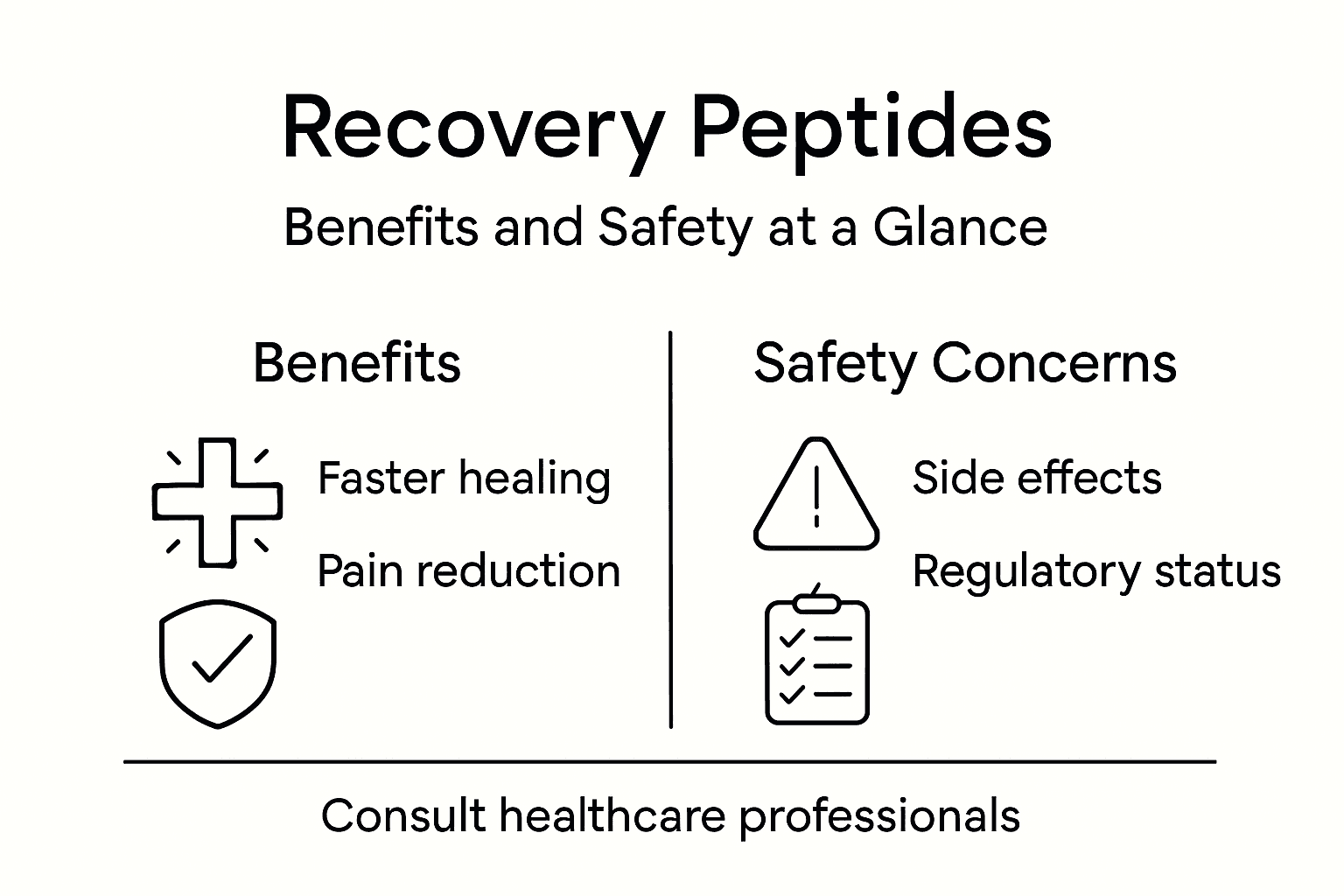
Consult this comparison for understanding risks versus benefits of recovery peptide use:
| Aspect | Therapeutic Potential | Associated Risks |
|---|---|---|
| Healing Efficiency | Faster tissue regeneration | Possible immune reactions |
| Specificity | Targeted repair mechanisms | Risk of off-target effects |
| Side Effects | Fewer than some drugs | Pain, hormonal shifts |
| Long-term Safety | Still under study | Unknown profiles |
| Regulatory Review | Limited approval | Legal complexities |
Pro tip: Always consult healthcare professionals and obtain thorough medical assessments before considering any peptide-based interventions.
Discover Safe and Effective Recovery Peptides for Your Healing Journey
Understanding the complex science and safety considerations behind recovery peptides is crucial for anyone looking to enhance tissue repair and regeneration. This article highlights common challenges such as ensuring molecular precision, navigating legal regulations, and avoiding risks from unverified sources. If you want to explore trusted research peptides that support recovery while prioritizing your health and safety, we offer carefully sourced compounds backed by scientific expertise.

Take control of your recovery with confidence today. Visit Northern Peptides to access a wide range of research peptides and educational resources designed to empower your healing process. Learn more about peptide classifications and safe usage in our Uncategorized – Northern peptides section. For comprehensive guidance on responsible research peptide use, start here and make an informed choice towards better outcomes.
Frequently Asked Questions
What are recovery peptides and how do they work?
Recovery peptides are specialized molecular compounds that support and enhance biological repair processes in the body. They function as targeted biological messengers, triggering cellular repair mechanisms and influencing inflammation and tissue regeneration.
What are the key characteristics of recovery peptides?
Key characteristics of recovery peptides include precise targeting of biological processes, modulation of inflammation, minimal systemic side effects, rapid signaling capabilities, and natural compatibility with existing biochemical communication networks.
What are the risks and side effects associated with recovery peptides?
Potential risks and side effects of recovery peptides include injection site pain, unexpected immune responses, hormonal imbalances, digestive disruptions, and the possibility of allergic reactions. Proper medical supervision is essential to mitigate these risks.
How are recovery peptides classified and produced?
Recovery peptides are classified based on structural length, amino acid composition, biochemical interaction mechanisms, and metabolic stability. They can be produced through methods such as enzymatic hydrolysis, microbial fermentation, synthetic chemical synthesis, recombinant engineering, and tissue extraction.