

Seeking the most effective tools for swift recovery and sustained vitality presents a real challenge for modern athletes and health professionals. As the pursuit of peak performance intensifies, the science behind synthetic peptides is gaining international attention for its ability to offer precise, customizable biological effects. This guide dispels common misconceptions and highlights how these laboratory-engineered molecules are transforming recovery strategies for dedicated fitness communities worldwide.
Table of Contents
- What Are Synthetic Peptides And Misconceptions
- Types Of Synthetic Peptides For Fitness And Health
- How Synthetic Peptides Promote Recovery And Vitality
- Legal Status And Safety In Canada
- Risks, Costs, And Comparing Alternatives
Key Takeaways
| Point | Details |
|---|---|
| Synthetic Peptides Offer Customisation | These engineered amino acids provide precise targeting and enhanced effectiveness in therapeutic applications compared to natural peptides. |
| Diverse Categories for Health and Fitness | Synthetic peptides include hormone mimetics, regenerative peptides, and more, each tailored to specific performance and recovery needs. |
| Regulatory Compliance is Essential | In Canada, synthetic peptides are strictly regulated for research purposes and must adhere to Health Canada guidelines to ensure safety and integrity. |
| Cost-Benefit Analysis is Crucial | Evaluating the long-term therapeutic value of synthetic peptides is important, as their precision and reduced side effects may outweigh initial development costs. |
What Are Synthetic Peptides and Misconceptions
Synthetic peptides represent a groundbreaking frontier in medical science, offering precise molecular solutions for research and therapeutic applications. These engineered amino acid chains are carefully designed to mimic natural peptide properties with remarkable precision and potential.
At their core, synthetic peptides are laboratory-created short chains of amino acids meticulously constructed to replicate or enhance the functions of naturally occurring peptides. Unlike traditional drug compounds, these molecules offer unprecedented customization and targeting capabilities. Scientists produce them through advanced chemical synthesis techniques, typically using solid-phase methods that ensure high purity and consistency.
Common misconceptions about synthetic peptides often stem from limited understanding of their complex development process. Many people mistakenly believe these molecules are less effective or more challenging to produce than natural peptides. However, modern research demonstrates their significant advantages:
- Precise molecular engineering
- Enhanced biocompatibility
- Improved stability compared to natural peptides
- Potential for targeted therapeutic interventions
- Scalable production methods
Researchers are continuously addressing traditional challenges like bioavailability and production costs through innovative chemical redesign strategies. By modifying molecular structures, scientists can optimize synthetic peptides to reduce toxicity, improve pharmacokinetics, and expand their potential applications across multiple medical disciplines.
Pro tip: Always consult scientific literature and expert researchers when exploring the potential of synthetic peptides for specific research or therapeutic goals.
Types of Synthetic Peptides for Fitness and Health
Synthetic peptides have emerged as a revolutionary approach in fitness and health, offering targeted solutions for athletes and wellness enthusiasts. Peptide types range widely across different physiological domains, each designed to address specific performance and recovery needs.
The primary categories of synthetic peptides in fitness and health include:
- Hormone Mimetic Peptides: Designed to stimulate natural hormone production
- Regenerative Peptides: Support tissue repair and recovery
- Metabolic Modulators: Enhance metabolic processes and energy utilization
- Immunomodulatory Peptides: Support immune system function
- Growth Factor Peptides: Promote muscle development and cellular regeneration
Hormone mimetic peptides, such as growth hormone releasing peptides, play a critical role in muscle development and metabolic optimization. These molecules are engineered to trigger specific physiological responses, helping athletes enhance performance and accelerate recovery. Unlike traditional supplements, these peptides offer precision targeting and minimal side effects.
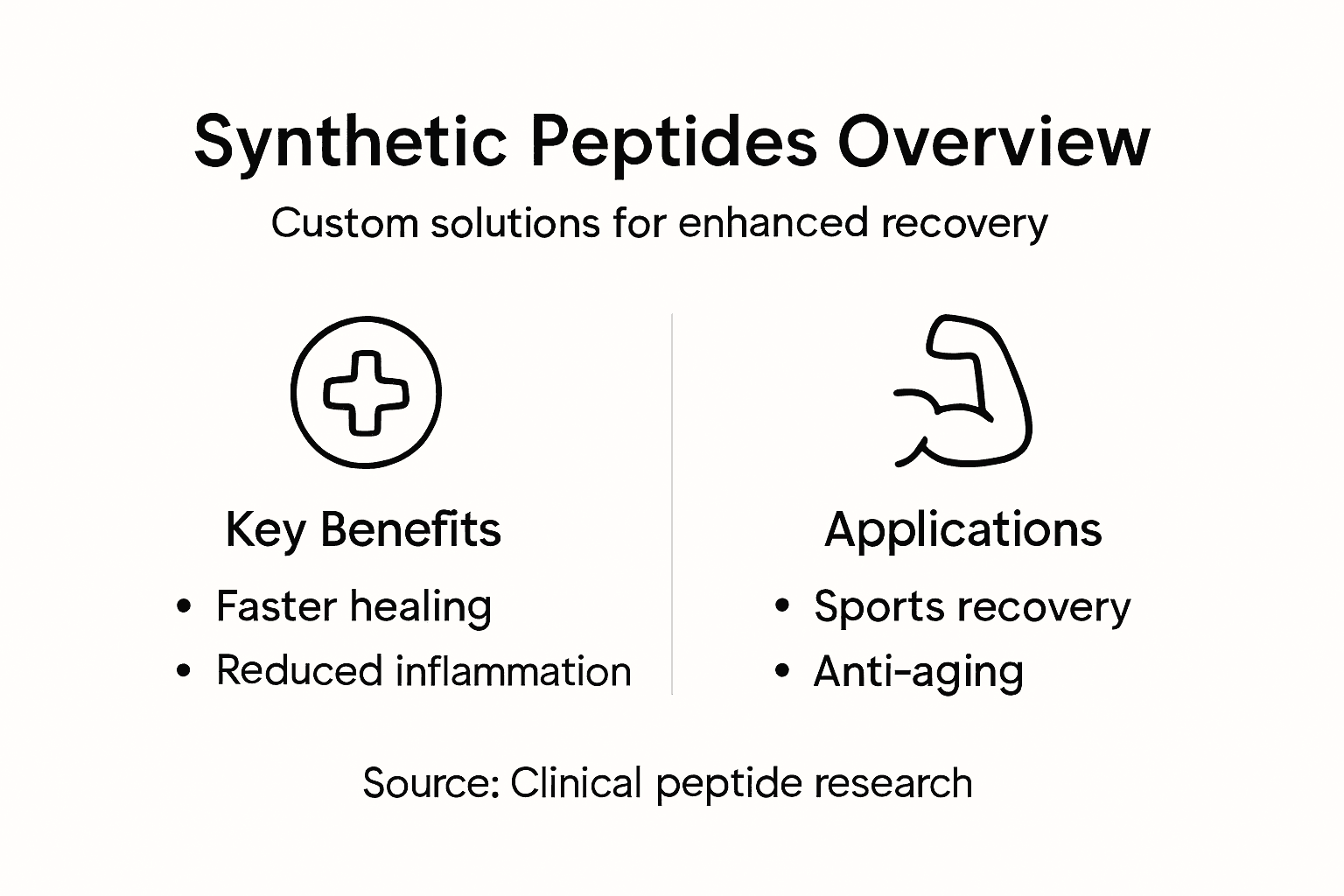
Regenerative peptides represent another significant breakthrough, supporting tissue repair mechanisms with remarkable efficiency. By promoting cellular healing and reducing inflammation, these peptides help athletes recover faster from intense training and potential injuries.
Synthetic peptides provide a scientifically advanced approach to optimizing human performance and wellness.
Researchers continue developing increasingly sophisticated peptide structures that can be customized for individual physiological requirements, expanding the potential applications across fitness, anti-aging, and therapeutic domains.
Here’s a quick overview of major synthetic peptide categories and their typical uses in fitness and health:
| Peptide Category | Primary Role | Common Application |
|---|---|---|
| Hormone Mimetic Peptides | Stimulate hormone release | Muscle growth, metabolism |
| Regenerative Peptides | Support cell and tissue repair | Faster recovery, healing |
| Metabolic Modulators | Boost energy and metabolism | Fat loss, energy balance |
| Immunomodulatory Peptides | Enhance immune system response | Reduced illness, defence |
| Growth Factor Peptides | Promote cellular development | Anti-aging, performance |
Pro tip: Consult with healthcare professionals specializing in peptide therapies to develop a personalized approach tailored to your specific fitness and health goals.
How Synthetic Peptides Promote Recovery and Vitality
Synthetic peptides represent a cutting-edge approach to enhancing physical recovery and overall vitality, offering targeted interventions at the cellular level. Peptide biomaterials create precise healing environments that support comprehensive physiological restoration.
The primary mechanisms of recovery and vitality enhancement through synthetic peptides include:
- Accelerating muscle tissue healing
- Reducing systemic inflammation
- Stimulating collagen production
- Improving cellular regeneration
- Enhancing metabolic efficiency
- Supporting immune system function
These engineered molecular compounds work by mimicking natural cellular signaling processes, triggering specific biological responses that promote rapid healing and performance optimization. By precisely targeting inflammation pathways and cellular repair mechanisms, synthetic peptides can significantly reduce recovery time and enhance overall physiological resilience.
Tissue regeneration strategies demonstrate remarkable potential in creating microenvironments that support cellular migration and proliferation. Synthetic peptides can be engineered into advanced biomaterials like hydrogels and scaffolds, releasing bioactive signals that promote anti-inflammatory and regenerative processes.
Synthetic peptides represent a sophisticated molecular approach to human performance enhancement.
Researchers continue to develop increasingly complex peptide structures that can be customized for individual physiological requirements, expanding potential applications across fitness, anti-aging, and therapeutic domains.

Pro tip: Consult with sports medicine professionals to develop a personalized peptide therapy approach tailored to your specific recovery and performance goals.
Legal Status and Safety in Canada
Synthetic peptide regulations in Canada represent a complex legal landscape with strict guidelines governing their use, possession, and distribution. The Canadian regulatory framework maintains rigorous standards to ensure scientific integrity and public safety.
Key legal considerations for synthetic peptides in Canada include:
- Strictly limited to scientific research purposes
- Prohibited for human consumption or medical treatment
- Must be sourced from authorized suppliers
- Require comprehensive laboratory testing certifications
- Mandatory research-use-only labeling
- Subject to Health Canada oversight
The legal framework prohibits marketing synthetic peptides with direct health or fitness claims. Researchers and institutions must adhere to stringent protocols when handling these molecular compounds. This means peptides can only be acquired, studied, and maintained within controlled research environments, with explicit documentation of their intended scientific purpose.
Compliance requires meticulous documentation and transparent communication with regulatory bodies. Researchers must ensure that all synthetic peptide materials are:
- Procured from licensed scientific suppliers
- Stored in secure laboratory conditions
- Used exclusively for approved research objectives
- Tracked with comprehensive chain-of-custody records
Legal compliance is not optional – it is a fundamental requirement for scientific research integrity.
Navigating the Canadian regulatory landscape demands a comprehensive understanding of legal restrictions and ethical research practices. Institutions and individual researchers must remain vigilant about evolving regulations and maintain the highest standards of scientific conduct.
Pro tip: Always consult with institutional legal counsel and verify current Health Canada guidelines before initiating any synthetic peptide research project.
Risks, Costs, and Comparing Alternatives
Synthetic peptide research involves complex risk assessments that extend beyond traditional therapeutic interventions. Understanding the potential immunogenicity and financial implications is crucial for researchers and potential users.
Key risk factors in synthetic peptide development include:
- Potential immune system reactions
- Variability in peptide purity
- Manufacturing complexity
- Short molecular half-lives
- Potential unintended epitope generation
- Variability in individual physiological responses
The economic landscape of peptide development is nuanced. Comparative drug development costs reveal that expenses are primarily driven by research and clinical trials rather than synthesis itself. This challenges the common perception of prohibitively expensive peptide therapeutics.
Alternative therapeutic approaches each present unique trade-offs. Traditional small molecule drugs might offer lower initial costs but frequently demonstrate less specificity compared to peptide interventions. Biologics provide another alternative, though they typically involve more complex manufacturing processes and higher production expenses.
The following table compares synthetic peptides with traditional small molecule drugs and biologics in terms of therapeutic characteristics:
| Aspect | Synthetic Peptides | Small Molecule Drugs | Biologics |
|---|---|---|---|
| Molecular Targeting | Highly specific | Moderately selective | Highly specific |
| Manufacturing Cost | Moderate | Lower | High |
| Potential Side Effects | Usually minimal | Variable | Variable |
| Customisation Ability | Easily tailored | Difficult to customise | Customisable but complex |
| Storage & Stability | Stable under right conditions | Usually stable | Sensitive to conditions |
Not all therapeutic approaches are created equal – precision matters more than price.
Researchers must conduct thorough cost-benefit analyses, considering factors beyond immediate financial investment. The specificity, potential efficacy, and reduced side effect profile of synthetic peptides can offset their seemingly higher development costs.
Pro tip: Conduct comprehensive comparative analyses that evaluate long-term therapeutic value, not just immediate development expenses.
Unlock the Power of Synthetic Peptides for Faster Recovery and Vitality
Are you ready to overcome the challenges of slow recovery and limited vitality? This article highlighted key pain points such as reducing systemic inflammation, accelerating muscle healing, and promoting cellular regeneration through precise molecular interventions. Synthetic peptides offer a transformative solution with enhanced biocompatibility and targeted therapeutic effects tailored to your needs.
Discover effective strategies and trusted resources for your research and wellness journey at Uncategorized – Northern Peptides where cutting-edge insights meet quality supplies.

Take control of your physical restoration today by exploring our extensive selection of research peptides, chemicals, and educational tools at Northern Peptides. Act now to access scientifically advanced solutions designed to transform recovery and elevate performance in compliance with rigorous standards.
Frequently Asked Questions
What are synthetic peptides?
Synthetic peptides are short chains of amino acids engineered in a laboratory to replicate or enhance the functions of naturally occurring peptides, offering precise targeting and customization for therapeutic and research applications.
How do synthetic peptides promote recovery and vitality?
Synthetic peptides support recovery by accelerating muscle tissue healing, reducing inflammation, stimulating collagen production, and improving cellular regeneration, all of which enhance overall physiological resilience and performance.
What are the potential risks associated with synthetic peptide use?
Potential risks include immune system reactions, variability in peptide purity, manufacturing complexity, short molecular half-lives, and individual physiological response variability, which must be carefully assessed before use.
How do synthetic peptides compare to traditional drugs and biologics?
Synthetic peptides offer high specificity and can be easily tailored for individual needs, while traditional small molecule drugs may be less specific and biologics involve more complex manufacturing, often at higher costs. The choice depends on the therapeutic requirements and desired targeting effectiveness.