
For many fitness specialists and advanced gym enthusiasts, understanding what separates a high-quality peptide from a risky product is more than just a technical detail. The reality is that purity is the backbone of effective and safe peptide use, shaping everything from performance gains to recovery speed. As outlined by the United States Pharmacopeial Convention, peptide purity means far more than just a number—it incorporates structure, identity, and controlled impurity levels, challenging some of the most common myths in today’s athletic community.
Table of Contents
- Defining Peptide Purity And Common Myths
- Peptide Purity Grades And Classifications
- How Peptide Purity Is Tested And Verified
- Impurity Risks For Health And Performance
- Supplier Claims, Certificates And Legal Concerns
Key Takeaways
| Point | Details |
|---|---|
| Understanding Peptide Purity | Peptide purity significantly affects the effectiveness and safety of peptide-based interventions, and involves identity, strength, and impurity profiles. |
| Analytical Techniques are Essential | Advanced analytical methods like NMR, mass spectrometry, and HPLC are crucial for accurate assessment of peptide quality and potential impurities. |
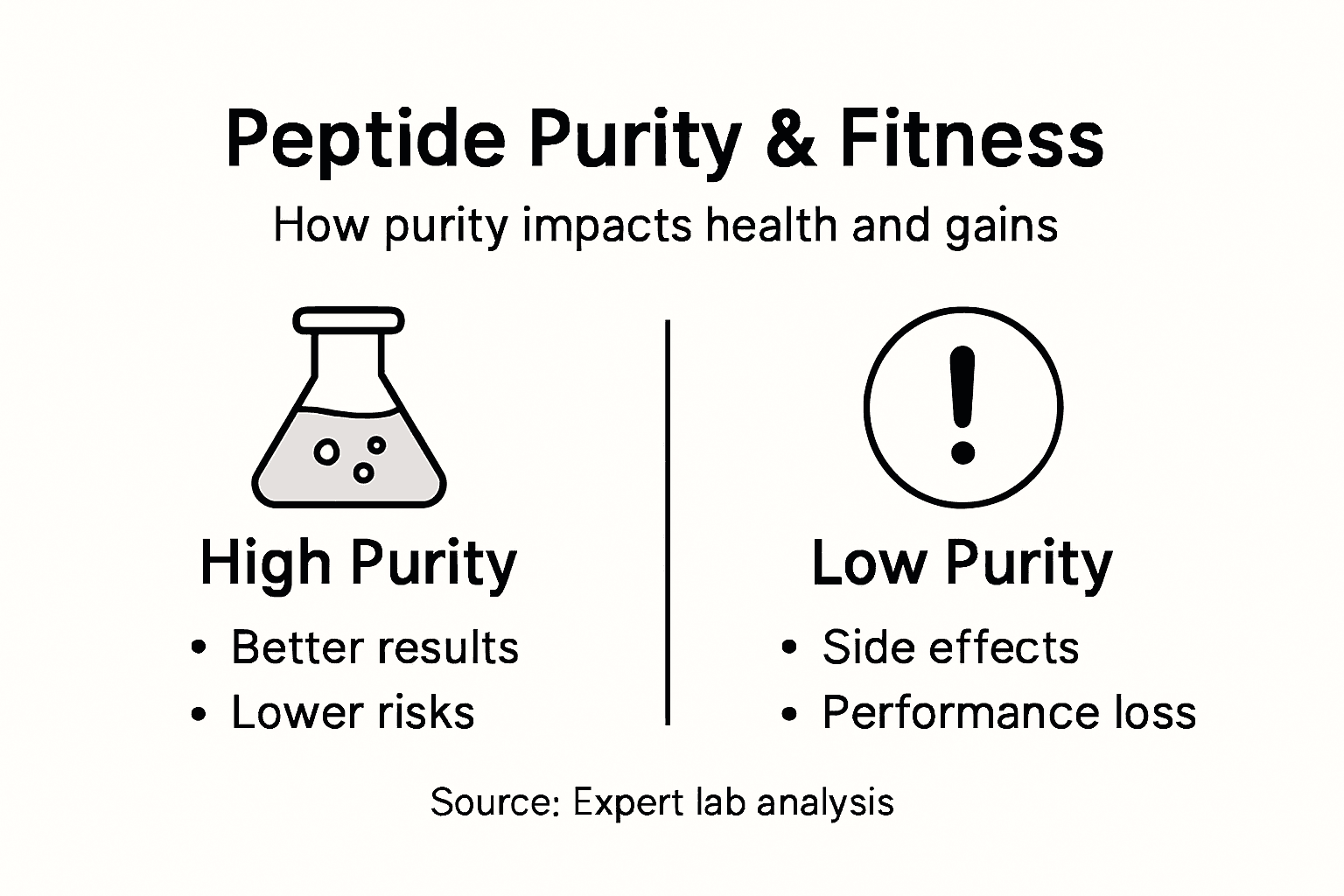
| Impurity Risks | Impurities in peptides can lead to adverse health effects and reduced athletic performance, making rigorous testing essential. |
| Scrutinise Supplier Claims | Evaluate supplier documentation critically, focusing on Certificates of Analysis and compliance with regulatory standards for legitimate peptide sourcing. |
Defining peptide purity and common myths
Understanding peptide purity is critical for fitness professionals and advanced gym enthusiasts seeking optimal performance and recovery strategies. Peptide quality isn’t just a technical specification—it’s a fundamental factor determining the effectiveness and safety of peptide-based interventions.
Peptide purity refers to the precise chemical composition and structural integrity of a peptide, which directly influences its biological activity. According to the United States Pharmacopeial Convention, purity encompasses several crucial dimensions:
- Identity: Confirming the exact amino acid sequence
- Strength: Quantifying the active peptide concentration
- Impurity Profile: Detecting and measuring potential contaminants
Common myths surrounding peptide purity can mislead even experienced researchers and athletes. Contrary to popular belief, not all peptides are chemically identical, and synthesis methods significantly impact their final quality. The FDA guidance highlights that high purity does not automatically guarantee absence of impurities—instead, it means having well-characterized and controlled impurity levels.
Key misconceptions about peptide purity include:
- Assuming all peptides are created equal
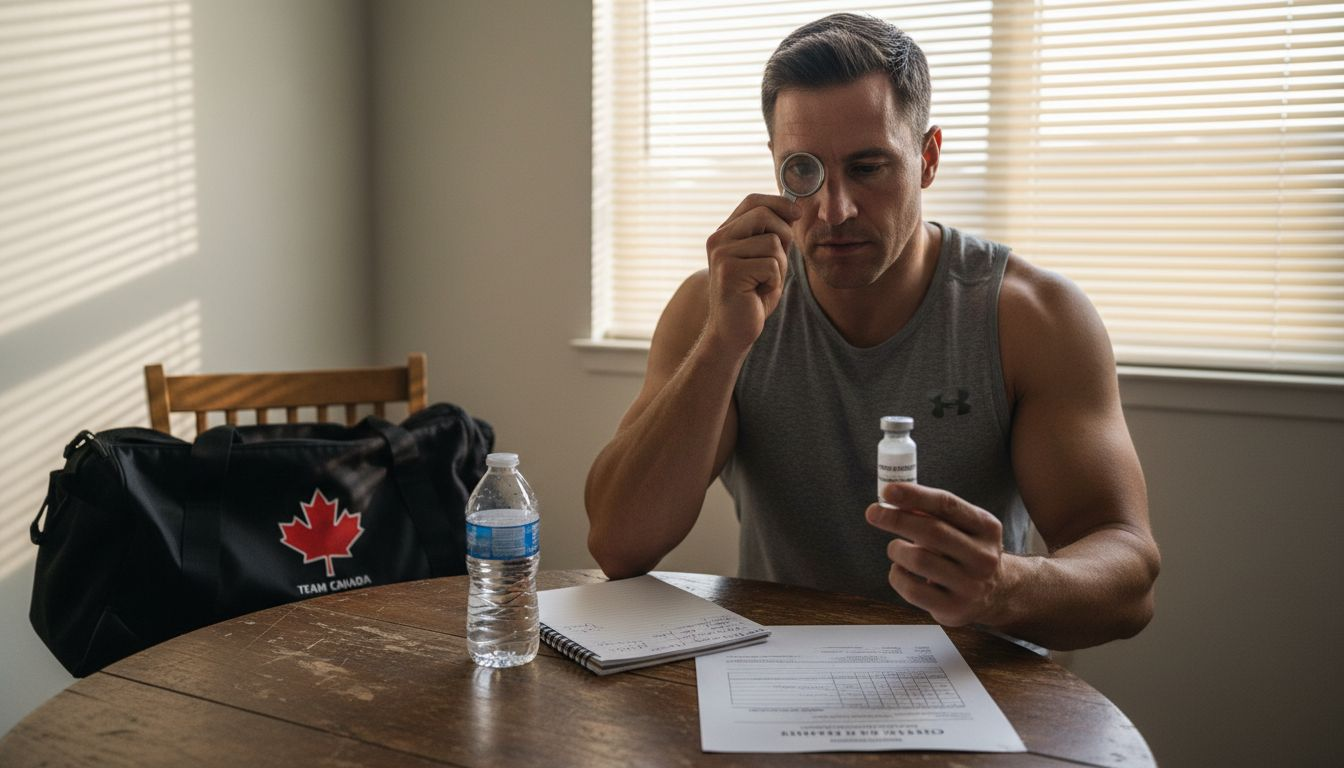
- Believing purity can be determined by visual inspection
- Thinking concentration equals quality
- Overlooking potential degradation products
Analytical techniques like nuclear magnetic resonance (NMR), mass spectrometry, and advanced chromatography are essential for accurately assessing peptide quality. These methods provide detailed insights into a peptide’s molecular structure, potential contaminants, and overall integrity.
Immunogenicity represents another critical consideration. Impurities and molecular variations can trigger unexpected immune responses, potentially compromising performance and safety. Rigorous testing and characterization become paramount for athletes and fitness professionals seeking predictable, reliable peptide interventions.
Pro tip: Always request comprehensive third-party lab testing results that detail peptide purity, molecular weight, and impurity profiles before incorporating any peptide into your fitness regimen.
Peptide purity grades and classifications
Peptide purity classifications are sophisticated scientific measures that go far beyond simple percentage metrics. International reference standards establish comprehensive frameworks for evaluating peptide quality across multiple dimensions.
Typically, peptide purity grades are categorized into several key levels:
- Research Grade: Suitable for preliminary scientific investigations
- Analytical Grade: Meets strict quality standards for detailed laboratory analysis
- Pharmaceutical Grade: Highest quality, suitable for clinical and medical applications
- Synthetic Grade: Engineered for specific biochemical research purposes
The classification process involves rigorous analytical techniques that examine multiple aspects of peptide composition:
- Mass fraction purity assessment
- Impurity profile characterization
- Molecular structure verification
- Homogeneity evaluation
Each grade represents a progressively more refined level of peptide quality. Research-grade peptides might have acceptable impurity levels around 85-90%, while pharmaceutical-grade peptides demand purity exceeding 98% with meticulously documented molecular characteristics.
Here is a summary of peptide purity grades and their typical uses:
| Purity Grade | Typical Purity (%) | Common Applications | Documentation Required |
|---|---|---|---|
| Research Grade | 85–90 | Early-stage lab research | Basic certificate |
| Analytical Grade | 95–98 | Advanced analysis; assay validation | Detailed analytical report |
| Pharmaceutical Grade | >98 | Human clinical and medical uses | Comprehensive regulatory dossier |
| Synthetic Grade | Variable | Custom biochemical investigations | Custom synthesis report |
Peptide purity is not just about percentage—it’s about comprehensive molecular integrity and precise characterization.
Advanced scientific protocols like nuclear magnetic resonance (NMR) and mass spectrometry enable researchers to perform granular assessments of peptide composition. These techniques provide unprecedented insights into molecular structure, potential contaminants, and overall peptide quality.
For fitness professionals and athletes, understanding these classifications becomes critical. The purity grade directly influences biological performance, potential immune responses, and overall intervention effectiveness. Pharmaceutical and highly purified synthetic grades offer the most predictable and reliable outcomes.
Pro tip: Always request a detailed certificate of analysis that breaks down purity grade, impurity profile, and molecular characterization before selecting a peptide for your fitness protocol.
How peptide purity is tested and verified
Peptide purity testing represents a sophisticated scientific process involving multiple advanced analytical techniques. Comprehensive verification protocols ensure rigorous assessment of molecular integrity and chemical composition.
The primary analytical methods for peptide purity verification include:
- Nuclear Magnetic Resonance (NMR): Provides detailed molecular structure insights
- High-Performance Liquid Chromatography (HPLC): Separates and quantifies peptide components
- Mass Spectrometry: Determines precise molecular weight and identifies impurities
- Capillary Electrophoresis: Evaluates peptide purity through molecular separation
The verification process typically follows a systematic approach:
- Initial mass balance assessment
- Orthogonal analytical technique confirmation
- Impurity profile characterization
- Stress testing and stability evaluation
Peptide purity verification is not a single-step process but a comprehensive molecular investigation.
Fitness professionals and researchers must understand that purity testing goes beyond simple percentage calculations. Advanced techniques like high-resolution mass spectrometry enable granular assessments of peptide composition, revealing subtle molecular variations that traditional methods might miss.
The following table contrasts major analytical techniques for peptide quality assessment:
| Technique | Main Purpose | Strengths | Limitations |
|---|---|---|---|
| Nuclear Magnetic Resonance (NMR) | Structural confirmation | Reveals 3D structure, high accuracy | Requires specialist skills |
| Mass Spectrometry | Purity and molecular weight | High sensitivity, detects impurities | Complex data interpretation |
| High-Performance Liquid Chromatography (HPLC) | Component separation/quantification | Effective for routine purity checks | May miss some contaminants |
| Capillary Electrophoresis | Charge-based impurity profiling | Suitable for charge variants | Limited in structure analysis |
Critical parameters examined during peptide verification include:
- Molecular weight accuracy
- Chemical composition consistency
- Potential degradation products
- Aggregate formation potential
- Structural integrity under various conditions
Stress testing plays a crucial role in understanding peptide stability. Researchers subject peptide samples to extreme conditions like temperature variations, pH changes, and extended storage to evaluate long-term molecular reliability.
Pro tip: Request detailed analytical certificates that showcase multiple verification techniques, not just simple purity percentages, when evaluating peptide quality for fitness applications.
Impurity risks for health and performance
Peptide impurities represent a critical concern that can dramatically compromise both health outcomes and athletic performance. Regulatory guidelines emphasize stringent impurity control to mitigate potential risks associated with molecular contaminants.
The primary impurity risks for fitness professionals and athletes include:
- Immunogenic Responses: Impurities can trigger unexpected immune system reactions
- Performance Degradation: Molecular contaminants can reduce peptide effectiveness
- Metabolic Interference: Impurities might disrupt normal physiological processes
- Unpredictable Biological Interactions: Unknown compounds can create systemic complications
Molecular impurities emerge through multiple pathways:
- Synthesis process contamination
- Chemical degradation during storage
- Incorrect amino acid sequencing
- Unintended molecular aggregation
Not all impurities are visibly detectable, making comprehensive analytical testing essential.
Immunogenicity represents the most significant risk associated with peptide impurities. Even microscopic molecular variations can provoke complex immune responses that potentially compromise an athlete’s physiological performance and long-term health.
Specific performance risks associated with peptide impurities include:
- Reduced muscle protein synthesis efficiency
- Inconsistent hormonal signalling
- Potential inflammatory responses
- Compromised recovery mechanisms
- Unpredictable metabolic interactions
Advanced analytical techniques like high-resolution mass spectrometry enable detailed molecular characterization, helping researchers and athletes identify and mitigate potential impurity-related risks before they manifest in physiological systems.
Pro tip: Always request comprehensive impurity profile documentation that details molecular characterization and potential immunogenic risks when selecting peptides for performance enhancement.
Supplier claims, certificates and legal concerns
Navigating the complex landscape of peptide procurement requires a critical understanding of supplier documentation and legal implications. Regulatory standards demand rigorous transparency in peptide manufacturing and marketing claims, protecting consumers from potential misrepresentation.
Key elements fitness professionals must evaluate in supplier documentation include:
- Certificate of Analysis (CoA): Detailed purity and impurity profile
- Reference Standards: Validated testing methodologies
- Traceability Documentation: Origin and manufacturing process details
- Compliance Certifications: Regulatory approval markers
Legal concerns surrounding peptide supply encompass multiple critical dimensions:
- Accurate representation of product characteristics
- Compliance with pharmacopeial standards
- Transparent impurity disclosure
- Rigorous analytical testing documentation
- Potential liability for misrepresentation
Not all certificates are created equal—deep scrutiny is essential for legitimate peptide procurement.
Regulatory compliance represents a fundamental requirement in peptide sourcing. Suppliers must provide comprehensive documentation that demonstrates:
- Precise molecular characterization
- Validated testing protocols
- Consistent manufacturing standards
- Comprehensive impurity profiles
- Third-party verification mechanisms
Potential legal risks for fitness professionals include potential product liability, performance inconsistencies, and health complications arising from undocumented or misrepresented peptide compositions. Sophisticated athletes and researchers must demand extensive documentation beyond superficial marketing claims.
Pro tip: Request multiple independent analytical certificates and cross-reference supplier claims with international pharmacopeial standards before making any peptide procurement decisions.
Ensure Your Peptides Meet the Highest Standards for Fitness Success
Peptide purity is more than a number. It impacts your performance, recovery, and long-term health. If you want to avoid common pitfalls like unpredictable immune reactions and compromised biological effects, you need access to rigorously tested, pharmaceutical-grade peptides. Our offerings prioritise comprehensive molecular characterisation and detailed impurity profiles so you can train and recover with confidence.
Discover a trusted source where transparency and quality matter. Explore our carefully selected peptides, supported by certified lab reports and verified purity grades. Visit our Uncategorized – Northern Peptides page for more insights and curated products.

Take control of your fitness regimen today by choosing peptides vetted by advanced techniques like NMR and mass spectrometry. Don’t risk your gains or health on unverified supplements. Browse our full collection now at Northern Peptides and make informed decisions backed by scientific rigour.
Frequently Asked Questions
What is peptide purity and why is it important?
Peptide purity refers to the chemical composition and structural integrity of a peptide, which directly affects its biological activity and effectiveness in fitness applications. Higher purity means fewer impurities, leading to predictable and reliable outcomes in performance and recovery.
How is peptide purity tested?
Peptide purity is tested using advanced analytical techniques such as Nuclear Magnetic Resonance (NMR), High-Performance Liquid Chromatography (HPLC), and Mass Spectrometry. These methods assess molecular structure, quantify active components, and identify potential impurities, ensuring rigorous quality control.
What are the different grades of peptide purity?
Peptide purity is classified into grades such as Research Grade, Analytical Grade, Pharmaceutical Grade, and Synthetic Grade. Each grade represents a different level of quality and suitable applications, with Pharmaceutical Grade offering the highest purity for clinical use.
What risks do impurities in peptides pose?
Peptide impurities can lead to various risks, including immunogenic responses, decreased performance, metabolic interference, and unpredictable biological interactions. Proper testing and detailed impurity profiles are essential to mitigate these risks and ensure athlete safety.