

Sorting through peptide safety can feel intimidating with evolving fitness trends and health research. For women who focus on anti-aging and performance, understanding rigorous peptide lab testing is vital to protect your results and well-being. Regulatory guidelines set worldwide by agencies such as the EMA and FDA demand reliable analytical methods and stability checks, so exploring the basics ensures you only trust peptides held to the highest standards in global labs.
Table of Contents
- What Are Peptides and Lab Testing?
- Types of Peptides in Fitness Research
- Analytical Methods for Peptide Evaluation
- Regulatory Standards and Safety Compliance
- Risks of Untested or Contaminated Peptides
- Comparing Lab-Validated Alternatives
Key Takeaways
| Point | Details |
|---|---|
| Peptide Functions | Peptides are crucial for biological functions, acting as communication molecules that influence processes such as hormone signalling and cellular repair. |
| Rigorous Lab Testing | Comprehensive lab testing, including mass spectrometry and purity assessments, is essential to ensure peptide safety and efficacy before use in research and therapy. |
| Regulatory Compliance | Adherence to strict regulatory standards ensures that peptides meet quality benchmarks, protecting researchers and end-users from health risks. |
| Risks of Untested Peptides | Using unverified peptides can lead to serious health issues, including biological contamination and unpredictable physiological effects. |
What Are Peptides and Lab Testing?
Peptides are small protein fragments composed of amino acids that play critical roles in biological communication and metabolic processes. These molecular messengers are essential for numerous physiological functions, ranging from hormone signalling to cellular repair and regeneration.
At their core, peptides act like targeted communication molecules within the human body. They differ from full proteins by being shorter chains of amino acids, typically containing fewer than 50 amino acid units. This compact structure allows them to interact rapidly and specifically with cellular receptors, triggering precise biological responses.
Lab testing for peptides is a rigorous scientific process designed to ensure safety, purity, and efficacy. Peptide drug development involves comprehensive regulatory guidelines that mandate extensive characterization and quality control measures. These testing protocols are critical for determining a peptide’s molecular structure, potential impurities, and overall performance.
Key aspects of peptide lab testing include:
- Mass spectrometry analysis to confirm molecular weight and composition
- Purity assessment through high-performance liquid chromatography
- Stability testing under various environmental conditions
- Structural verification using nuclear magnetic resonance spectroscopy
- Impurity profiling to identify potential contaminants
Researchers and manufacturers must adhere to strict standards set by regulatory agencies like the FDA, EMA, and ICH. These guidelines ensure that peptides used in medical research, clinical trials, and potential therapeutic applications meet the highest quality benchmarks.
Pro tip: Always request a comprehensive lab testing certificate when purchasing peptides to verify their quality and safety standards.
Types of Peptides in Fitness Research
Peptides have emerged as powerful tools in fitness research, offering targeted approaches to muscle growth, recovery, and performance enhancement. Research peptides play a critical role in understanding and optimizing human physiological responses to exercise and training.
Several key peptide categories are particularly relevant to fitness and athletic performance:
- Growth Hormone Releasing Peptides (GHRP): Stimulate natural growth hormone production
- Growth Hormone Secretagogues (GHS): Enhance muscle growth and recovery
- Selective Androgen Receptor Modulators (SARMs): Target muscle and bone tissue specifically
- BPC-157: Supports tissue repair and reduces inflammation
- Thymosin Beta-4: Promotes muscle regeneration and healing
Each peptide type offers unique mechanisms for supporting athletic performance. Growth Hormone Releasing Peptides, for instance, can stimulate the body’s natural growth hormone production, potentially improving muscle mass, reducing body fat, and accelerating recovery. These molecular compounds work by signalling specific cellular receptors, triggering precise physiological responses that can benefit athletic performance.

Research peptides are not one-size-fits-all solutions. Their effectiveness varies based on individual physiology, training goals, and specific biochemical interactions. Athletes and researchers must approach peptide research with a nuanced understanding of their potential benefits and limitations.
Here is a summary comparing key peptide categories for fitness research:
| Peptide Type | Main Function | Typical Benefit |
|---|---|---|
| GHRP (Growth Hormone Releasing) | Stimulates growth hormone | Increases muscle mass, recovery |
| GHS (Growth Hormone Secretagogue) | Enhances muscle and repair | Accelerates recovery |
| SARMs (Selective Androgen Modulator) | Targets muscle and bone | Strengthens muscle and bones |
| BPC-157 | Tissue and injury repair | Reduces inflammation, speeds healing |
| Thymosin Beta-4 | Promotes regeneration | Facilitates muscle recovery |
Pro tip: Consult with sports medicine professionals and conduct comprehensive medical assessments before incorporating any research peptides into your fitness regimen.
Analytical Methods for Peptide Evaluation
Peptide analysis requires sophisticated scientific techniques to ensure precise characterization and quality control. Regulatory guidelines mandate rigorous analytical procedures for comprehensive peptide evaluation, establishing critical standards for research and pharmaceutical applications.
The most fundamental analytical methods for peptide assessment include:
- High-Performance Liquid Chromatography (HPLC): Separates and quantifies peptide components
- Mass Spectrometry: Determines molecular weight and structural composition
- Nuclear Magnetic Resonance (NMR) Spectroscopy: Provides detailed molecular structure insights
- Amino Acid Sequencing: Confirms precise peptide chain configuration
- Circular Dichroism Spectroscopy: Evaluates peptide secondary structural characteristics
Each analytical technique offers unique insights into peptide properties. Mass spectrometry, for instance, can precisely identify molecular weight and detect potential impurities with extraordinary accuracy. This method allows researchers to validate peptide purity, ensuring that only high-quality compounds are used in scientific research or medical applications.
Advanced peptide evaluation goes beyond simple compositional analysis. Researchers must consider multiple parameters, including stability, potential degradation pathways, and interactions with biological systems. Comprehensive testing protocols help mitigate risks and ensure the reliability of peptide-based research and potential therapeutic interventions.
Pro tip: Always cross-validate peptide characteristics using multiple analytical methods to ensure comprehensive and reliable results.
Regulatory Standards and Safety Compliance
Ensuring the safety and quality of peptides requires comprehensive regulatory oversight and stringent compliance protocols. Good Manufacturing Practice (GMP) establishes critical quality standards that govern peptide production and research across global scientific communities.
Key regulatory requirements for peptide safety include:
- Documentation and Traceability: Comprehensive record-keeping of production processes
- Quality Control Protocols: Systematic testing for purity and molecular integrity
- Contamination Prevention: Strict environmental and handling standards
- Impurity Threshold Monitoring: Precise measurement of potential contaminants
- Batch Consistency Verification: Ensuring uniform peptide composition
Regulatory agencies like the European Medicines Agency (EMA), Food and Drug Administration (FDA), and International Council for Harmonisation (ICH) collaborate to establish global standards. These frameworks protect researchers, medical professionals, and potential end-users by mandating rigorous testing and quality assurance mechanisms.
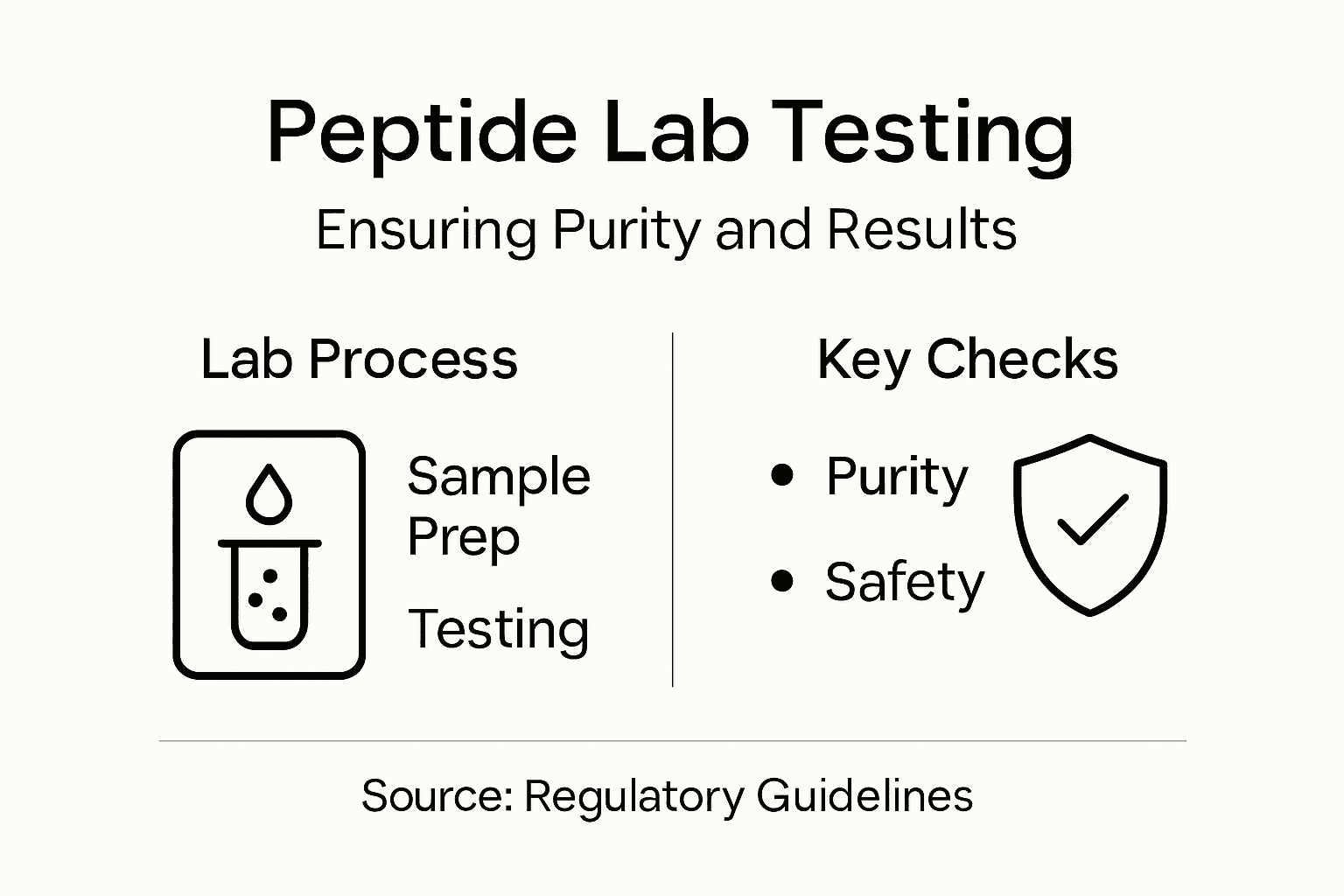
Complex peptide development requires multilayered compliance strategies. Researchers must navigate intricate regulatory landscapes, maintaining meticulous documentation and implementing robust quality control processes. This systematic approach minimizes risks associated with peptide research and development, ensuring scientific integrity and public safety.
Pro tip: Maintain detailed documentation of every stage of peptide production and always cross-reference your processes with the latest regulatory guidelines.
Risks of Untested or Contaminated Peptides
Untested and contaminated peptides pose significant health and research risks that can compromise scientific integrity and personal safety. Ethical sourcing remains critical in peptide research to mitigate potential dangers associated with unverified molecular compounds.
Key risks of using untested peptides include:
- Biological Contamination: Potential presence of harmful microorganisms
- Chemical Impurities: Unexpected molecular structures or toxic byproducts
- Structural Inconsistencies: Variations that compromise peptide effectiveness
- Immune System Reactions: Potential allergic or inflammatory responses
- Unpredictable Physiological Interactions: Unintended cellular consequences
Contaminated peptides can introduce significant variability into research protocols, rendering experimental results unreliable and potentially dangerous. Researchers might encounter unexpected molecular interactions that could skew scientific understanding or create unintended physiological responses. These risks extend beyond laboratory settings, potentially affecting medical research, therapeutic development, and individual health outcomes.
Professional laboratories implement multiple verification strategies to detect and prevent peptide contamination. These include comprehensive screening processes, advanced analytical techniques, and strict quality control measures that ensure peptide purity and molecular integrity before any research or application begins.
Pro tip: Always request a comprehensive certificate of analysis and third-party testing documentation when obtaining peptides for research purposes.
The following table contrasts risks of untested peptides with advantages of lab-validated peptides:
| Aspect | Untested Peptides | Lab-Validated Peptides |
|---|---|---|
| Purity and Quality | Uncertain, risk of impurity | Confirmed by analytical testing |
| Health Risks | High, unpredictable effects | Low, thorough safety checks |
| Regulatory Compliance | Often lacking | Meets international standards |
| Batch Consistency | Variable and inconsistent | Monitored for uniformity |
| Research Reliability | Results may be invalid | Supports reproducible results |
Comparing Lab-Validated Alternatives
Researchers and fitness enthusiasts must carefully evaluate peptide alternatives, prioritizing scientifically validated options that demonstrate consistent quality and safety. Essential safety tips guide research peptide selection to ensure optimal outcomes and minimize potential risks.
Key criteria for comparing peptide alternatives include:
- Purity Levels: Percentage of molecular integrity and contaminant absence
- Third-Party Verification: Independent laboratory testing documentation
- Molecular Characterization: Detailed structural analysis reports
- Batch Consistency: Reproducibility across multiple production cycles
- Regulatory Compliance: Adherence to international research standards
Lab-validated peptides undergo rigorous screening processes that distinguish them from unverified alternatives. These comprehensive evaluations involve multiple analytical techniques, including mass spectrometry, chromatographic separation, and structural confirmation. Such thorough testing ensures that researchers receive peptides with predictable performance and minimal variability.
Comparing alternatives requires a systematic approach that goes beyond basic performance metrics. Researchers must consider long-term stability, potential interaction profiles, and comprehensive safety documentation. This holistic evaluation strategy helps identify peptide sources that meet the highest scientific standards and research integrity requirements.
Pro tip: Request complete analytical certificates and compare multiple independent laboratory reports before selecting peptide research materials.
Ensure Peptide Safety and Quality with Trusted Lab Testing Solutions
The article highlights the critical challenge of verifying peptide purity, safety, and consistency through rigorous lab testing. If you are concerned about risks such as contamination, structural inconsistencies, or variability in peptide batches, it is essential to choose research peptides backed by comprehensive analytical validation methods like mass spectrometry and HPLC. Achieving reliable results depends on thorough quality control and adherence to global regulatory standards.
Northern Peptides is committed to supporting your scientific and fitness goals by offering meticulously tested, high-purity research peptides. Explore our resources and products at Uncategorized – Northern peptides to equip yourself with ethically sourced, lab-validated peptides that deliver consistent performance.

Ready to elevate your peptide research and fitness regimen with trusted quality? Visit our main site at Northern Peptides and discover the critical difference lab-tested peptides can make. Make your next peptide selection with confidence and ensure safety every step of the way.
Frequently Asked Questions
What are peptides and why is lab testing important?
Peptides are small protein fragments that play crucial roles in biological processes. Lab testing for peptides ensures their safety, purity, and efficacy, confirming that they meet regulatory standards.
What analytical methods are used in peptide testing?
Peptide testing employs various analytical techniques such as high-performance liquid chromatography (HPLC), mass spectrometry, nuclear magnetic resonance (NMR) spectroscopy, amino acid sequencing, and circular dichroism spectroscopy to assess quality and purity.
What are the common risks associated with untested or contaminated peptides?
Untested or contaminated peptides can pose risks such as biological contamination, unexpected chemical impurities, immune system reactions, and unpredictable physiological interactions, compromising research integrity and personal safety.
How can researchers ensure they are using lab-validated peptides?
Researchers should request comprehensive certificates of analysis and third-party testing documentation. Evaluating criteria like purity levels, batch consistency, and regulatory compliance helps ensure the selected peptides are validated and safe.