Finding safe, effective ways to enhance recovery and achieve visible skin benefits can be confusing with so many options on the market. For fitness enthusiasts and beauty-focused women, understanding how to apply peptides starts with good preparation and thoughtful choices. This beginner’s guide demystifies every step, highlighting the importance of a meticulously clean workspace and precision in peptide handling for real results and peace of mind.
Table of Contents
- Step 1: Prepare Your Workspace And Supplies
- Step 2: Select The Right Peptide And Dosage
- Step 3: Mix And Reconstitute Peptides Safely
- Step 4: Apply Peptides With Correct Technique
- Step 5: Monitor Effects And Adjust As Needed
Quick Summary
| Key Point | Explanation |
|---|---|
| 1. Maintain a sterile workspace | A clean, organized setting reduces contamination risks and enhances peptide handling precision. Use personal protective equipment and disinfected tools. |
| 2. Choose peptides based on goals | Select peptides aligned with your fitness objectives and health profile to optimize effectiveness and safety in recovery. |
| 3. Use correct reconstitution techniques | Follow careful preparation steps, including sanitization and using the right solvent, to ensure peptide stability and effectiveness. |
| 4. Apply peptides with precise methods | Use appropriate injection techniques and rotate sites efficiently to maximize absorption and minimize tissue damage during application. |
| 5. Monitor and adjust for optimal results | Document physiological responses and adjust dosages accordingly to tailor peptide therapy for individual needs and enhance recovery outcomes. |
Step 1: Prepare your workspace and supplies
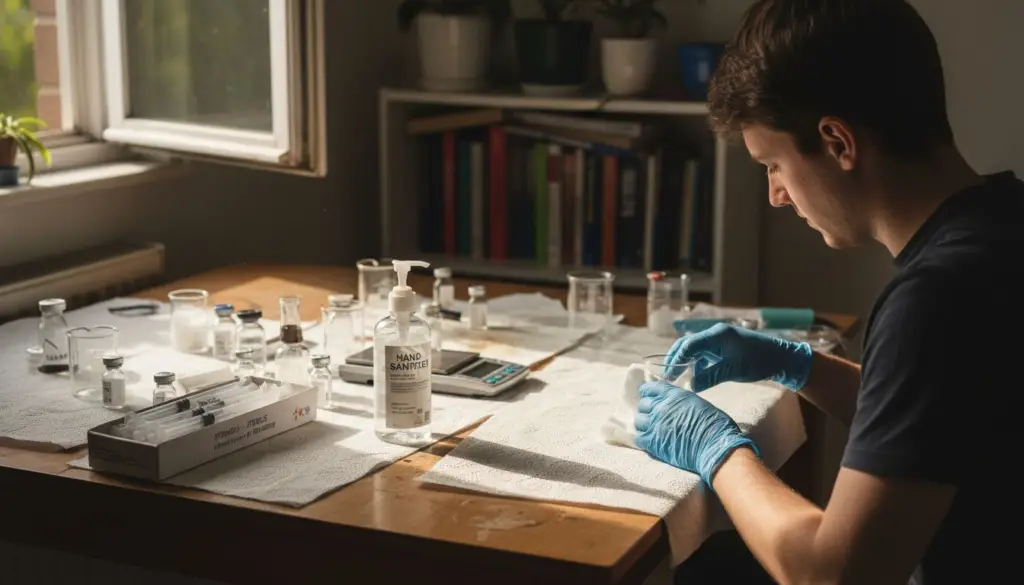
Creating a clean, organised workspace is crucial for safe and effective peptide handling. Your preparation will directly impact the quality and precision of your recovery results. Before starting, gather all necessary materials and set up a dedicated area that minimises contamination risks.
Your peptide workspace should include the following key components:
- Clean work surface: A sterile, flat area like a laminar flow hood or sanitised countertop
- Personal protective equipment: Disposable gloves, lab coat, and safety glasses
- Sterile tools: Micropipettes, precision scales, alcohol wipes, sterile syringes
- Storage containers: Sterile vials, desiccator, or refrigerated storage unit
- Disinfection supplies: 70% isopropyl alcohol, sterile gauze, sharps disposal container
Maintaining a meticulously clean environment is more important than the peptide application itself.
Precision matters when preparing your workspace. Thoroughly sanitise all surfaces before setting up your materials, and ensure your work area is free from potential contaminants. This means cleaning surfaces with alcohol, using fresh disposable coverings, and keeping unnecessary items away from your workspace.
Pro tip: Invest in dedicated tools for peptide handling and never use them for other laboratory or household tasks to prevent cross-contamination.
Step 2: Select the right peptide and dosage
Selecting the appropriate peptide and dosage requires careful consideration of your specific recovery goals, fitness level, and overall health profile. Your choice will significantly impact the effectiveness and safety of your peptide application strategy.
When choosing a peptide, consider these critical factors:
- Fitness objectives: Muscle recovery, performance enhancement, or injury rehabilitation
- Current health status: Age, existing medical conditions, hormone levels
- Recovery needs: Muscle repair, joint healing, metabolic support
- Experience level: Beginner, intermediate, or advanced peptide user
Not all peptides are created equal – precision in selection is paramount for achieving desired results.
To determine the right dosage, you’ll need to assess multiple variables. Start by selecting recovery peptides that align with your specific physiological requirements. Typical peptide dosages vary widely, ranging from 0.1 to 1.0 mg per kilogram of body weight, depending on the specific compound and individual metabolic factors.
- Consult with a healthcare professional
- Review your current fitness and recovery goals
- Start with the lowest recommended dosage
- Monitor your body’s response carefully
- Adjust dosage incrementally if needed
Understanding individual metabolic variations is crucial. What works effectively for one person might require significant adjustment for another. Track your progress meticulously and be prepared to modify your approach based on your body’s unique response.
Pro tip: Always purchase peptides from reputable sources and maintain a detailed log of your dosage, application method, and physiological responses to optimise your recovery strategy.
Step 3: Mix and reconstitute peptides safely
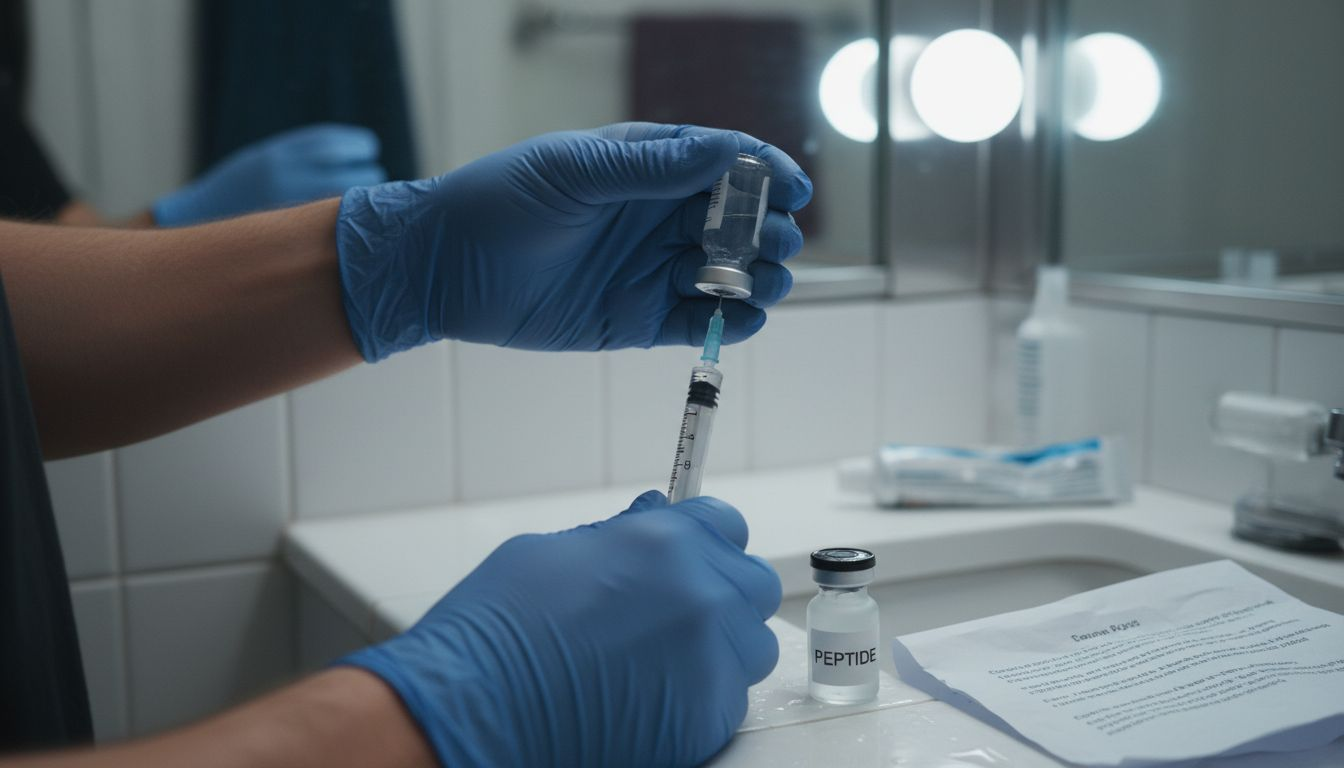
Reconstituting peptides requires precision, sterile techniques, and a methodical approach to ensure both safety and effectiveness. Your goal is to transform lyophilized peptide powder into a usable solution without compromising its molecular integrity or introducing potential contaminants.
Your peptide reconstitution toolkit should include:
- Sterile bacteriostatic water or prescribed solvent
- Precision micropipette with calibrated measurements
- Sterile syringes with fine-gauge needles
- Alcohol wipes for surface and equipment sterilisation
- Protective gloves and safety glasses
- Clean workspace with minimal ambient contamination
Precision in peptide reconstitution is not optional – it is fundamental to your safety and results.
Follow these critical steps for peptide safety and preparation:
- Sanitise your entire workspace thoroughly
- Calculate exact solvent volume based on peptide concentration
- Slowly inject solvent against the vial’s inner wall
- Gently rotate the vial to dissolve – never shake
- Allow solution to settle for 1-2 minutes before handling
Understanding proper reconstitution techniques prevents protein degradation and ensures maximum peptide stability. Maintain consistent temperature during the entire process, ideally between 2-8 degrees Celsius, to preserve peptide structure.
Pro tip: Always use fresh, sterile equipment for each reconstitution and discard any partially used solutions after recommended storage periods.
Step 4: Apply peptides with correct technique
Successful peptide application requires precise technique and understanding of your body’s unique physiological responses. Your approach will directly impact absorption, effectiveness, and overall recovery potential.
Peptide application methods vary depending on specific compound and intended results:
Here’s how common peptide application methods compare:
| Application Method | Absorption Speed | Typical Uses | Invasiveness Level |
|---|---|---|---|
| Subcutaneous Injection | Moderate, steady effect | General therapy, fat loss | Low |
| Intramuscular Injection | Faster local action | Targeted muscle recovery | Moderate |
| Transdermal Application | Slow, variable uptake | Emerging energy boosters | Minimal |
| Oral Administration | Slow, low effectiveness | Research, rare peptides | None |
- Subcutaneous injection: Most common method for many peptides
- Intramuscular injection: Used for specific muscle recovery peptides
- Transdermal application: Emerging method for certain compounds
- Oral administration: Limited effectiveness for most peptide types
Consistent technique matters more than the application method itself.
When preparing to apply peptides, follow peptide safety guidelines with meticulous attention:
- Verify peptide temperature and reconstitution quality
- Select appropriate injection site
- Clean injection area with alcohol wipe
- Use sterile, single-use needle
- Inject at 45-90 degree angle depending on technique
Rotate injection sites systematically to prevent tissue damage and maintain consistent absorption. Monitor your body’s response carefully, noting any unusual reactions or changes in recovery performance.
Pro tip: Keep a detailed log of injection sites, dosages, and physiological responses to track your peptide therapy effectiveness and identify potential patterns.
Step 5: Monitor effects and adjust as needed
Tracking your body’s response to peptide therapy is crucial for optimising recovery and ensuring safe, personalised treatment. Therapeutic peptide monitoring involves systematic observation of your physiological changes and potential adjustments.
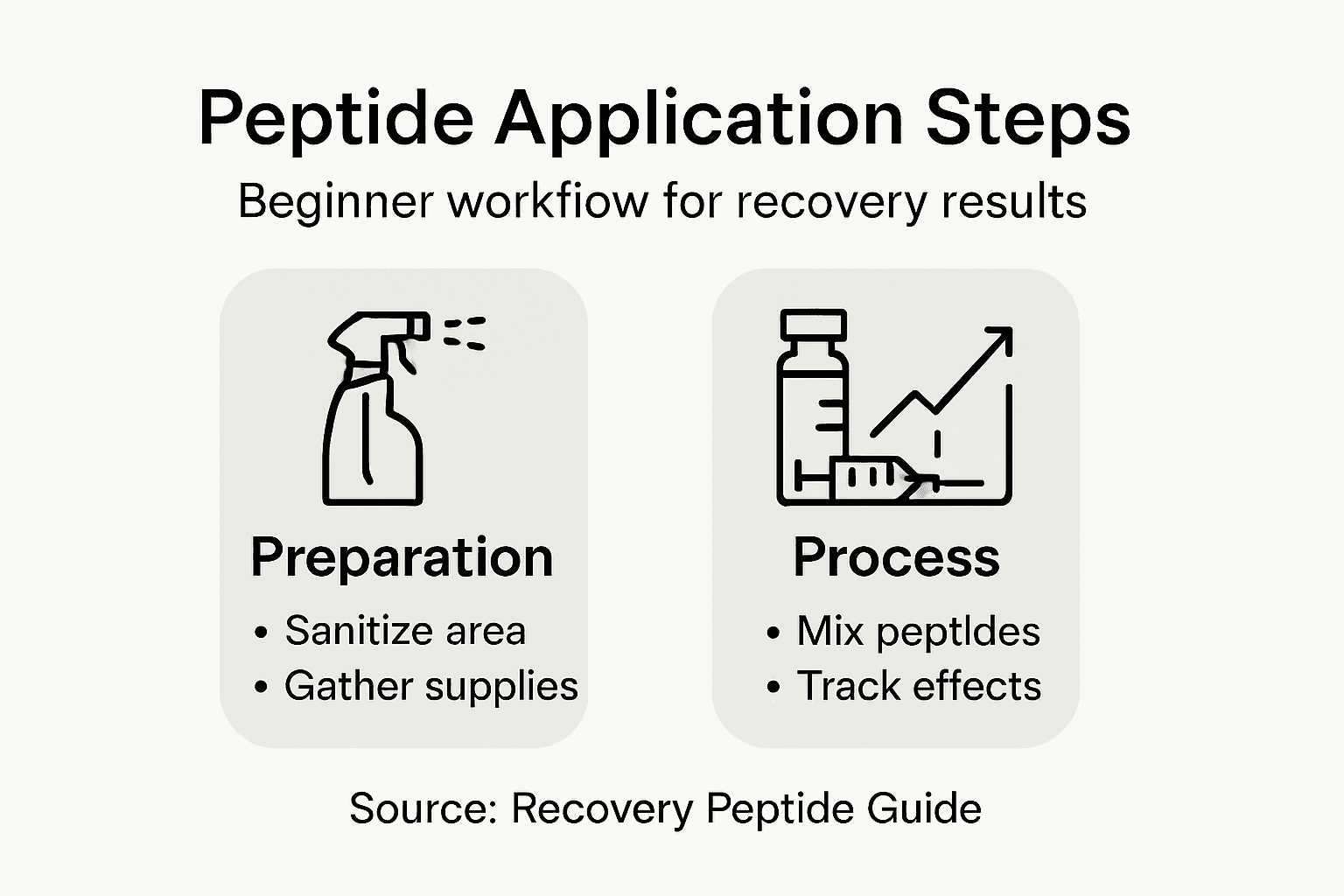
Key parameters to track during peptide therapy include:
Use this table for a quick reference to key monitoring parameters and why they matter:
| Parameter | What It Tracks | Why It’s Important |
|---|---|---|
| Recovery Rate | Muscle/joint improvement | Shows therapy effectiveness |
| Energy & Fatigue | Daily well-being | Detects metabolic responses |
| Sleep Quality | Rest patterns | Impact on healing process |
| Weight/Muscle Changes | Body composition | Evaluates metabolic impact |
| Side Effects | Immune or adverse reactions | Safety assessment |
- Physical recovery rate: Muscle repair, joint mobility
- Energy levels and fatigue
- Metabolic changes: Weight, muscle composition
- Sleep quality and patterns
- Potential side effects or immune responses
Your body’s unique response is the most valuable data point in peptide therapy.
Implement a comprehensive monitoring strategy:
- Create a detailed daily symptom and progress journal
- Take weekly body measurements
- Record subjective wellness indicators
- Photograph progress periodically
- Schedule regular check-ins with healthcare professional
Document changes systematically and be prepared to modify dosage or approach based on your observations. Some peptides might require subtle adjustments to achieve optimal results.
Pro tip: Use digital tracking apps or spreadsheets to maintain consistent, objective records of your peptide therapy progression.
Master Your Peptide Recovery Journey with Confidence
Are you ready to take the guesswork out of peptide application for recovery? This beginner workflow highlights the challenges of precise workspace preparation, peptide selection, and safe administration – all crucial for maximising your results safely. If you are striving to improve muscle repair, boost energy, or enhance overall recovery you need reliable resources and high-quality peptides from trusted sources.

Explore our extensive collection at Northern Peptides where you can find premium research peptides, chemicals, and educational materials tailored to your recovery goals. Start by visiting our Uncategorized – Northern peptides category to discover essential insights and tools that support your peptide journey. Don’t wait to enhance your recovery process with expert-backed solutions. Visit us now and empower your peptide therapy with knowledge and quality supplies.
Frequently Asked Questions
What precautions should I take when preparing my peptide workspace?
To ensure safety and effectiveness, sanitise all surfaces and gather sterile tools like micropipettes and sterile syringes. Set up a clean, dedicated area to minimise contamination risks before you begin.
How do I choose the right peptide and dosage for recovery?
Select a peptide based on your fitness objectives, current health status, and experience level. Start by consulting with a healthcare professional and monitor your response to adjust the dosage incrementally, typically between 0.1 to 1.0 mg per kilogram of body weight.
What steps should I follow to safely mix and reconstitute peptides?
Begin by sanitising your workspace and calculating the exact solvent volume needed. Slowly inject the solvent against the vial’s inner wall and gently rotate it to dissolve, ensuring you maintain sterility throughout the process.
How can I correctly apply peptides for optimal results?
For effective peptide application, select the appropriate method—such as subcutaneous or intramuscular injection—based on the compound. Clean the injection site thoroughly and inject at the correct angle, then rotate injection sites to prevent tissue damage.
What parameters should I monitor during peptide therapy?
Track your recovery rate, energy levels, sleep quality, and any side effects you may experience. Maintaining a detailed daily journal to document these changes will help you assess the therapy’s effectiveness and make any necessary adjustments.
How often should I evaluate my progress with peptide therapy?
Check your progress at least every week by taking body measurements and recording symptoms. Regularly assess your subjective wellness indicators and share these findings in consultations with your healthcare professional for optimal results.