

Peptide contamination affects roughly 15% of samples from questionable suppliers, putting your health at serious risk. If you’re exploring peptides for muscle recovery or anti-aging benefits, understanding safety protocols isn’t optional. This guide clarifies how peptides work biologically, manufacturing quality factors, side effect profiles, U.S. regulatory considerations, common misconceptions, and practical frameworks to help you use peptides safely and confidently for your fitness or beauty goals.
Table of Contents
- Introduction To Peptides And Their Mechanisms Of Action
- Manufacturing Quality And Safety Risks In Peptide Products
- Side Effects And User Experience With Peptides
- Legal And Regulatory Considerations In The U.S.
- Common Misconceptions And Safety Mythbusting
- Evaluating And Ensuring Peptide Safety: A Practical Framework
- Conclusion And Key Takeaways For Safe Peptide Use
- Learn More With Northern Peptides
- FAQ
Key takeaways
| Point | Details |
|---|---|
| Peptides stimulate recovery and anti-aging through biological mechanisms | They mimic natural growth factors to accelerate muscle repair and collagen synthesis for targeted results. |
| Manufacturing quality varies significantly and impacts safety | Contamination from endotoxins and impurities creates health risks; third-party testing reduces these dangers. |
| Side effects differ by peptide type and administration route | Injectable forms show 12-18% injection site reactions; oral peptides have poor bioavailability below 5%. |
| U.S. regulation of peptides remains complex and inconsistent | FDA classifies many peptides as unapproved drugs, creating legal grey areas and variable product oversight. |
| Practical evaluation steps enable safer peptide use | Verifying supplier credentials, checking certificates of analysis, and consulting professionals minimise risks. |
Introduction to peptides and their mechanisms of action
Peptides are short chains of amino acids that act as signalling molecules in your body. Unlike proteins, which contain hundreds of amino acids, peptides typically consist of 2 to 50 amino acids linked together. This smaller size allows them to penetrate cells more easily and trigger specific biological responses.
For muscle recovery and anti-aging applications, synthetic peptides mimic natural growth factors like IGF-1 and growth hormone secretagogues. These compounds influence cellular regeneration, accelerate tissue repair, and stimulate collagen synthesis. Research shows certain peptides can boost healing rates by 20-30% in controlled environments.
Men focusing on performance often gravitate towards peptides that enhance muscle protein synthesis and reduce recovery time between training sessions. Women interested in beauty applications typically explore peptides that promote skin elasticity, reduce fine lines, and support overall skin health. Both demographics benefit from understanding how these compounds interact with natural biological systems.
Common peptides include:
- BPC-157 for tissue repair and gut health support
- GHK-Cu for collagen production and skin regeneration
- TB-500 for muscle recovery and inflammation reduction
- Ipamorelin for growth hormone stimulation
- Matrixyl peptides for wrinkle reduction in topical applications
Each peptide targets specific cellular pathways and receptor sites. BPC-157, for instance, appears to modulate growth factor expression and angiogenesis, promoting blood vessel formation in damaged tissue. GHK-Cu binds to copper ions and stimulates collagen and elastin production whilst supporting antioxidant enzyme activity.
The effectiveness of peptide therapy depends heavily on proper dosing, administration method, and individual response variability. Understanding peptide structure helps you grasp why certain formulations work better than others. Novel peptides for anti-aging continue emerging as peptide research advances, offering more targeted solutions for specific concerns.
Your body already produces peptides naturally. Supplemental peptides aim to amplify these existing processes rather than introducing entirely foreign substances. This distinction matters for understanding both efficacy and safety profiles. When peptides support muscle recovery in athletes, they’re essentially providing additional signalling molecules to accelerate what your body would do naturally over a longer timeframe.
Manufacturing quality and safety risks in peptide products
Manufacturing standards dramatically impact peptide safety. The synthesis process involves complex chemistry, and shortcuts create contamination risks that compromise both efficacy and user health. You’re trusting that manufacturers follow strict protocols, but quality varies enormously across suppliers.
Contamination sources include:
- Endotoxins from bacterial cell walls that trigger immune responses
- Residual solvents and reagents from synthesis processes
- Heavy metals from equipment or raw material impurities
- Bacterial or fungal growth in improperly sterilised products
- Incorrect peptide sequences or fragmented chains
FDA investigations revealed contamination-related adverse events in approximately 15% of peptide samples from questionable suppliers. These contaminations cause reactions ranging from mild inflammation to serious systemic immune responses. You can’t visually detect these impurities, making third-party laboratory testing essential.

Reputable suppliers provide certificates of analysis (CoA) from independent laboratories. These documents verify peptide purity, typically showing 95% or higher purity for research-grade products. The CoA should list specific testing methods like HPLC (high-performance liquid chromatography) and mass spectrometry results. Without this documentation, you’re gambling with product quality.
Real-world examples highlight these risks. In 2025, FDA issued warnings about several peptide suppliers selling products contaminated with bacterial endotoxins. Users reported severe injection site infections, fever, and systemic inflammatory responses. Some required hospitalisation for treatment of complications that could have been avoided with proper manufacturing oversight.
Supplier reputation matters immensely. Established companies with transparent sourcing, proper storage facilities, and quality control procedures dramatically reduce safety risks. Look for suppliers who openly share their testing protocols, maintain proper cold chain logistics, and respond promptly to quality concerns. Peptide safety in recovery applications depends largely on starting with verified, uncontaminated products.
Pro Tip: Always request batch-specific certificates of analysis before purchasing peptides. Generic CoAs or those dated months prior don’t guarantee the specific vial you receive meets quality standards. Legitimate suppliers provide current batch testing documentation without hesitation.
Storage and handling also affect safety. Peptides degrade when exposed to heat, light, or moisture. Proper lyophilisation (freeze-drying) and storage at correct temperatures preserve peptide integrity. Products stored improperly may contain degradation byproducts that reduce efficacy or increase side effect risks.
Transparency separates quality suppliers from questionable ones. Companies that hide their manufacturing locations, refuse to discuss testing protocols, or make exaggerated efficacy claims typically cut corners on safety. Following peptide safety tips includes vetting suppliers thoroughly before committing to purchases.
Side effects and user experience with peptides
Peptide side effects vary significantly based on the specific compound, dosage, administration route, and individual physiology. Understanding common reactions helps you set realistic expectations and recognise when something requires medical attention.
Most users experience mild, localised effects. An observational review showed 12-18% incidence of mild injection site reactions, with less than 2% reporting systemic side effects. These local reactions typically include redness, swelling, itching, or minor bruising at injection sites. They usually resolve within 24 to 48 hours without intervention.
Common side effects include:
- Injection site reactions: redness, swelling, tenderness
- Temporary headaches, particularly with growth hormone-stimulating peptides
- Mild dizziness or lightheadedness after administration
- Flushing or warmth sensations
- Increased hunger or thirst with certain peptides
- Temporary water retention
Rare but potentially serious effects involve hormonal disruption or immune system activation. Growth hormone-releasing peptides may affect blood sugar regulation, thyroid function, or natural hormone production patterns. Immune-related reactions occur when contaminants trigger inflammatory responses, though these primarily result from poor product quality rather than the peptide itself.
Administration method significantly impacts safety profiles. Injectable peptides show reaction rates around 12-18%, whilst oral peptides suffer from poor bioavailability below 5%. Injectable forms carry higher infection risks if proper sterile technique isn’t followed. Subcutaneous injections generally cause fewer reactions than intramuscular administration.
Injectable peptides demonstrate superior bioavailability but require strict sterile protocols to prevent localised infections and tissue damage.
Oral peptides face digestive enzyme breakdown, limiting absorption and requiring much higher doses to achieve effects. Topical peptides work well for skin applications but don’t provide systemic effects for muscle recovery. Your administration choice should balance efficacy needs against comfort and safety considerations.
Monitoring and responding to adverse effects:
- Track all doses, timing, and any reactions in a daily log
- Start with the lowest effective dose and increase gradually
- Watch for patterns connecting specific peptides to symptoms
- Discontinue use immediately if severe reactions occur
- Consult healthcare providers for persistent or concerning effects
- Never combine multiple peptides without professional guidance
Poor oral bioavailability often leads users to take excessive doses, increasing side effect risks without proportional benefits. Understanding these limitations helps you make informed decisions about administration routes. Incorporating peptides safely means matching the delivery method to your specific goals and tolerance.
Individual responses vary considerably. Factors like age, baseline health status, concurrent medications, and genetic variations all influence how you react to peptides. What works perfectly for one person might cause problems for another. This variability makes personalised approaches and careful monitoring essential for safe use.
Legal and regulatory considerations in the U.S.
The U.S. regulatory landscape for peptides creates confusion that directly impacts safety and product accessibility. Understanding these legal frameworks helps you navigate the market whilst minimising regulatory and health risks.
FDA classifies most peptides marketed for human use as unapproved drugs. This means they haven’t undergone formal approval processes demonstrating safety and efficacy through clinical trials. The FDA permits peptide sales for research purposes only, creating a legal grey area where many consumers purchase “research peptides” for personal use.
Current legal context includes:
- Most peptides sold online are labelled “not for human consumption”
- FDA can seize products marketed with health claims or therapeutic benefits
- Doctors can prescribe certain peptides through compounding pharmacies
- Importing peptides for personal use exists in regulatory grey zones
- State laws may impose additional restrictions beyond federal regulations
Regulatory gaps contribute significantly to market confusion and variable product safety. Without mandatory oversight, manufacturers face limited accountability for quality control. This creates opportunities for unscrupulous suppliers to sell contaminated or mislabelled products. Consumers bear the responsibility and risk of verifying product legitimacy.
Enforcement remains inconsistent. FDA periodically issues warning letters to companies making explicit health claims or selling contaminated products. However, the sheer volume of online peptide suppliers makes comprehensive enforcement practically impossible. This patchy oversight means dangerous products can circulate for extended periods before authorities intervene.
“The FDA considers peptides that are marketed with therapeutic claims to be unapproved new drugs, and their sale for human use violates federal law. Consumers should exercise extreme caution when purchasing these products.”
Regulatory compliance tips:
- Purchase only from suppliers who clearly state products are for research
- Avoid companies making explicit medical or therapeutic claims
- Understand that “research use” designation doesn’t guarantee safety
- Consult healthcare providers familiar with peptide therapy regulations
- Stay informed about FDA enforcement actions and recalls
Compounded peptides prescribed by licensed physicians occupy a different legal category. These preparations fall under pharmacy compounding regulations, providing more oversight and quality assurance. However, access requires a prescription and often involves higher costs than purchasing research peptides directly.
The regulatory environment creates safety challenges. Without mandatory testing requirements or quality standards, consumers must independently verify product legitimacy. This burden falls disproportionately on those least equipped to assess technical documentation. The peptide regulations overview provides additional context for navigating these complexities.
Legal risks extend beyond product quality. Purchasing peptides marketed for human consumption without prescriptions could theoretically result in legal consequences, though enforcement against individual consumers remains rare. The greater risk involves receiving ineffective or dangerous products from unregulated sources.
Common misconceptions and safety mythbusting
Misunderstandings about peptide safety lead users to make dangerous assumptions. Correcting these misconceptions prevents unsafe practices and helps you approach peptide use with appropriate caution and realistic expectations.
Myth number one suggests all peptides are natural and therefore inherently safe. Whilst peptides occur naturally in your body, synthetic versions aren’t automatically safe. Natural doesn’t equal harmless. Botulinum toxin is natural but extremely dangerous. Synthetic peptides can cause side effects, interact with medications, or create hormonal imbalances regardless of their structural similarity to endogenous compounds.
Another persistent myth claims peptides can replace conventional medical treatments for serious conditions. Peptides show promise in specific applications, but they’re not miracle cures. Relying on peptides instead of proven treatments for conditions like diabetes, cancer, or cardiovascular disease creates serious health risks. Peptides may complement medical care under professional supervision, but they shouldn’t substitute for established therapies.
The misconception that online peptide purchases are equally safe regardless of supplier causes significant problems. Quality varies enormously. Legitimate research chemical suppliers maintain strict quality control, whilst fly-by-night operations sell contaminated or fake products. The cheapest option typically signals corners cut in manufacturing and testing.
Top myths versus facts:
- Myth: “Natural peptides have no side effects.” Fact: Even endogenous peptides cause reactions when supplemented at supraphysiological doses.
- Myth: “All peptides sold online are pharmaceutical grade.” Fact: Most are research chemicals without pharmaceutical manufacturing oversight.
- Myth: “Peptides work immediately for everyone.” Fact: Response varies widely; some users see no benefits even with quality products.
Pro Tip: If a supplier’s claims sound too good to be true, they almost certainly are. Extraordinary efficacy claims without supporting evidence signal unreliable sources. Verify all claims against peptide safety information from reputable sources.
Some users believe higher doses always produce better results. This dose-escalation mindset increases side effect risks without proportional benefits. Peptides often work within specific dose ranges, and exceeding these ranges may actually reduce effectiveness whilst amplifying adverse reactions. More isn’t automatically better.
The assumption that peptides require no medical supervision is particularly dangerous. Whilst many people use peptides without professional guidance, this approach increases risks. Healthcare providers familiar with peptide therapy can help monitor effects, adjust protocols, and identify interactions with existing medications or conditions.
Smart peptide usage tips and a comprehensive safety checklist help you avoid common pitfalls. Education and critical evaluation of information sources protect you from predatory marketing and dangerous practices.
Evaluating and ensuring peptide safety: a practical framework
Assessing peptide products and usage protocols requires systematic evaluation. This framework provides concrete criteria for making safer, more informed decisions about peptide purchases and administration.
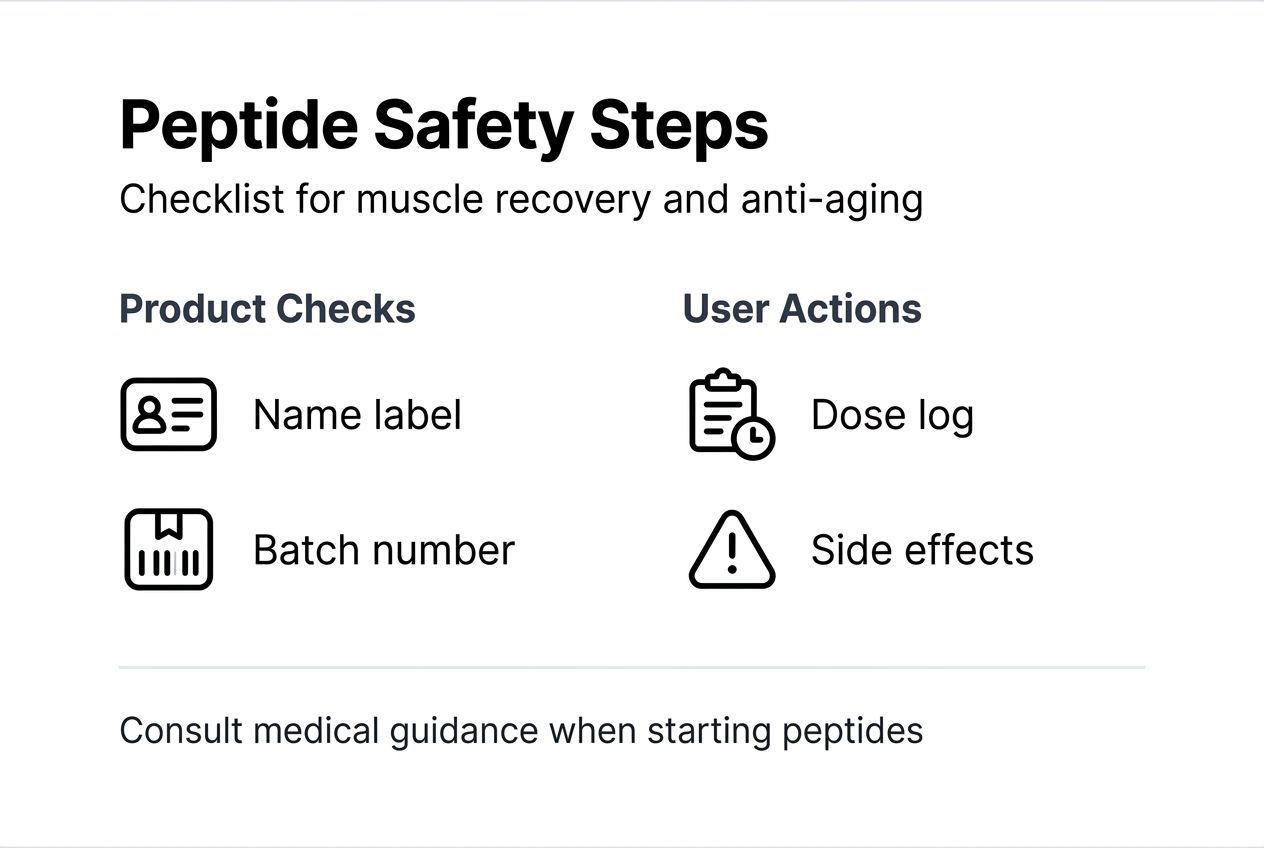
Supplier legitimacy verification starts with researching company history and reputation. Established suppliers typically maintain active online presences with verifiable contact information, physical addresses, and responsive customer service. Check independent review sites, forums, and social media for consistent user experiences. Red flags include recently created websites, no physical address, or exclusively positive reviews that seem manufactured.
Third-party testing documentation must be current and batch-specific. Certificates of analysis should include:
- HPLC chromatography results showing purity percentage
- Mass spectrometry confirming molecular weight and identity
- Endotoxin testing results (typically LAL assay)
- Sterility testing for injectable products
- Heavy metal screening results
- Laboratory contact information for verification
Product labelling provides crucial safety information. Legitimate products clearly state peptide name, sequence (if applicable), purity level, quantity, storage requirements, and reconstitution instructions. Missing or vague labelling suggests poor quality control.
| Aspect | Injectable Peptides | Oral Peptides |
|---|---|---|
| Bioavailability | 80-95% when properly administered | Under 5% due to digestive breakdown |
| Side Effect Profile | 12-18% injection site reactions, infection risk | Minimal localised effects, poor efficacy |
| Onset of Action | Within hours to days | Variable and often minimal |
| Convenience | Requires injection supplies and technique | Simple administration |
| Cost Effectiveness | Lower doses needed due to high absorption | Higher doses required, often impractical |
| Safety Considerations | Sterile technique essential, proper disposal | Few safety concerns beyond contamination |
Steps to safely procure and use peptides:
- Research specific peptides thoroughly, including mechanisms, dosing, and side effects
- Verify supplier credentials, testing protocols, and user reviews across multiple sources
- Request and review current batch certificates of analysis before purchasing
- Start with smallest commercially available quantity to assess tolerance
- Follow proper reconstitution procedures using bacteriostatic water for injectable forms
- Implement strict sterile technique for all injections, including proper needle disposal
- Maintain detailed logs tracking doses, timing, effects, and any adverse reactions
- Begin with lowest recommended dose and increase gradually based on response
- Monitor for side effects and discontinue use if concerning symptoms develop
- Schedule regular check-ins with healthcare providers familiar with peptide therapy
Dosing protocols vary significantly between peptides. Growth hormone secretagogues often require specific timing relative to meals and sleep. Recovery peptides may work better when administered post-workout. Following established protocols rather than experimenting improves both safety and efficacy.
Administration technique matters enormously for injectable peptides. Proper subcutaneous injection involves cleaning the site with alcohol, pinching skin to create a fold, inserting the needle at a 45-degree angle, and aspirating before injection. Rotating injection sites prevents tissue damage and reduces local reactions.
Pro Tip: Consult with healthcare professionals experienced in peptide therapy before starting any protocol. Doctors, naturopaths, or sports medicine specialists familiar with peptides can help personalise approaches, monitor for complications, and adjust protocols based on your response and health status.
Effect monitoring should track both desired outcomes and potential side effects. Keep detailed records of energy levels, recovery time, sleep quality, mood changes, and physical changes alongside any negative reactions. This data helps you assess whether benefits justify continued use and costs.
The comprehensive safety tips and detailed safety checklist provide additional frameworks for systematic evaluation. Safety isn’t a single decision but an ongoing process of assessment and adjustment.
Conclusion and key takeaways for safe peptide use
Peptide safety for muscle recovery and anti-aging depends on understanding biological mechanisms, recognising manufacturing quality variations, managing side effect risks, navigating regulatory complexities, and correcting dangerous misconceptions. Your safety improves dramatically when you source from reputable suppliers, follow proper administration protocols, and maintain realistic expectations.
Quality verification through third-party testing remains your strongest protection against contaminated or ineffective products. The U.S. regulatory landscape offers limited oversight, placing responsibility on consumers to assess product legitimacy independently. Starting with conservative doses, monitoring effects systematically, and consulting knowledgeable healthcare providers minimises risks whilst maximising potential benefits.
Final action points:
- Verify all products through current, batch-specific certificates of analysis
- Research peptide mechanisms, dosing, and side effects before purchasing
- Choose established suppliers with transparent quality control processes
- Implement proper administration techniques and sterile protocols
- Monitor effects closely and adjust protocols based on individual response
- Consult healthcare professionals for personalised guidance and oversight
- Stay informed about regulatory developments and safety alerts
Education remains your best defence against unsafe practices. As peptide research advances and new compounds emerge, maintaining current knowledge helps you make informed decisions. The complexity of peptide safety requires ongoing learning rather than one-time understanding.
Learn more with Northern peptides
To support your safe peptide journey, Northern peptides offers trusted resources and practical tools. Our comprehensive information page provides detailed guidance on peptide selection, safety protocols, and regulatory considerations specific to research applications.

The peptide concentration calculator ensures dosing accuracy by helping you calculate proper reconstitution ratios and injection volumes. This tool eliminates guesswork and reduces dosing errors that compromise both safety and efficacy. Our educational resources section includes in-depth articles, research summaries, and practical guides covering everything from basic peptide science to advanced administration techniques.
Northern peptides maintains rigorous quality standards with third-party testing, transparent sourcing, and responsive customer support. We provide batch-specific certificates of analysis and detailed product information to help you make confident, informed decisions about peptide research.
FAQ
Are peptides safe for women focusing on anti-aging?
Peptides like GHK-Cu and Matrixyl typically stimulate collagen production with minimal systemic effects when used topically or in conservative doses. Safety depends on product purity, proper dosing, and individual health factors. Women should verify supplier testing credentials and start with lowest effective doses whilst monitoring for reactions.
What are the legal risks of buying peptides online in the U.S.?
Most peptides sold online are labelled for research only and classified as unapproved drugs by FDA. Purchasing from suppliers making therapeutic claims or selling contaminated products carries greater legal and safety risks. Reputable research chemical suppliers reduce these dangers through proper labelling and quality control, though regulatory grey areas persist.
How can I minimise side effects when using peptides?
Start with the lowest effective dose and monitor your body’s response carefully before increasing amounts. Purchase only from suppliers providing current certificates of analysis showing high purity and low contamination. Follow recommended administration methods, use proper sterile technique for injections, and maintain detailed logs tracking doses and reactions to identify patterns quickly.
Do all peptides require injection for effectiveness?
Injectable peptides offer 80-95% bioavailability compared to under 5% for most oral formulations due to digestive enzyme breakdown. Topical peptides work effectively for localised skin benefits but don’t provide systemic effects for muscle recovery. Your administration choice should match your specific goals, with injections necessary for most performance and recovery applications.
Can peptides replace medical treatments for aging or injuries?
Peptides may complement conventional medical care but shouldn’t substitute for proven treatments prescribed by healthcare providers. They show promise in specific applications like enhanced recovery and skin health, but claiming they replace established therapies for serious conditions is dangerous. Always consult qualified professionals before using peptides, especially if you have existing health conditions or take medications.