
Confusion around peptides is common, even among experienced trainers and nutritionists. Many believe peptides are complex synthetic substances, yet these molecules are fundamental to daily biological functions from muscle repair to skin health. Peptides are small, diverse biomolecules that regulate signalling, structure, and metabolism in every client’s body. Unpacking the basics of peptide structure clarifies not only how they work, but also dispels myths, allowing you to recommend evidence-based recovery and ageing solutions with greater confidence.
Table of Contents
- Peptide Structure Basics And Misconceptions
- Types Of Peptides And Structural Variations
- How Structure Influences Biological Function
- Applications In Muscle Repair And Recovery Strategies
- Risks, Regulations, And Quality Sourcing For Peptides
Key Takeaways
| Point | Details |
|---|---|
| Understanding Peptides | Peptides are simple biological molecules essential for signalling, structural support, and metabolism, and are naturally consumed in daily food. |
| Structure Determines Function | The specific amino acid sequence and structure of a peptide dictate its function, making accurate recommendations crucial for client outcomes. |
| Types of Peptides | Different peptide types such as collagen, milk, and synthetic peptides serve unique biological functions and should be matched to individual client goals. |
| Quality Sourcing | Ensuring high-quality peptide sourcing through third-party testing and Certificates of Analysis is vital for client safety and effectiveness. |
Peptide structure basics and misconceptions
Peptides are often misunderstood by fitness professionals and nutritionists. Many assume they’re exotic compounds requiring advanced chemistry knowledge. Actually, peptides are straightforward biological molecules that follow predictable rules.
What peptides actually are matters more than the hype suggests. Peptides are small, diverse biomolecules with roles in signalling, structural support, and metabolic regulation. They’re derived either from larger precursor proteins or directly encoded in your client’s genome. Nothing mysterious here—just biology working as intended.
The biggest misconception? That peptides are unnatural or dangerous. Your clients already consume peptides daily in food. Meat, dairy, and plant sources all break down into peptide sequences during digestion. Your body manufactures peptides constantly for immune function, wound healing, and muscle protein synthesis.
Here’s what actually happens:
- Amino acid chains link together in specific sequences
- Peptide bonds form between adjacent amino acids, creating the backbone
- Side chains (R groups) extend from this backbone, determining function
- Folding patterns develop based on chemical properties of those side chains
Understanding research peptide terminology helps you communicate accurately with clients about what they’re actually taking.
Another false belief: peptides work like magic pills. They don’t. Peptides trigger specific biological pathways—collagen synthesis, growth hormone release, or immune response. The timeline matters. Recovery-focused peptides typically require 4–8 weeks of consistent use before clients notice measurable changes in joint comfort or skin elasticity.
Structure determines everything about peptide function. Two peptides with similar amino acids but different sequences perform completely different jobs. The three-dimensional shape is what allows a peptide to bind to specific receptors on cells. Without proper structure, nothing happens.
Misconception number three: all peptides are identical. False. Peptide sequences vary dramatically. A collagen-supporting peptide has a completely different structure than a recovery-enhancing peptide. This is why specificity matters when recommending peptides to clients—you’re not just giving them “peptides,” you’re targeting particular biological processes.
Structure defines function. Change the amino acid sequence, and you change what the peptide does in your client’s body.
Pro tip: When discussing peptides with clients, explain that structure determines function—just like how a house’s architectural design determines its purpose. A peptide’s specific amino acid sequence is its blueprint.
Types of peptides and structural variations
Not all peptides work the same way. Understanding the different types helps you match the right peptide to your client’s specific recovery or anti-ageing goals.
Bioactive peptides are classified by their origin, length, and biological function. Bioactive peptides vary based on amino acid sequences, post-translational modifications, and conformational changes. These structural differences directly determine what the peptide does in the body.
The main peptide categories break down like this:
- Collagen peptides – sourced from animal connective tissue; support joint and skin health
- Milk peptides – derived from dairy proteins; promote muscle recovery and sleep quality
- Plant-based peptides – extracted from seeds and legumes; support immune function
- Synthetic peptides – engineered in laboratories; target specific biological pathways with precision
Length matters more than people realise. Short peptides (2-10 amino acids) absorb quickly into the bloodstream. Medium peptides (11-50 amino acids) work in the digestive tract and bloodstream. Longer peptide chains work differently, often staying localised to specific tissues.

Structural variations stem from post-translational modifications. After the peptide is synthesised, your body can add phosphate groups, glycogen, or lipids. These chemical additions change how the peptide functions. A phosphorylated peptide behaves entirely differently than its unmodified version.
Conformational changes represent another critical variation. Peptides fold into 3D shapes—alpha helices, beta sheets, or random coils. The three-dimensional structure determines which cells recognise and respond to the peptide. Two peptides with identical amino acid sequences but different folding patterns trigger different biological responses.
Why does specificity matter for your clients? Because recovery-focused peptides target muscle protein synthesis. Anti-ageing peptides target collagen production. Immune-supporting peptides activate different cellular pathways entirely. Recommending the wrong type delivers zero results.
Post-translational modifications also affect stability. Some modifications make peptides more resistant to stomach acid and enzymes. Others make them work faster in the bloodstream. Your clients’ peptide choice affects both efficacy and absorption rate.
Peptide type determines destination and function. The same amino acid sequence with different modifications creates entirely different biological outcomes.
When selecting peptides for clients, consider these variation factors:
- Confirm the peptide origin matches your client’s dietary preferences
- Check the peptide length—shorter means faster absorption
- Verify whether post-translational modifications are present
- Understand the target biological pathway
Understanding why peptide research matters for healthy ageing helps you explain to clients which peptide type aligns with their goals.
Pro tip: Create a simple reference chart showing peptide type, length, origin, and target function—this becomes an invaluable client education tool that demonstrates your expertise and builds trust.
Here’s a quick reference comparing major peptide types for client education:
| Peptide Type | Typical Origin | Common Target Function | Ideal Use Case |
|---|---|---|---|
| Collagen peptides | Animal connective tissue | Support joint and skin | Ageing or injury recovery |
| Milk peptides | Dairy proteins | Enhance muscle recovery | Post-exercise supplementation |
| Plant-based peptides | Seeds and legumes | Boost immune response | Vegan or plant-based clients |
| Synthetic peptides | Laboratory synthesis | Specific cell signalling | Targeted therapy or trials |
How structure influences biological function
Peptide structure isn’t just abstract chemistry. It directly determines whether a peptide works in your client’s body or does nothing at all.
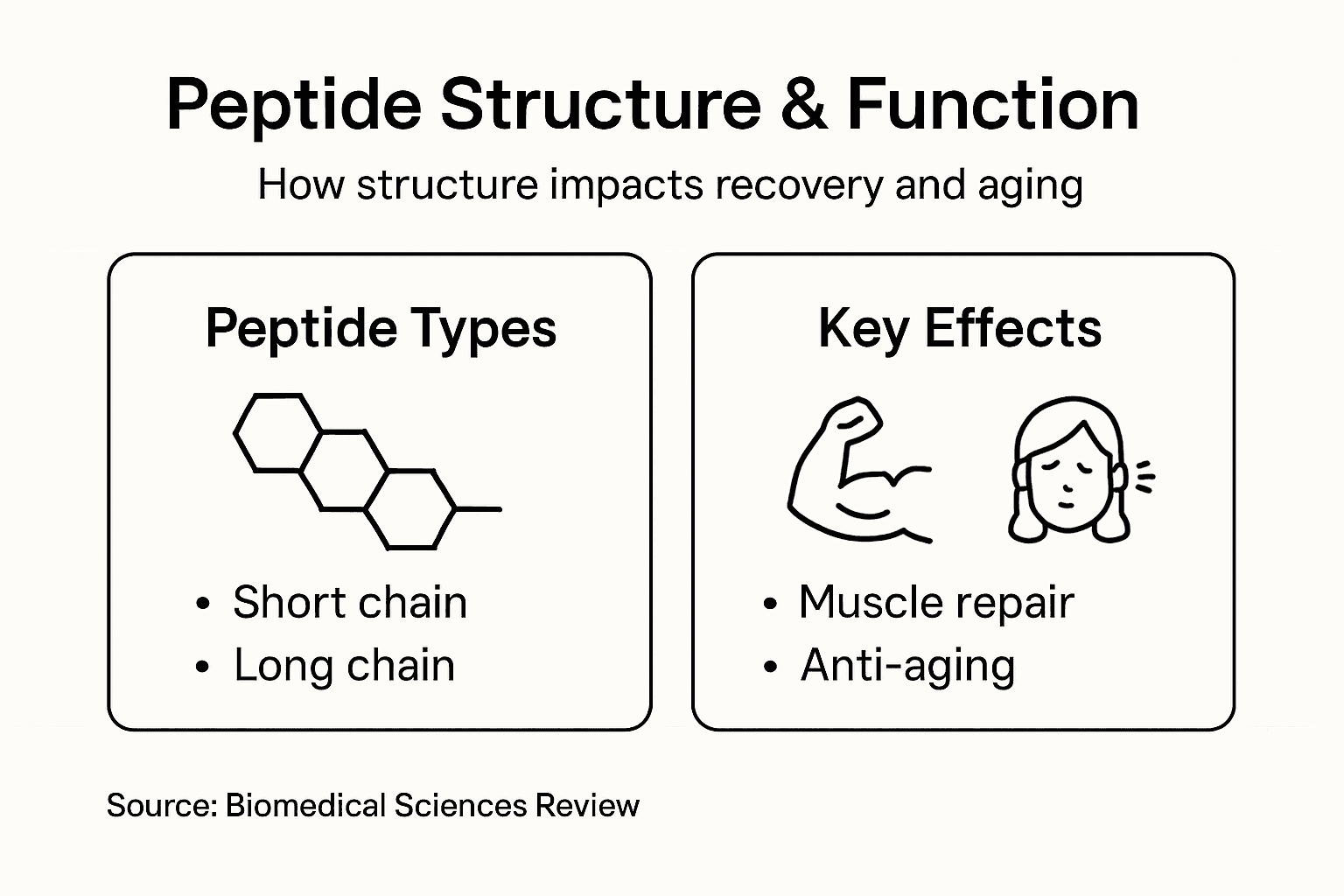
Think of peptide structure as an architectural blueprint. The primary structure is the amino acid sequence—the order of building blocks. Change one amino acid, and the entire peptide changes. Peptide structure determines biological function through its primary, secondary, tertiary, and quaternary organisation. This hierarchical structure controls everything from binding specificity to therapeutic activity.
Here’s how the structural levels work:
- Primary structure – the amino acid sequence (the foundation)
- Secondary structure – local folding patterns like alpha helices or beta sheets
- Tertiary structure – the complete 3D shape of the peptide molecule
- Quaternary structure – how multiple peptides link together (if applicable)
The peptide bond conformation controls how tightly or loosely the chain folds. This matters because folding determines which receptors the peptide can bind to on cell surfaces. A poorly folded peptide cannot reach its target receptors, rendering it useless for recovery or anti-ageing benefits.
Side chain interactions create the actual 3D shape. Hydrophobic side chains cluster together away from water. Hydrophilic side chains face outward toward the aqueous environment. Charged side chains attract or repel each other based on electrical properties. These interactions create the peptide’s unique three-dimensional architecture.
Binding specificity depends entirely on structural fit. Your client’s cells have specific receptor shapes. Only peptides with complementary 3D structures can dock into those receptors and trigger biological responses. A collagen-supporting peptide has a completely different shape than a muscle-recovery peptide. Each fits different receptor locks.
Small structural changes produce massive functional differences. A single amino acid substitution can eliminate binding capability entirely. Post-translational modifications—adding phosphate groups or glycans—alter the 3D shape and change which cells recognise the peptide.
Perfect structure equals perfect function. Even tiny structural variations can transform a powerful peptide into an inactive molecule.
This is why peptide purity and stability matter for your clients:
- Degraded peptides lose their precise 3D structure
- Structural breakdown prevents receptor binding
- Non-functional peptides deliver zero recovery or anti-ageing benefits
- Proper storage maintains structural integrity
When peptides enter the bloodstream, their structure determines how long they survive. Enzymes constantly break down peptides. Structurally stable peptides resist this enzymatic attack longer, providing extended therapeutic windows. Unstable structures deteriorate within minutes.
Pro tip: When recommending peptides to clients, emphasise that structure determines efficacy—ask them to verify peptide purity certificates and storage conditions, as these directly impact whether the peptide’s structure remains intact and functional.
The following table clarifies how peptide structural features impact biological outcomes:
| Structural Feature | Key Influence | Impact on Peptide Function |
|---|---|---|
| Amino acid sequence | Determines 3D folding | Enables receptor binding |
| Post-translational modifications | Alters chemical behaviour | Changes function and absorption |
| Folding/conformation | Creates unique architecture | Dictates cell specificity |
| Purity and stability | Maintains active structure | Ensures efficacy and safety |
Applications in muscle repair and recovery strategies
Muscle repair happens through specific biological pathways. Understanding these pathways helps you recommend peptides strategically to accelerate your clients’ recovery.
When your client exercises, muscle fibres sustain microscopic damage. The body responds by triggering protein synthesis—building new muscle tissue stronger than before. Peptides modulate inflammation and stimulate protein synthesis during this critical repair window. The right peptide at the right time amplifies this natural process.
Here’s how peptides work in muscle recovery:
- Reduce excessive inflammation – control cytokine signalling that delays healing
- Accelerate protein synthesis – signal muscle cells to build new contractile proteins
- Promote cell regeneration – activate satellite cells that fuse into damaged muscle fibres
- Support collagen remodelling – strengthen connective tissue around muscle bundles
Timing matters significantly. Post-workout is when muscle protein synthesis is elevated. Peptides introduced during this window interact with specific receptors on muscle cells. These receptors activate intracellular signalling cascades that increase amino acid uptake and protein assembly.
Certain peptides target growth hormone release, which indirectly supports recovery. Growth hormone amplifies protein synthesis and reduces protein breakdown. Your client gets a dual benefit—more muscle building, less muscle loss.
Other peptides work directly on collagen synthesis. Stronger connective tissue means reduced injury risk and faster adaptation to training stress. Connective tissue repairs slower than muscle, so this application matters for long-term athletic performance.
Inflammation control is often overlooked but critical. Excessive inflammation delays healing and impairs satellite cell function. Peptides that modulate inflammatory markers reduce this delay. Your clients recover faster between sessions.
Muscle ageing presents a different challenge. As clients age, satellite cell function declines. Protein synthesis rates drop. Recovery takes longer. Specific peptides designed for muscle ageing bypass these age-related limitations by directly stimulating the same pathways that decline with time.
Peptides don’t replace training stimulus—they amplify the body’s natural repair response during the recovery window.
Structural specificity enables these targeted applications:
- Recovery peptides have receptors on muscle tissue they specifically bind to
- This binding triggers cell signalling cascades for protein synthesis
- Anti-inflammatory peptides target immune cells releasing inflammatory compounds
- Collagen-supporting peptides activate fibroblasts in connective tissue
Your clients see practical results: reduced soreness 24–48 hours post-training, faster strength recovery between sessions, and improved joint resilience. These outcomes depend on peptide selection matching their specific recovery goal.
Research on research peptides’ impact on muscle growth and recovery reveals timeline expectations your clients should understand.
Pro tip: Recommend peptides that match your client’s training phase—recovery-focused peptides post-workout, collagen-supporting peptides on rest days, and age-targeted peptides during macro-cycles lasting 8–12 weeks for measurable adaptation.
Risks, regulations, and quality sourcing for peptides
Peptide quality directly impacts your clients’ results and safety. Poor sourcing creates real risks that extend beyond ineffectiveness.
The peptide market has minimal regulation in many jurisdictions. This creates a wild landscape where quality varies dramatically between suppliers. Your responsibility as a health professional is understanding which sources meet actual standards and which ones cut corners.
Contamination risks are significant. Low-quality peptides may contain bacterial endotoxins, heavy metals, or unintended chemical byproducts. Your client’s immune system reacts to these contaminants, creating inflammation that defeats the recovery benefits they sought. Some contaminated peptides trigger allergic responses or gastrointestinal distress.
Here’s what separates quality suppliers from problematic ones:
- Third-party testing – independent labs verify peptide purity and identity
- Certificate of Analysis – documentation showing exact composition and contamination screening
- Sterility assurance – confirmation that bacterial and fungal growth is absent
- Heavy metal screening – testing for lead, cadmium, and mercury contamination
- Potency verification – confirmation the peptide works at stated concentrations
Misidentification happens more often than you’d expect. A supplier receives peptide powder labelled as one type, but actual chemical analysis reveals it’s something else entirely. Your clients get zero results because they’re taking the wrong peptide altogether.
Regulatory frameworks vary by country. Canadian suppliers face different requirements than American or European sources. Understanding peptide quality control standards helps you identify suppliers meeting rigorous testing protocols.
Degradation during storage is another hidden risk. Peptides deteriorate if exposed to heat, light, or humidity. An improperly stored peptide loses potency over weeks. Your client takes a degraded molecule that no longer functions, wasting time and money.
Stability data matters. Reputable suppliers provide stability studies showing how their peptides degrade over time under specified conditions. This tells you exactly how long a peptide remains effective after purchase.
Quality sourcing isn’t optional—it’s the foundation of client results and safety.
Risk factors to evaluate:
- Does the supplier provide Certificate of Analysis for every batch?
- Are tests conducted by independent, accredited laboratories?
- Can they trace peptide origin from synthesis through final packaging?
- Do they offer potency guarantees or money-back assurance?
- Is storage information clearly documented?
Ethical sourcing also matters. Understanding ethical sourcing practices for peptides ensures you recommend suppliers aligned with research integrity standards. Your professional reputation depends on this due diligence.
Lab testing serves as your verification mechanism. When lab testing confirms peptide safety and results, you gain confidence recommending that source to clients.
Pro tip: Always request Certificate of Analysis documentation before recommending any peptide to clients—this single step eliminates 90 per cent of quality issues and demonstrates professional diligence in your practice.
Unlock the Power of Peptide Structure for Optimal Recovery and Healthy Ageing
Understanding peptide structure is crucial to overcoming the challenges of ineffective supplements and slow recovery. If your clients struggle to see real results because of peptide purity, absorption, or the right biological target, it matters to choose solutions that align with these vital scientific principles. Key concepts from this article like post-translational modifications, peptide folding, and receptor binding explain why not all peptides deliver the same benefits.

Explore our comprehensive resources and high-quality research peptides at Northern Peptides where science meets practical recovery and anti-ageing strategies. Benefit from:
- Verified purity and stability backed by Certificate of Analysis
- Detailed educational materials on Research Peptide Terminology to communicate confidently with clients
- Targeted peptide options designed for specific recovery and ageing pathways
Don’t let vague promises delay your clients’ progress. Act now to harness the exact peptide structures that drive meaningful, measurable results. Visit Northern Peptides today and empower your practice with trusted peptide science.
Frequently Asked Questions
What are peptides and how do they function in the body?
Peptides are small, diverse biomolecules made of amino acids that play critical roles in signalling, structural support, and metabolic regulation in the body. They are either derived from larger proteins or directly encoded in your genome.
How does peptide structure influence its function?
The structure of a peptide, including its amino acid sequence and folding patterns, directly determines how it interacts with cells and receptors. A slight change in the sequence can lead to very different physiological outcomes, highlighting the importance of structure in peptide function.
What types of peptides are beneficial for muscle recovery?
Peptides that focus on muscle recovery often work by reducing inflammation, accelerating protein synthesis, and promoting cell regeneration. Examples include collagen peptides and specific bioactive peptides designed to enhance the repair processes after exercise.
Why is it important to source peptides from reputable suppliers?
Sourcing peptides from reputable suppliers is essential to ensure quality and safety. Poor-quality peptides can contain contaminants that not only hinder recovery benefits but also pose health risks. Always look for suppliers that provide Certificate of Analysis and third-party testing to verify purity and potency.