You’re constantly bombarded with new anti-aging ingredients, aren’t you? One week it’s retinol, the next it’s ceramides. But lately, you’re hearing a lot about peptides. You’re probably wondering: are these just another fleeting trend, or do they genuinely offer something different? And even if they do, what’s the deal with all the talk about “natural” versus “synthetic”? It’s confusing to navigate, especially when brands use these terms so loosely.
Quick Answer: Natural vs. Synthetic Peptides
Peptides are short chains of amino acids; they’re like messengers for your cells. Natural peptides are found in organisms, while synthetic ones are made in labs. Both can be effective for skin health, but synthetic versions often offer greater stability, targeted action, and purity, enabling precise cosmetic and therapeutic applications.
So, what exactly are peptides? Think of them as tiny pieces of protein. Proteins are made up of long chains of amino acids, and when you break those chains down into smaller segments, you get peptides. These little guys act as cellular messengers, telling your cells what to do – like produce more collagen, repair damage, or reduce inflammation. It’s a pretty elegant system, really.
The Role of Amino Acids
It all starts with amino acids. These are the building blocks of life, forming proteins that are essential for virtually every function in your body. When we’re talking about skin, amino acids link together in specific sequences to form peptides, which then go on to create larger proteins like collagen and elastin. Without enough of the right amino acids, your skin simply can’t produce these vital structural proteins.
How Peptides Work in Your Skin
When you apply peptides to your skin, they can penetrate the outer layers and get to work. Different types of peptides have different jobs. Some signal your fibroblasts – the cells that make collagen – to produce more of it, helping to plump up your skin and reduce fine lines. Others might tell your body to heal a wound faster or to calm down an inflammatory response. It’s like sending a very specific instruction manual to your cells. How do they know what to do? Because their structure mimics natural signals that your cells already recognize.
In the ongoing debate of natural versus synthetic peptides, it’s essential to consider various perspectives and research findings. A related article that delves into alternatives to traditional peptide sources can be found at Northern Peptides. This resource provides insights into the benefits and drawbacks of different peptide options, helping readers make informed decisions about their use in various applications.
What Are Natural Peptides?
When we talk about “natural” peptides, we’re referring to those derived directly from living organisms or natural sources. These have been part of biological processes for eons. It seems pretty straightforward, right?
Sources of Natural Peptides
You’ll find natural peptides in all sorts of places. For instance, collagen peptides often come from animal sources like bovine or marine collagen. These are essentially fragments of larger collagen proteins, broken down so your body can more easily absorb and utilize them. You also get peptides from plant sources; for example, some peptides derived from rice or soy are used in skincare for their anti-aging or brightening properties. Even milk contains peptides that can have beneficial effects.
Pros and Cons of Natural Peptides
There’s definitely an appeal to using something “natural.” Many people feel safer knowing an ingredient came directly from nature. They’re often seen as more readily recognized by the body, which can sometimes lead to good absorption. However, natural doesn’t always mean better, or even safer.
On the downside, natural peptides can be less stable. They might degrade more quickly when exposed to air, light, or heat, meaning their effectiveness can diminish before they even reach your skin. Purity can also be a challenge; extracting peptides from natural sources sometimes leaves behind other compounds that might not be beneficial, or could even cause allergic reactions. It’s also harder to control the exact concentration and size of these peptides, which impacts their overall efficacy.
What Are Synthetic Peptides?

Now, let’s look at their counterparts: synthetic peptides. These are created in a laboratory. Don’t let the word “synthetic” scare you; in many cases, it actually offers significant advantages.
The Science Behind Synthetic Peptides
Scientists synthesize peptides by linking specific amino acids together in a precise sequence. This is a highly controlled process. They can design peptides to mimic the exact structure of natural peptides or even create entirely new ones with specific functions. It’s like building a targeted key for a specific cellular lock. This allows for incredibly precise targeting of skin concerns.
Examples in Skincare
You’ve probably seen synthetic peptides listed on ingredient labels without even realizing it. Ingredients like Palmitoyl Pentapeptide-4 (Matrixyl), Acetyl Hexapeptide-8 (Argireline), and Copper Peptides are all excellent examples. Matrixyl, for instance, signals collagen production, much like a natural peptide would, but with optimized stability and efficacy. Argireline works a bit like Botox, relaxing muscle contractions to reduce expression lines, but without the injections. Copper peptides are renowned for their wound-healing and anti-inflammatory properties, and they’re also synthesized for consistent potency.
Pros and Cons of Synthetic Peptides
The biggest advantage of synthetic peptides is their stability and purity. Because they’re manufactured in a controlled environment, formulators can ensure a consistent product with minimal impurities. This means they’re less likely to cause irritation (unless you’re allergic to a specific amino acid sequence or how they’re delivered). Synthetic peptides can also be engineered to be more bioavailable, meaning your skin can absorb and use them more effectively.
Are there downsides? Sometimes, the cost of manufacturing complex synthetic peptides can be higher, which might be reflected in the product price. And while they are designed for specific functions, there’s always the ongoing research into long-term effects, though current evidence overwhelmingly supports their safety and efficacy in cosmetic formulations. Usually, the benefits vastly outweigh these minor considerations.
Natural vs. Synthetic Peptides: The Key Differences

It’s not always a case of one being inherently “better” than the other, but rather a question of precision, stability, and control. It’s somewhat similar to comparing a wild herb to a pharmaceutical-grade extract of that same herb.
Purity and Consistency
This is where synthetic peptides really shine. When a peptide is synthesized in a lab, chemists can control the exact sequence of amino acids, ensuring 100% purity and no unwanted contaminants. This consistency means that every batch of a product containing that peptide should perform identically.
With natural peptides, especially those extracted from plants or animals, achieving that same level of purity and consistency is much harder. There can be batch-to-batch variations depending on the source material, extraction method, and environmental factors. This can lead to less predictable results.
Stability and Bioavailability
Imagine you have a delicate message written on a piece of paper. If it gets wet or torn, the message is lost. Natural peptides can be a bit like that paper; they can be quite fragile. They often have a shorter shelf life and are more susceptible to degradation from light, heat, or enzymes in the skin. This means the peptide might not be active enough to do its job by the time it reaches its target cell.
Synthetic peptides, conversely, are often designed with enhanced stability in mind. Scientists can modify their structure slightly to make them more resilient, ensuring they remain active for longer and can penetrate the skin more effectively. This enhanced bioavailability means more of the peptide actually gets to where it needs to go, leading to better results.
Targeted Action and Efficacy
This is perhaps the most significant difference. With natural peptides, while they perform various biological functions, you’re getting a mix of different peptides, and it’s harder to isolate one specific effect. It’s like a general instruction set.
Synthetic peptides can be specifically engineered to perform one particular job. If you want to boost collagen, there’s a peptide for that. If you want to reduce muscle contractions, there’s a peptide for that too. This means highly targeted action and, usually, greater efficacy for specific concerns. It’s like a laser-focused instruction manual. You’re not just hoping for a good outcome; you’re often getting a scientifically proven one.
When exploring the advantages and disadvantages of natural versus synthetic peptides, it’s essential to consider various perspectives on their applications and efficacy. A related article that delves deeper into this topic can be found at Northern Peptides, which provides valuable insights for health professionals. Understanding the nuances between these two types of peptides can significantly impact their use in therapeutic settings and enhance the overall effectiveness of treatment strategies.
Which Type is “Better” for Your Skin?
“`html
| Criteria | Natural Peptides | Synthetic Peptides |
|---|---|---|
| Cost | Higher cost due to extraction and purification process | Lower cost due to chemical synthesis |
| Purity | May contain impurities from natural sources | High purity due to controlled synthesis |
| Effectiveness | May have better bioavailability and activity | Can be tailored for specific functions |
| Safety | Generally well-tolerated with minimal side effects | Potential for immunogenicity and side effects |
“`
This is the million-dollar question, isn’t it? And like most things in skincare, there’s no single, one-size-fits-all answer. However, I’ve found that, given the current research and formulation capabilities, synthetic peptides generally offer significant advantages for targeted skin concerns.
When Synthetic Peptides Reign Supreme
For precise anti-aging benefits, wound healing, or very specific cellular signaling, synthetic peptides are undeniably more reliable. Their controlled structure allows for:
- Predictable Results: You know what you’re getting with a synthetic peptide, and there’s often robust scientific data to back up its claims.
- Enhanced Stability: They’re formulated to last and remain active during transport and application.
- Targeted Action: They’re designed to do a specific job, and they usually do it very well.
- Reduced Allergenic Potential: While not entirely free of risk, the purity often means less chance of reacting to unknown contaminants found in some natural extracts.
Think about it this way: if you’re trying to fix a leaky faucet, you want a specific tool designed for that job, not a general-purpose wrench that might or might not fit. Synthetic peptides are those precision tools.
Complementary Roles: Natural Peptides in Focus
Does this mean natural peptides are useless? Absolutely not! They still have a place, especially when used for more generalized nutritional support or overall skin health rather than targeting a very specific issue. For instance, hydrolyzed collagen peptides taken orally can support overall skin elasticity and hydration, working from the inside out. Some plant-derived peptides can offer antioxidant benefits or general skin conditioning.
It’s not truly an “either/or” situation; sometimes, the best approach involves a combination. You might drink a collagen peptide supplement (natural) for overall wellness, while also applying a targeted synthetic peptide serum to address fine lines. It seems to be about understanding the specific role each type plays.
Ultimately, when you’re looking for measurable changes in your skin associated with anti-aging or skin repair, I lean heavily towards well-formulated products that utilize expertly designed synthetic peptides. They offer the kind of scientific precision and proven efficacy that’s hard to beat. Don’t be swayed by marketing jargon; look for scientific evidence and reputable brands.
When exploring the differences between natural and synthetic peptides, it’s essential to consider various factors such as efficacy, safety, and cost. A related article that delves into the top peptide suppliers for health can provide valuable insights into where to source these compounds effectively. For those interested in enhancing their understanding of peptide options, this resource is particularly useful. You can read more about it in this informative piece on top peptide suppliers.
How to Choose the Right Peptide Product
Navigating the peptide market can feel overwhelming, can’t it? With so many choices, how do you decide what’s genuinely effective for your skin?
Decoding Ingredient Lists
This is crucial. Don’t just look for “peptides” on a label. Look for specific peptide names. As I mentioned before, Palmitoyl Pentapeptide-4, Acetyl Hexapeptide-8, Copper Peptides, Oligopeptide, and Tripeptide are some common and effective synthetic examples. If a product just says “plant peptides” without further detail, it’s harder to assess its specific benefits or scientific backing. You want transparency.
Also, examine the concentration. While some peptides are effective at very low concentrations, a really minuscule amount might not deliver the desired results. Usually, reputable brands will highlight the key peptide ingredients and often provide some information about their efficacy.
Considering Other Ingredients
Peptides rarely work alone. They’re often combined with other beneficial ingredients that enhance their performance or address other skin concerns. Look for formulations that also include:
- Antioxidants (e.g., Vitamin C, Vitamin E, Ferulic Acid): These protect your skin from environmental damage, complementing the repair work of peptides.
- Hyaluronic Acid: Provides immediate hydration and helps plump the skin, creating an optimal environment for peptide activity.
- Ceramides: Crucial for maintaining a healthy skin barrier, which helps peptides penetrate more effectively and protects your skin overall.
- Niacinamide (Vitamin B3): Reduces inflammation, improves barrier function, and can help with collagen production.
A well-formulated product will have a synergistic blend of ingredients, creating a more comprehensive approach to skin health.
Patch Testing and Patience
No matter how promising an ingredient sounds, always patch test a new product, especially if you have sensitive skin. Apply a small amount to an inconspicuous area, like behind your ear or on your inner forearm, for a few days to check for any adverse reactions.
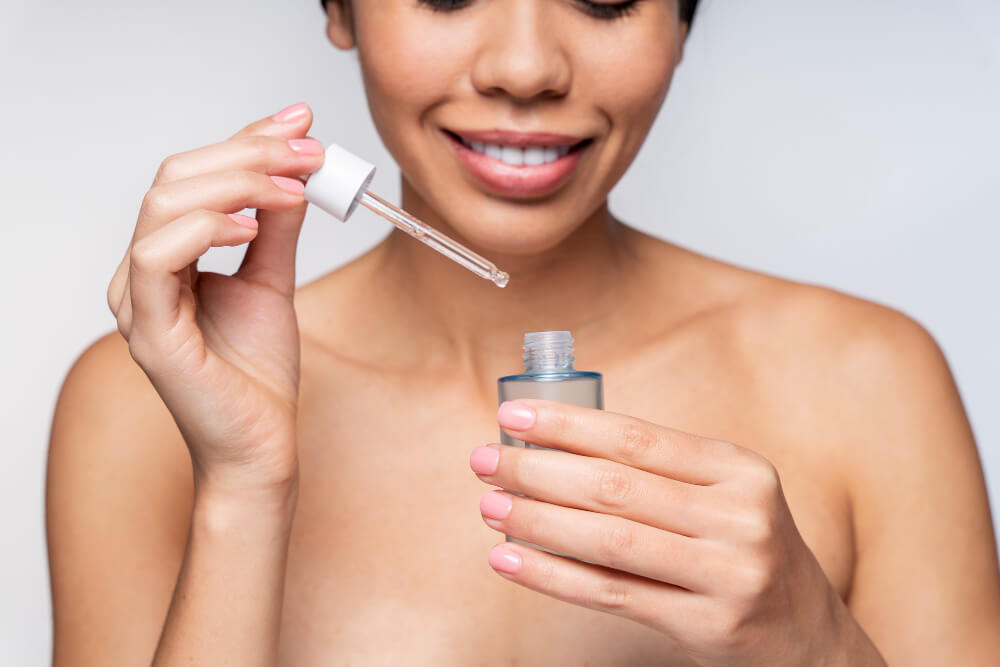
And here’s the kicker: peptides require patience. You’re not going to see dramatic results overnight. Cellular processes take time. Usually, you need to use a peptide product consistently for at least 6-12 weeks to start noticing real improvements in skin texture, firmness, and the appearance of fine lines. It’s an investment in your skin’s long-term health, not a quick fix.
You’ve now got a clearer picture of the peptide landscape, understanding that when it comes to targeted skin transformation, synthetic peptides often hold the edge due to their precision and stability. Now, start investigating the ingredient lists of your current anti-aging products to see what peptides they actually contain. Then, consider adding a well-formulated synthetic peptide serum to your routine and commit to using it consistently for at least two months to truly see what it can do for your skin.
FAQs
What are natural peptides?
Natural peptides are short chains of amino acids that are naturally produced in the body. They play a crucial role in various biological processes, such as cell signaling, immune response, and hormone regulation.
What are synthetic peptides?
Synthetic peptides are artificially created in a laboratory setting. They are designed to mimic the structure and function of natural peptides and can be customized for specific therapeutic or research purposes.
What are the benefits of natural peptides?
Natural peptides are biologically active and are involved in numerous physiological functions. They are generally well-tolerated by the body and have a lower risk of adverse reactions compared to synthetic peptides.
What are the benefits of synthetic peptides?
Synthetic peptides offer the advantage of being customizable, allowing for the development of targeted therapies for various medical conditions. They also have a longer shelf life and can be produced in larger quantities compared to natural peptides.
Which is better, natural or synthetic peptides?
The choice between natural and synthetic peptides depends on the specific application. Natural peptides are often preferred for their biocompatibility and lower risk of side effects, while synthetic peptides offer the advantage of customization and scalability for therapeutic and research purposes.