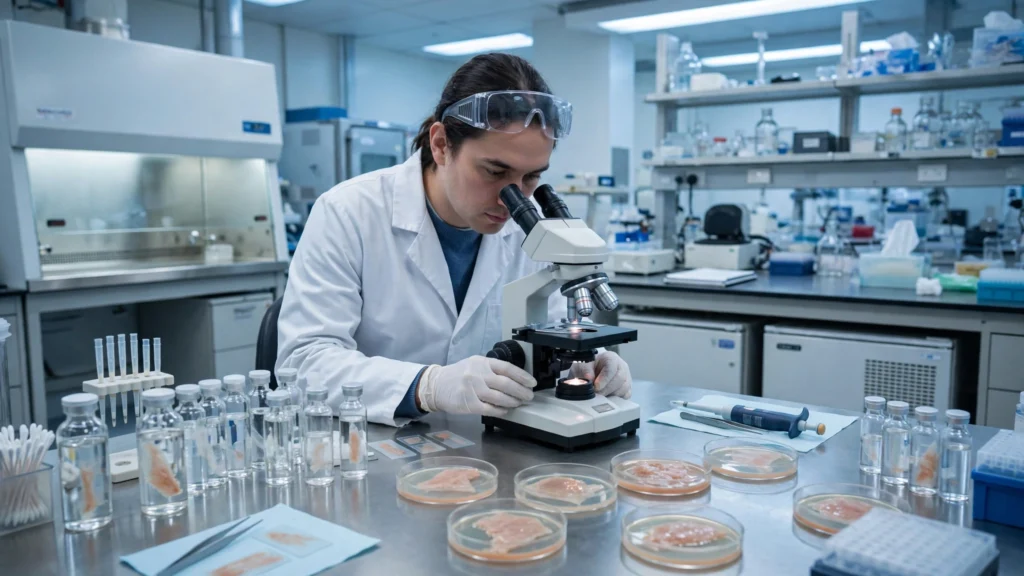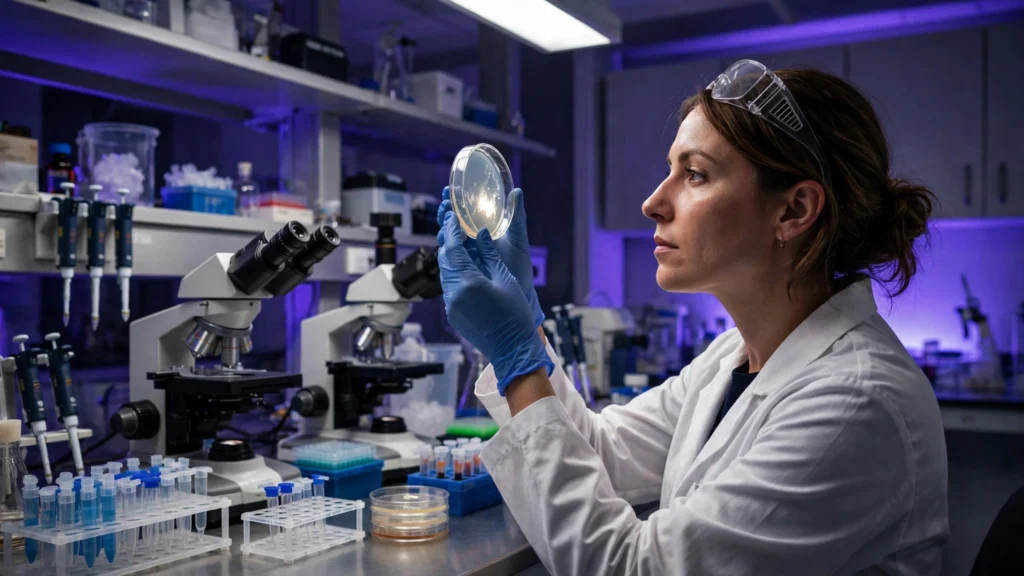

Human health does not exist in isolation. It is shaped by biological interactions involving other animals, plants, microorganisms, water, soil, and the environments people share.
That understanding forms the foundation of One Health research, an interdisciplinary scientific approach that examines how human, animal, and ecosystem health influence one another.
For decades, physicians, veterinarians, microbiologists, ecologists, and environmental scientists frequently investigated overlapping health problems through separate research systems. A respiratory virus might be studied in a clinical laboratory, while its animal reservoir was monitored elsewhere. Antibiotic-resistant bacteria could be examined in hospital patients without fully accounting for their presence in livestock, waterways, or food-production environments.
One Health research seeks to connect those observations.
The scientific importance of this approach extends beyond infectious disease. It includes antimicrobial resistance, food safety, environmental contamination, wildlife ecology, molecular surveillance, and the effects of land-use change on biological systems.
International One Health Day takes place annually on November 3. Established in 2016, the observance encourages scientific collaboration across human, animal, and environmental disciplines.
Ahead of One Health Day 2026, this Northern Peptides research overview examines seven major areas where integrated science is improving understanding of interconnected biological systems.
The central question is straightforward: What becomes scientifically visible when researchers stop treating human, animal, and environmental health as separate systems?
What Is One Health Research?
One Health research is an integrated approach to studying health-related challenges that involve interactions among people, animals, plants, microorganisms, and the environment.
The One Health High-Level Expert Panel developed an internationally recognized definition in 2021, describing an approach intended to sustainably balance and improve health across these connected domains.
That definition informed the One Health Joint Plan of Action for 2022–2026, developed by four international organizations:
- World Health Organization (WHO)
- Food and Agriculture Organization of the United Nations (FAO)
- United Nations Environment Programme (UNEP)
- World Organisation for Animal Health (WOAH)
The Joint Plan recognizes that many biological threats cannot be adequately understood through a single scientific discipline.
Why conventional research boundaries can be limiting
Consider a bacterial pathogen identified in a patient with a gastrointestinal infection.
Clinical researchers can determine the organism’s identity, evaluate its antibiotic susceptibility, and investigate how the infection developed.
However, additional questions may remain unanswered.
Did the organism originate in food? Was it circulating among livestock? Did environmental contamination contribute to exposure? Does the bacterial genome contain resistance genes also observed in animal or wastewater samples?
Answering those questions may require collaboration among clinical microbiologists, veterinary researchers, food-safety scientists, environmental laboratories, and molecular epidemiologists.
The goal is not simply to collect more data. It is to determine whether observations from different biological systems provide a more accurate explanation of how disease emerges, spreads, and persists.
One Health is a research framework, not a treatment
An important distinction concerns the scientific status of One Health itself.
One Health is not a medication, biological compound, medical procedure, or experimentally established treatment.
It is a framework for coordinating research, surveillance, prevention, and public-health decision-making.
Its effectiveness must therefore be evaluated through measurable outcomes, including earlier hazard detection, improved identification of transmission pathways, more useful surveillance information, and better-informed prevention strategies.
An integrated approach is scientifically attractive, but its benefits should not be assumed without evidence.
1. Zoonotic Disease Research Reveals the Importance of Cross-Species Transmission
One of the most established applications of One Health research concerns zoonotic diseases.
A zoonotic disease is an infectious disease capable of passing between animals and humans.
Depending on the pathogen, transmission may occur through direct contact, contaminated food or water, insect vectors, or other exposure pathways.
The US Centers for Disease Control and Prevention estimates that more than six in ten known human infectious diseases can spread from animals, while approximately three-quarters of new or emerging infectious diseases in humans originate in animals.
These broad estimates illustrate why animal health and human health surveillance are closely related.
They do not mean that every animal-associated pathogen poses a substantial threat to humans.
Understanding the spillover process
Pathogen spillover occurs when an infectious agent crosses from one host species into another.
For researchers, the existence of a pathogen in an animal population is only one element of spillover risk.
Several biological conditions must align:
- The pathogen must be present in a source population.
- Transmission must occur at a sufficient level.
- A susceptible recipient population must become exposed.
- The pathogen must enter and function within the recipient’s biological systems.
- It must replicate and potentially spread further.
Not every exposure results in infection, and not every successful cross-species infection leads to sustained transmission.
This distinction is especially important when interpreting viral sequence discoveries.
Detecting a virus in wildlife does not automatically demonstrate that it can infect humans.
Likewise, laboratory evidence that a viral protein interacts with a particular receptor does not, by itself, establish real-world transmission capability.
What molecular research contributes
Modern zoonotic-disease research frequently uses genomic sequencing, phylogenetic analysis, receptor-binding experiments, and laboratory infection models.
Genomic sequencing helps researchers compare genetic similarities and differences among pathogen isolates.
Phylogenetic analysis can suggest evolutionary relationships among sampled organisms.
Cellular experiments can investigate whether pathogen proteins interact with receptors associated with particular host species.
However, each technique answers a different question.
A genetic relationship does not independently establish the precise direction of transmission.
A receptor-binding result does not establish the probability of disease in an exposed population.
And experimental infection under controlled conditions may not represent ordinary environmental exposure.
The strongest conclusions emerge when molecular findings are interpreted alongside epidemiology, host ecology, and field observations.
Why this matters
One Health researchers seek to identify conditions that create opportunities for cross-species transmission.
Such knowledge can inform surveillance priorities and improve understanding of where preventive interventions may be useful.
Nevertheless, predicting the timing and location of individual spillover events remains challenging.
Most surveillance systems observe only a fraction of the microorganisms and host interactions occurring in natural environments.
2. Land-Use Change Can Alter Pathogen Ecology
Biological systems do not operate independently of landscape use.
Deforestation, agricultural expansion, road construction, irrigation, urban growth, and wildlife habitat fragmentation can change how animal species interact with one another and with people.
These changes can affect feeding behavior, breeding patterns, animal migration, water availability, population density, and exposure to pathogens.
Researchers studying emerging diseases have identified relationships among ecological disturbance, wildlife distribution, livestock production, and human exposure.
Evidence from global hotspot research
A major 2017 assessment led by EcoHealth Alliance researchers predicted that hotspots for emerging zoonotic diseases were likely to occur in forested tropical regions undergoing significant land-use change and containing high levels of mammal biodiversity.
The findings supported an important One Health principle: an environmental change may alter opportunities for pathogen transmission before a related human case is recognized.
However, land-use change alone does not explain an outbreak.
Relationships among habitat modification and disease depend on the particular pathogen, its host species, vector populations, local agricultural systems, and human activity.
Responses can vary substantially among locations.
Some ecological changes may increase contact among species, while others may reduce particular disease risks.
Researchers must therefore evaluate transmission mechanisms instead of assuming that every form of environmental disturbance produces the same biological effect.
A long-term investigation involving Hendra virus
Hendra virus provides a useful illustration of why longitudinal ecological research matters.
The virus circulates among Australian flying foxes and can cause severe disease in horses, which may then expose people.
Australian research integrating long-term wildlife, landscape, and infection data found relationships among habitat loss, food shortages, bat movement, nutritional status, viral shedding, and Hendra spillover risk.
The value of this work was not merely that bats carried a potentially dangerous virus.
Researchers accumulated multiple layers of evidence, including:
- Seasonal patterns
- Changes in available food resources
- Bat migration and overwintering behavior
- Nutritional condition
- Viral shedding
- Proximity to horses
- Documented spillover events
The study design enabled investigators to investigate when and where risk changed, rather than simply documenting that a pathogen existed in wildlife.
What the Hendra findings do and do not establish
The Hendra research supports the broader hypothesis that ecological pressures can influence the circumstances under which viral shedding and cross-species exposure occur.
It does not establish that habitat loss will produce the same effects across every virus-host system.
Nor does it mean that an individual spillover event can be accurately predicted solely from landscape condition.
Instead, it demonstrates the value of collecting ecological, behavioral, physiological, and virological information over extended periods.
Climate change and future research
Climate change may compound these relationships by altering temperatures, rainfall, vegetation, water access, and species distributions.
Vectors such as mosquitoes and ticks may become established in locations where environmental conditions were previously less favorable.
At the same time, climate-associated changes should not be interpreted as uniform.
Higher temperatures do not automatically produce more transmission for every pathogen.
Effects depend on vector survival, development rates, host behavior, local infrastructure, and the biology of the infectious agent.
One Health research provides a framework for investigating these variables as interacting components rather than unrelated phenomena.
3. Antimicrobial Resistance Requires Integrated Biological Surveillance
Antimicrobial resistance occurs when microorganisms evolve mechanisms that reduce the effectiveness of medicines designed to inhibit or kill them.
Although AMR has sometimes been described as a general decline in antibiotic effectiveness, the underlying biology is specific.
Resistance may involve genetic mutations, horizontally transferred resistance genes, altered drug targets, changes in cell permeability, enzymatic drug inactivation, or efflux systems capable of removing antimicrobial compounds from bacterial cells.
These mechanisms can develop and spread across different environments.
Why resistance is not confined to hospitals
Clinical infections represent only one component of the AMR research picture.
Resistant bacteria and resistance genes have also been investigated in:
- Community-associated infections
- Companion animals
- Livestock
- Food products
- Aquaculture
- Soil
- Rivers and lakes
- Wastewater
- Wildlife
- Hospital and municipal environments
Human medicine, veterinary medicine, food production, and environmental management can therefore influence overlapping microbial populations.
Integrated surveillance seeks to determine whether genetically related organisms or resistance elements appear across those settings, and if so, through which mechanisms they may move.
That task is scientifically complex because identifying a similar resistance gene in two locations does not automatically establish how it arrived there.
Researchers may require genomic context, temporal sampling, geographic data, bacterial species identification, and information about mobile genetic elements.
Environmental antimicrobial resistance
Environmental systems can influence both the distribution and selection of resistant microorganisms.
Wastewater may contain mixtures of bacteria, antimicrobial residues, resistance genes, and mobile genetic elements from households, hospitals, agriculture, and industry.
Soil and water systems may also contain naturally occurring resistance determinants.
That natural background presents a significant interpretation challenge.
The presence of a resistance gene in an environmental sample does not necessarily demonstrate recent pollution, clinical relevance, or an actionable human exposure pathway.
Distinguishing natural microbial diversity from resistance patterns associated with human activity requires careful controls and comparison across locations and time periods.
The role of laboratory methodology
AMR studies use a range of methods with different strengths and limitations.
Culture-based testing can isolate viable bacteria and determine whether they grow in the presence of specific antimicrobial concentrations.
PCR-based methods can detect selected resistance genes.
Whole-genome sequencing can identify resistance determinants and examine relationships among isolates.
Metagenomic sequencing can investigate resistance genes in complex communities without culturing every organism.
However, detecting a resistance gene through sequencing does not necessarily show that the gene is expressed, that its host organism is viable, or that it presents a clinically meaningful risk.
One Health AMR research is strongest when genetic findings are combined with microbiology, exposure assessment, veterinary information, clinical outcomes, and environmental data.
4. Canada Provides an Important Example of One Health Surveillance
Canada has developed several systems that demonstrate the practical value of integrated biological surveillance.
One prominent example is the Canadian Integrated Program for Antimicrobial Resistance Surveillance, commonly known as CIPARS.
Established in 2002 by the Public Health Agency of Canada, CIPARS monitors antimicrobial use and resistance across components of the agri-food system and investigates relationships between antimicrobial exposure in animals and resistance in bacterial populations relevant to animal and human health.
How integrated Canadian surveillance works
Canadian surveillance activities can bring together information from:
- Human clinical isolates
- Animals on farms
- Animals at slaughter
- Retail meat
- Animal clinical isolates
- Antimicrobial-use and sales information
- Laboratory susceptibility testing
- Genomic analysis
By evaluating these data together, researchers can ask whether related resistance patterns are emerging simultaneously in multiple parts of the system.
For example, surveillance might identify increased resistance in bacteria recovered from retail food and observe similar patterns in human clinical samples.
Such findings warrant investigation, but they still require careful interpretation.
Similar resistance findings do not independently prove that food was the source of human infection.
Genomic relationships, timing, geography, population exposure, and bacterial ecology all affect the strength of that conclusion.
Nevertheless, integrated surveillance can identify questions that isolated monitoring may not reveal.
Canadian research and whole-genome sequencing
Recent Canadian research has also examined the use of whole-genome sequencing to improve characterization of antimicrobial resistance and relatedness among bacterial isolates.
Genome-based methods may clarify whether resistance is associated with particular bacterial lineages, plasmids, genetic mutations, or other mobile elements.
The transition from conventional laboratory methods to sequencing-based surveillance also raises methodological questions about standardization, comparability with historical data, bioinformatics capacity, and appropriate clinical interpretation.
Canada’s experience illustrates a central One Health research principle: data integration is valuable, but only when the limitations and purpose of each data stream are understood.
Avian influenza as another One Health example
Highly pathogenic avian influenza also demonstrates the need for cross-disciplinary surveillance in Canada.
The virus affects wild birds and poultry and can occasionally infect mammals, including people under particular exposure conditions.
Understanding its spread requires ornithology, veterinary pathology, wildlife ecology, poultry epidemiology, viral genomics, and occupational exposure research.
No single surveillance system can independently capture that information.
Canadian One Health networks have therefore emphasized coordination among wildlife, agricultural, environmental, and public-health researchers when investigating avian influenza activity.
5. Genomic Sequencing Is Transforming Pathogen Surveillance
Genomic technologies have substantially changed how researchers investigate infectious diseases across One Health systems.
Sequencing allows scientists to examine the genetic material of bacteria, viruses, fungi, and parasites in detail, often revealing relationships that conventional laboratory methods cannot distinguish.
Whole-genome sequencing
Whole-genome sequencing determines most or all of an organism’s genetic sequence.
Researchers can use those data to:
- Compare isolates from different hosts or locations
- Identify mutations and resistance genes
- Investigate possible transmission clusters
- Track changes over time
- Distinguish genetically unrelated organisms that appear similar under conventional testing
During outbreaks, sequencing may help establish whether cases are likely to belong to the same transmission network.
It may also identify when cases initially thought to be connected involve different pathogen lineages.
For foodborne disease investigations, genomic comparison has become an important complement to epidemiological interviews and food-history investigations.
Metagenomic research
Metagenomics examines genetic material recovered directly from complex samples.
Rather than culturing a single organism, researchers can analyze microbial communities present in water, soil, feces, wastewater, respiratory specimens, or other materials.
This approach can detect organisms that are difficult to culture and can reveal broader microbial community composition.
However, detecting a DNA or RNA sequence does not necessarily prove that the source organism is alive, infectious, or capable of causing disease.
Interpretation must account for sample quality, contamination controls, sequencing depth, reference databases, and whether detected sequences represent complete or partial genomes.
Why genomic evidence needs context
Genetic similarity alone does not conclusively identify who infected whom, where an infection originated, or how a pathogen moved between systems.
Sampling bias can substantially affect conclusions.
If researchers sequence many isolates from hospitals but few from animal or environmental sources, the resulting analysis may overrepresent clinical transmission.
Likewise, the most closely related available sequence is not necessarily the direct source of infection.
It may simply be the closest organism that happened to be sampled.
One Health research helps reduce that blind spot by expanding sampling and interpretation across biological systems.
Wastewater as a research environment
Wastewater surveillance became especially visible during the COVID-19 pandemic, but its One Health relevance extends to antimicrobial resistance, enteric pathogens, and other biological markers.
Wastewater aggregates material from large populations and may reveal trends that precede or complement clinical reporting.
It also presents methodological challenges.
Pathogen concentrations can vary with population behavior, rainfall, industrial input, sample timing, storage, and laboratory methods.
A detected increase does not automatically correspond to a predictable number of infections.
Researchers therefore generally treat wastewater data as one source of evidence among several rather than as a direct replacement for clinical, veterinary, or environmental surveillance.
6. Environmental Microbiology Connects Ecosystem Conditions With Biological Risk
Microorganisms occupy soil, freshwater, oceans, plants, built environments, and animal hosts.
Environmental microbiology investigates how these organisms survive, move, interact, and change under different ecological conditions.
This work is central to One Health because environmental systems can serve as reservoirs, pathways, or selective environments for pathogens and resistance determinants.
Soil and water as microbial environments
Soil contains extraordinarily diverse microbial communities involved in nutrient cycling, plant health, decomposition, and ecosystem function.
Some soil organisms may also cause human or animal infections under particular circumstances.
The scientific challenge is distinguishing ordinary ecological presence from a meaningful exposure pathway.
Similarly, water systems may transport microorganisms from farms, wildlife habitats, wastewater systems, septic infrastructure, or urban runoff into locations where people or animals encounter them.
Hydrology, sediment, temperature, nutrient concentration, and treatment processes can influence microbial behavior.
Understanding those processes requires expertise spanning microbiology, environmental engineering, chemistry, and ecology.
Environmental DNA and RNA
Environmental DNA and RNA methods allow researchers to detect genetic material organisms leave in water, sediment, soil, or other surroundings.
Such methods can help monitor species distribution without directly capturing every organism.
They may also reveal microbial communities or target organisms at sampling locations.
But environmental detection does not always indicate current presence.
Genetic material can persist after an organism has died or moved, and contamination can create false-positive results.
Researchers must include field blanks, laboratory controls, replication, and cautious interpretation.
Pollution and microbial selection
Chemical pollution may alter microbial communities directly or change the organisms able to survive in a particular environment.
Metals, antimicrobial compounds, disinfectants, and other contaminants may contribute to selection pressures, though effects vary substantially by substance, concentration, exposure duration, and microbial community.
Research into co-selection explores cases in which resistance to one type of stressor is genetically or physiologically associated with resistance to another.
For example, genes involved in metal tolerance and antibiotic resistance may sometimes occur on the same mobile genetic element.
That possibility makes environmental chemistry relevant to microbiology, but it does not mean every contaminated site contributes meaningfully to clinically important resistance.
Evidence must be assessed organism by organism and environment by environment.
Why ecosystem data matters
Environmental evidence can reveal changes that are not visible through clinical surveillance alone.
A pathogen may circulate in wildlife or water systems before cases are recognized.
Resistance genes may become more prevalent in a wastewater catchment.
A formerly suitable habitat may shift, changing the distributions of hosts or vectors.
These signals are rarely definitive by themselves.
Their value lies in contributing to a more complete evidentiary picture.
7. Integrated Research Is Changing How Scientists Evaluate Evidence
The seventh major insight concerns scientific methodology itself.
One Health research changes not only which subjects are investigated, but also how evidence is evaluated.
When observations come from hospitals, farms, wildlife studies, laboratories, and environmental monitoring, researchers must determine how those data fit together and where uncertainty remains.
Association is not causation
An association between an environmental condition and disease occurrence does not establish that the environmental condition caused the disease pattern.
Other variables may explain the observation.
For example, a region with extensive land-use change may also have higher population density, more intensive livestock production, warmer temperatures, different surveillance capacity, or greater human-wildlife contact.
Careful study design is needed to separate these influences.
Longitudinal observations, control locations, mechanistic evidence, statistical adjustment, and replication can strengthen interpretation, but none removes uncertainty completely.
Surveillance findings are not necessarily clinical outcomes
Detecting a microorganism, resistance gene, or environmental marker does not automatically predict illness in a defined population.
Surveillance can identify hazards or changing biological conditions, but clinical significance depends on exposure level, organism viability, host susceptibility, infectious dose, route of exposure, and many other variables.
This distinction is particularly important in science communication.
A study may demonstrate that a pathogen sequence was detected in wastewater or wildlife without showing that the detected organism caused human disease.
Accurate reporting should preserve that distinction.
The importance of transparent reporting
High-quality One Health research should report:
- How samples were selected
- Where and when they were collected
- Which laboratory methods were used
- The sensitivity and limitations of those methods
- How comparison groups were defined
- Whether findings were replicated
- What alternative explanations remain plausible
- How missing data may affect conclusions
Transparency allows other scientists to evaluate whether conclusions follow from the evidence.
It also helps policymakers distinguish preliminary findings from results supported by multiple independent investigations.
The Role of Molecular and Peptide Research in One Health
Although One Health is often associated with epidemiology and ecology, molecular science also contributes to integrated research.
Laboratory studies can investigate pathogen proteins, host receptors, antimicrobial peptides, immune signalling molecules, and other biological mechanisms involved in infection and host response.
Host-pathogen molecular interactions
Pathogens interact with host cells through specific molecular structures.
Viral surface proteins may bind cellular receptors.
Bacterial proteins can influence adhesion, invasion, toxin activity, or immune recognition.
Fungal molecules may affect cell walls, metabolism, or antifungal susceptibility.
Studying those interactions helps researchers understand host range, tissue tropism, virulence, and potential routes of transmission.
However, molecular compatibility is only one component of infection.
A pathogen may enter a cell in an experiment yet fail to replicate efficiently, spread between hosts, or cause meaningful disease under real-world conditions.
Proteomics and biomarker discovery
Proteomic methods can compare proteins present in healthy and infected biological samples.
Such research may identify candidate biomarkers associated with infection stage, host response, tissue injury, or disease severity.
Candidate biomarkers require validation in larger and independently collected sample sets before they can be considered scientifically reliable.
An initially promising protein pattern may reflect sample handling, unrelated inflammation, demographic characteristics, or another confounding variable.
Molecular research is therefore most valuable when findings progress through replication, validation, and appropriate biological interpretation.
Why experimental context matters
Peptide and protein experiments are conducted under defined laboratory conditions.
Important variables include:
- Compound identity and purity
- Concentration
- Cell or organism model
- Exposure duration
- Environmental conditions
- Experimental controls
- Replication
- Whether observations occur in vitro, in animals, or in another system
A laboratory result involving a peptide or pathogen protein cannot automatically be generalized to humans, animals in natural environments, or ecosystem-level outcomes.
Responsible interpretation requires preserving the boundaries of the original study.
How Researchers Can Build Better One Health Studies
Designing an integrated study requires more than collecting samples from several sources.
Researchers need a clear biological question and a defensible reason for believing those sources are connected.
Define the biological relationship being investigated
A study should specify whether it is investigating direct transmission, shared environmental exposure, genetic relatedness, antimicrobial selection, host movement, or another relationship.
Without that definition, data from different systems may appear connected merely because they were collected during the same investigation.
Use compatible sampling and analytical methods
Human, animal, and environmental samples may require different collection and laboratory procedures.
Researchers should document those differences and consider whether results can reasonably be compared.
Timing also matters.
An animal sample collected months after a human case may not represent the biological conditions present during transmission.
Account for sampling bias
Surveillance systems rarely sample all populations equally.
Urban areas, commercial farms, hospitals, and accessible wildlife populations may be studied more intensively than remote or less visible groups.
Those differences can create misleading impressions about where pathogens or resistance patterns are most common.
Evaluate uncertainty explicitly
Uncertainty should not be treated as a weakness to conceal.
It is information about how much confidence the evidence supports.
Researchers should identify unknown transmission links, limits of detection, missing populations, and alternative explanations.
That practice strengthens rather than weakens scientific credibility.
Major Research Challenges Heading Into 2027
Despite its growing influence, One Health research continues to face substantial barriers.
Data-sharing limitations
Human, veterinary, agricultural, and environmental data may be governed by different institutions, privacy requirements, reporting standards, and technical systems.
Integrating those datasets can therefore be slow or incomplete.
Genomic databases have improved sharing, but metadata quality and access remain uneven.
Unequal surveillance capacity
Some regions possess extensive laboratory and sequencing infrastructure, while others have limited diagnostic resources.
This imbalance affects global understanding of pathogen diversity and disease emergence.
A pathogen may appear concentrated in one region simply because that region samples and sequences more thoroughly.
Uncertain translation into prevention
Identifying a biological association does not always reveal an effective intervention.
For example, understanding that land-use change contributes to a disease pattern does not immediately determine which environmental, agricultural, or public-health action will reduce risk without unintended effects.
Prevention strategies require their own evaluation.
Maintaining scientific credibility
One Health concepts can be appealing because they encourage collaboration and systems thinking.
But broad concepts can also become scientifically vague if they are applied without clear questions, measurable variables, and falsifiable expectations.
The credibility of One Health research will depend on demonstrating practical scientific value, not merely repeating the language of integration.
What One Health Research May Achieve in the Future
Future progress will likely depend less on collecting isolated datasets and more on building research systems capable of interpreting them responsibly.
Priorities include:
- Better integration of genomic and epidemiological data
- More representative sampling across regions and species
- Improved metadata standards
- Long-term ecological monitoring
- Shared laboratory protocols
- Stronger interdisciplinary training
- Transparent communication of uncertainty
- Greater attention to local scientific capacity
Artificial intelligence may help researchers identify patterns in large genomic, environmental, and epidemiological datasets.
However, computational models depend on the quality and representativeness of the data used to train and validate them.
An algorithm cannot correct biased sampling merely by processing those data at a larger scale.
Researchers must continue evaluating model assumptions, external validity, and the risk of generating apparently precise conclusions from incomplete evidence.
Conclusion: Why One Health Research Matters
One Health research matters because many biological systems cannot be fully understood in isolation.
Zoonotic pathogens move among hosts.
Antimicrobial resistance develops through interacting clinical, agricultural, and environmental processes.
Ecosystems influence exposure, microbial evolution, and host behavior.
Genomic and ecological data can reveal relationships that narrower research systems may overlook.
The value of One Health is therefore scientific as well as organizational.
It encourages researchers to ask whether an observation in one biological system changes the interpretation of findings in another.
At the same time, integrated research should not be treated as automatically superior.
Its conclusions must be supported by representative sampling, validated laboratory methods, careful causal reasoning, and transparent reporting.
The most important insight approaching One Health Day 2026 is that connection is not itself an explanation.
Demonstrating how human, animal, and environmental systems are connected — and establishing the strength and limits of that evidence — is the real scientific work.
Frequently Asked Questions About One Health Research
1. What is One Health research?
One Health research is an interdisciplinary approach that investigates relationships among human, animal, plant, microbial, and environmental health.
It integrates methods and evidence from fields including medicine, veterinary science, microbiology, ecology, genomics, epidemiology, and environmental science.
2. Why is One Health important?
One Health is important because infectious diseases, antimicrobial resistance, food safety, and environmental change often involve interactions that cannot be adequately explained through a single discipline.
Integrated research can identify transmission pathways, ecological influences, and surveillance gaps that isolated studies may miss.
3. What is a zoonotic disease?
A zoonotic disease is an infectious disease that can pass between animals and humans.
Transmission may occur through direct animal contact, food, water, insect vectors, or other exposure routes, depending on the pathogen.
4. How does antimicrobial resistance relate to One Health?
Resistant microorganisms and resistance genes can be found in healthcare, community, animal, food, soil, water, and wastewater settings.
One Health surveillance investigates whether related organisms or genetic elements occur across those systems and examines the mechanisms through which they may spread.
5. Is One Health a medical treatment?
No. One Health is a research, surveillance, and public-health framework.
It is not a medication, peptide, medical device, procedure, or clinically established treatment.
Scientific References and Further Reading
The following organizations and publications provide authoritative background for further research:
1. One Health High-Level Expert Panel, “One Health Definition,” 2021.
2. Food and Agriculture Organization, United Nations Environment Programme, World Health Organization, and World Organisation for Animal Health, One Health Joint Plan of Action, 2022–2026.
3. World Health Organization, “One Health” fact sheet.
4. US Centers for Disease Control and Prevention, “About One Health.”
5. Public Health Agency of Canada, Canadian Integrated Program for Antimicrobial Resistance Surveillance resources.
6. Eby, P., et al., “Pathogen spillover driven by rapid changes in bat ecology,” Nature, 2023.
7. Allen, T., et al., “Global hotspots and correlates of emerging zoonotic diseases,” Nature Communications, 2017.
8. Stockholm Resilience Centre, “EAT-Lancet Commission.”
These sources should be consulted for current definitions, surveillance methods, and primary research findings.
Northern Peptides articles are intended to support laboratory and academic research by summarizing how scientific topics are investigated. They do not establish that any research compound is safe, effective, approved, or suitable for human or veterinary use.
For laboratory research use only. Not for human consumption.