
Many health enthusiasts believe peptides are either miracle compounds or dangerous experimental drugs. The truth lies somewhere in between, and proper education makes all the difference. As peptide therapy gains traction for anti-aging, performance enhancement, and recovery in 2026, knowing where to find reliable information becomes crucial. This guide walks you through the best educational resources available, from certification programmes to practical protocols, helping you navigate peptide therapy with confidence and safety.
Table of Contents
- Understanding Peptides And Their Health Applications
- Top Educational Programmes And Courses On Peptides In 2026
- Building Safe And Effective Peptide Protocols
- Choosing Trustworthy Resources And Staying Updated In Peptide Education
- Explore Our Peptide Education And Tools For 2026
- Frequently Asked Questions
Key takeaways
| Point | Details |
|---|---|
| Certified programmes cover comprehensive applications | A4M Module II Peptide Therapy Certification includes anti-aging, disease management, and performance protocols |
| Master courses teach practical implementation | Empire Medical Training offers protocols for weight loss, muscle building, and rejuvenation with dosing guidelines |
| Safety requires starting simple | Begin with one peptide, monitor for 8 weeks, and avoid stacking compounds initially |
| Credible sources emphasise evidence-based methods | Look for programmes offering CME credits and transparent monitoring protocols |
Understanding peptides and their health applications
Peptides are short chains of amino acids that act as biological messengers in your body. They regulate everything from hormone production to tissue repair, making them powerful tools for health optimisation. Unlike proteins, which contain hundreds of amino acids, peptides typically contain 2 to 50, allowing them to work faster and more precisely.
The applications for peptides span multiple health domains. For anti-aging enthusiasts, certain peptides stimulate collagen production and cellular repair. Athletes use them to accelerate muscle recovery and enhance performance. Others target specific concerns like hair restoration, weight management, or immune function. The versatility makes peptides attractive, but it also creates confusion about which ones to use and how.
Proper education becomes essential before starting any peptide regimen. Without understanding mechanisms, dosing, and potential interactions, you risk wasting money or experiencing unwanted effects. The A4M Module II Peptide Therapy Certification covers peptides for disease management, senolytics, performance health, aesthetics, and anti-aging, providing healthcare professionals with comprehensive training. Even if you’re not seeking certification, understanding why peptide research matters helps you evaluate information critically.
Reputable certification programmes teach you to distinguish between marketing hype and scientific evidence. They cover peptide classifications, biological pathways, and clinical applications. You learn which peptides work synergistically and which combinations to avoid. This foundation prevents costly mistakes and helps you set realistic expectations.
Pro Tip: Before diving into specific peptides, spend time understanding your body’s current baseline. Track metrics like sleep quality, recovery time, and energy levels for two weeks. This data becomes invaluable when assessing whether a peptide protocol actually works for you.
Key considerations when evaluating peptide education include:
- Source credibility and scientific backing
- Transparency about potential risks and limitations
- Practical guidance on dosing and monitoring
- Updates reflecting current research from 2026
- Clear explanations without excessive medical jargon
Top educational programmes and courses on peptides in 2026
Several high-quality educational programmes emerged as leaders in peptide education by 2026. These courses cater to different audiences, from healthcare professionals seeking certification to fitness enthusiasts wanting practical knowledge. Understanding what each programme offers helps you choose the right learning path.
The Empire Medical Training Peptide Therapy Master Course teaches protocols for weight loss, muscle building, anti-aging, and hair restoration, including dosing, cycling, and monitoring. This comprehensive approach covers the entire lifecycle of peptide therapy, from initial assessment through long-term maintenance. The course includes CME credits, making it valuable for medical professionals whilst remaining accessible to serious enthusiasts.
Certification programmes typically span multiple modules. You start with peptide biochemistry and mechanisms of action. Later modules cover specific therapeutic applications, patient assessment, and protocol design. Many programmes include case studies showing real-world applications and outcomes. This practical element bridges the gap between theory and implementation.
Online courses offer flexibility for self-paced learning. They often include video lectures, downloadable resources, and community forums. The interactive components let you ask questions and learn from others’ experiences. Some platforms provide ongoing updates as new research emerges, ensuring your knowledge stays current.
| Programme type | Best for | Key features | Time commitment |
|---|---|---|---|
| Certification courses | Healthcare professionals | CME credits, comprehensive protocols, legal considerations | 20-40 hours |
| Master courses | Serious enthusiasts | Practical dosing, cycling strategies, monitoring frameworks | 10-20 hours |
| Online modules | Beginners | Flexible pacing, foundational knowledge, community support | 5-15 hours |
| Workshops | Hands-on learners | Live demonstrations, direct Q&A, networking opportunities | 1-3 days |
When selecting a programme, consider your goals and current knowledge level. Beginners benefit from foundational courses covering peptide basics and safety protocols. Those with existing knowledge might jump directly into advanced protocols for specific applications. Healthcare professionals need programmes offering continuing education credits and legal guidance.
The best courses emphasise safety alongside efficacy. They teach you to recognise contraindications and manage potential side effects. You learn when to adjust dosing and when to discontinue use. This balanced approach prevents the common mistake of focusing solely on benefits whilst ignoring risks. Exploring peptide therapy anti-aging & recovery applications provides additional context for course content.
Pro Tip: Join the course community forum before purchasing. Active, helpful communities indicate quality instruction and ongoing support. Dead forums suggest the course lacks engagement or updates.
Staying informed about upcoming peptide trends 2026 ensures your education remains relevant as the field evolves rapidly.
Building safe and effective peptide protocols
Creating your first peptide protocol requires careful planning and conservative execution. The PeptideJournal decision framework recommends starting with one peptide and one goal, using low doses, monitoring for 8 weeks, and avoiding initial stacks. This methodical approach prevents overwhelming your system and helps you identify what actually works.
Your protocol development should follow these steps:
- Define one specific, measurable goal (improved sleep, faster recovery, enhanced focus)
- Research peptides with strong evidence for that particular goal
- Select a single peptide with the best safety profile and success rate
- Determine appropriate starting dose (typically 50-70% of recommended dose)
- Establish monitoring metrics and tracking frequency
- Set a minimum trial period (8-12 weeks for most peptides)
- Plan assessment points for dose adjustments or discontinuation
Monitoring separates successful protocols from failed experiments. You need baseline measurements before starting, then regular check-ins throughout your trial. For muscle recovery peptides, track workout performance, soreness duration, and strength gains. For anti-aging applications, photograph skin quality, measure sleep metrics, and note energy levels. Objective data prevents you from fooling yourself about results.

Common mistakes derail many first-time peptide users. Stacking multiple peptides immediately makes it impossible to know what’s working. Starting with maximum doses increases side effect risk without proven benefit. Changing protocols too quickly prevents you from seeing real results. Ignoring peptide safety explained guidelines creates unnecessary risks.
Dosing requires precision and patience. Most peptides show dose-dependent responses, meaning more isn’t always better. Some work optimally at moderate doses, with higher amounts producing diminishing returns or unwanted effects. Start low and increase gradually based on your response. This titration approach finds your personal sweet spot whilst minimising risks.
“The biggest mistake I see is people treating peptides like supplements, taking them inconsistently or changing protocols weekly. Peptides require commitment to a structured plan with consistent dosing and honest assessment.” Dr. Sarah Mitchell, Anti-Aging Medicine Specialist
Cycling prevents receptor desensitisation and maintains effectiveness. Most protocols include active periods followed by rest phases. A common approach uses 8-12 weeks on, then 4-6 weeks off. This rhythm gives your body time to reset whilst preventing tolerance buildup. Some peptides require different cycling strategies, which quality education programmes address specifically.
Optimising your approach means learning from each protocol. Keep detailed notes about dosing, timing, side effects, and results. This log becomes invaluable for future protocols and helps you identify patterns. Understanding how to optimise peptide intake process improves outcomes significantly.
Pro Tip: Create a simple spreadsheet tracking your peptide dose, time taken, meals consumed, sleep quality, and target metrics. After 8 weeks, patterns emerge showing optimal timing and dosing for your body.
Key monitoring points include:
- Daily subjective feelings (energy, mood, recovery)
- Weekly objective measurements (weight, body composition, performance)
- Bi-weekly photos for visual changes
- Monthly blood work if using peptides affecting hormones
- Immediate notation of any unusual symptoms
Choosing trustworthy resources and staying updated in peptide education
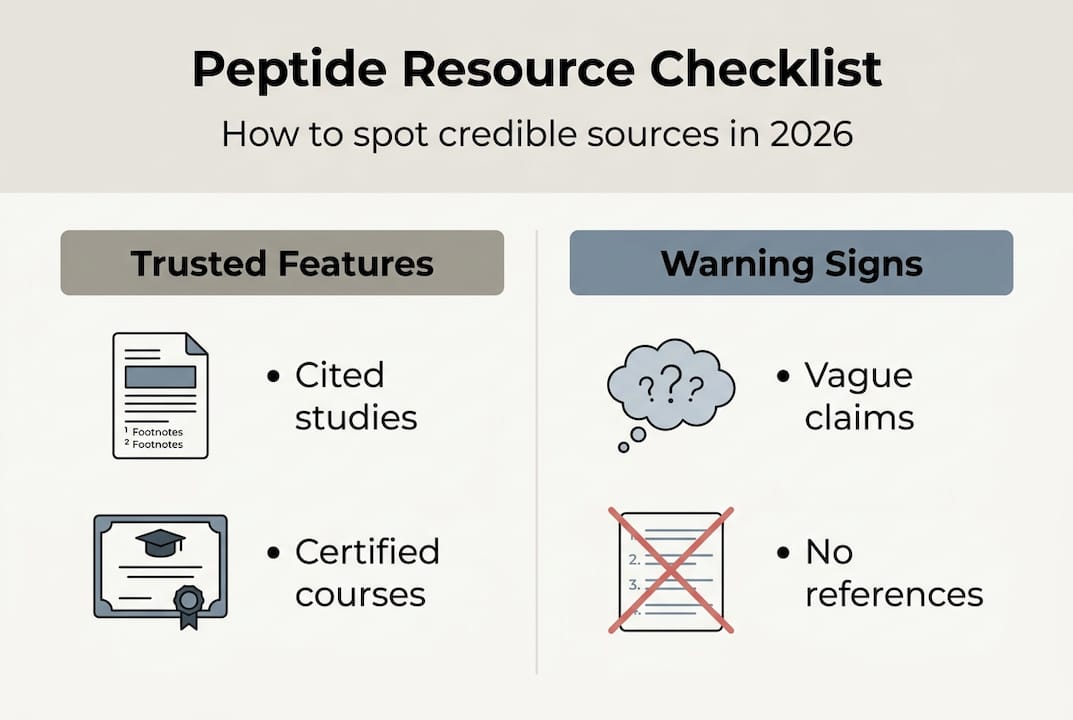
The peptide information landscape in 2026 includes excellent resources and misleading rubbish. Distinguishing between them protects your health and wallet. Credible sources share common characteristics: they cite peer-reviewed research, acknowledge limitations, disclose conflicts of interest, and update content regularly.
Evaluate potential resources using these criteria. Does the source explain mechanisms of action with scientific backing? Do they discuss both benefits and risks honestly? Can you verify their claims through independent research? Are the authors qualified in relevant fields? These questions filter out promotional content disguised as education.
| Resource type | Strengths | Best used for | Update frequency |
|---|---|---|---|
| Certification programmes | Comprehensive, structured, credentialed | Foundation building, professional development | Annual revisions |
| Peer-reviewed journals | Rigorous, evidence-based, unbiased | Verifying claims, understanding mechanisms | Continuous |
| Master courses | Practical, protocol-focused, actionable | Implementation guidance, dosing strategies | Quarterly updates |
| Community forums | Experiential, diverse perspectives, real-time | Troubleshooting, protocol refinement | Daily activity |
| Educational blogs | Accessible, current trends, practical tips | Staying informed, exploring new applications | Weekly to monthly |
Continuing education keeps your knowledge current as research evolves. New peptides enter the market regularly, whilst existing ones reveal additional applications through ongoing studies. Certification courses emphasise ongoing education including dosing, cycling, and CME credits to ensure practitioners maintain expertise.
Subscribe to reputable peptide journals and newsletters. Set aside time monthly to review new research and clinical findings. Join professional organisations offering webinars and conferences. This commitment to learning compounds over time, making you increasingly knowledgeable and discerning.
Red flags indicate unreliable sources. Absolute claims (“this peptide cures everything”) ignore scientific nuance. Lack of citations suggests opinion rather than evidence. Aggressive sales tactics prioritise profit over education. Anonymous authors hide accountability. Outdated information (pre-2024 without updates) misses recent discoveries.
Building a personal resource library serves you long-term. Bookmark trustworthy websites, save useful articles, and organise research papers by topic. This curated collection becomes your reference when questions arise or you’re designing new protocols. Quality beats quantity, focus on depth rather than breadth.
Pro Tip: Create a simple rating system for sources you encounter. Mark them as “highly credible,” “useful but verify,” or “avoid.” This quick assessment helps you prioritise where to spend your learning time.
Networking with other educated peptide users accelerates your learning. Online communities let you ask questions, share experiences, and learn from others’ mistakes. Look for groups with active moderation preventing misinformation spread. The best communities encourage critical thinking rather than blind acceptance.
Exploring educational resources Northern peptides provides curated, trustworthy information. Regular visits to the Northern peptides blog keep you informed about emerging research and practical applications.
Staying updated requires:
- Monthly review of new peptide research publications
- Quarterly assessment of your resource library for outdated content
- Annual completion of updated courses or workshops
- Weekly engagement with trusted community forums
- Immediate investigation of any adverse effects reported in literature
Explore our peptide education and tools for 2026
Northern Peptides provides comprehensive educational materials designed for health and fitness enthusiasts serious about peptide therapy. Our curated content bridges the gap between complex research and practical application, making advanced concepts accessible without oversimplification.

Our educational resources cover everything from peptide basics to advanced protocol design. We update content regularly to reflect 2026 research and emerging applications. The peptide concentration calculator helps you dose accurately, removing guesswork from your protocols. This precision tool prevents common dosing errors that compromise results.
Visit our information page to explore detailed guides on specific peptides, safety considerations, and optimisation strategies. We’re committed to supporting your peptide education journey with reliable, evidence-based resources that empower informed decisions.
Frequently asked questions
What are peptides and how do they benefit health and fitness?
Peptides are short chains of amino acids that regulate many biological functions in your body. They support muscle recovery by accelerating tissue repair, enhance anti-aging efforts through collagen stimulation, and improve performance by optimising hormone signalling. Different peptides target specific pathways, making them versatile tools when used correctly.
How can I find credible educational resources on peptide therapy?
Look for certified programmes offering CME credits and evidence-based protocols backed by peer-reviewed research. Use trusted platforms demonstrating transparency about dosing, cycling, and monitoring guidelines. Verify that instructors have relevant credentials and that content receives regular updates reflecting current science from 2026.
What are best practises when starting a peptide protocol?
Start with one peptide addressing a single, clearly defined goal using conservative doses. Monitor your progress consistently over 8-12 weeks before making adjustments or adding compounds. Track both subjective feelings and objective measurements to assess true effectiveness. Avoid the temptation to stack multiple peptides initially, as this makes identifying what works impossible.
Are there risks associated with peptide therapy?
Risks exist but proper education and careful monitoring minimise them significantly. Choosing reputable educational programmes reduces potential for misuse by teaching you to recognise contraindications and manage side effects. Starting conservatively, tracking responses carefully, and adjusting based on evidence keeps risks low whilst maximising benefits. Most adverse effects result from improper dosing, poor quality compounds, or ignoring warning signs rather than peptides themselves.