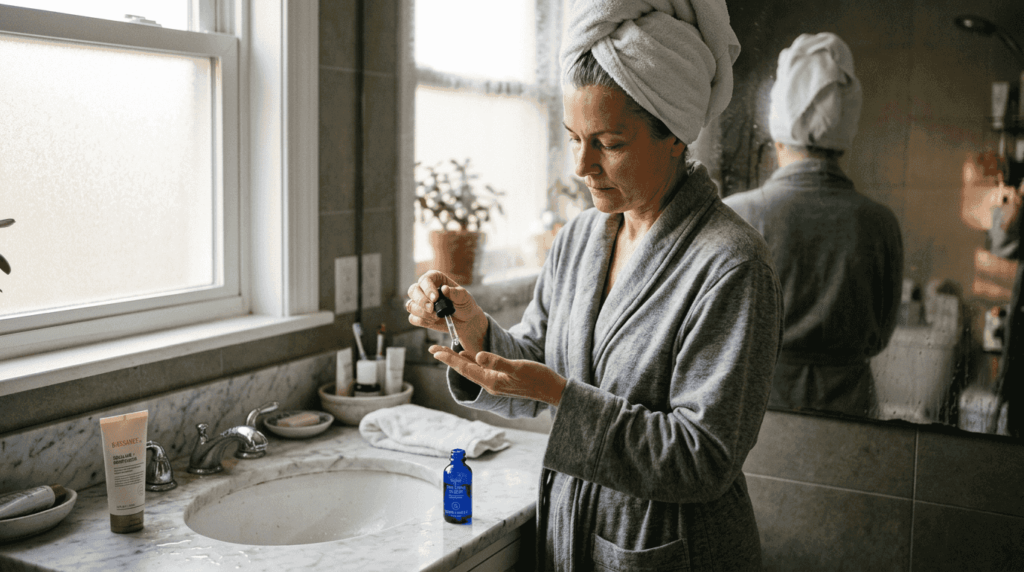
Struggling with peptide serums that don’t deliver visible anti-aging results? Poor application technique and incorrect layering often sabotage peptide efficacy before you see firmness improvements or wrinkle reduction. Understanding the proper peptide application workflow transforms these powerful amino acid chains from underwhelming products into effective anti-aging tools. This guide reveals a proven step-by-step approach to maximise peptide benefits and protect your skin’s integrity.
Table of Contents
- Understanding Peptides And Their Role In Skin Health
- Preparation: What You Need For An Effective Peptide Routine
- Step-By-Step Workflow For Applying Peptide Skincare
- Advanced Tips And Troubleshooting Common Peptide Application Mistakes
- Expected Results And Integrating Peptides Into Long-Term Skincare
- Discover Northern Peptides’ Solutions For Advanced Skincare
- Frequently Asked Questions
Key takeaways
| Point | Details |
|---|---|
| Layer by consistency | Apply peptide products from thinnest to thickest texture for optimal absorption |
| Damp skin application | Applying serums while skin remains damp locks in hydration and boosts efficacy |
| Gentle patting technique | Patting instead of rubbing enhances penetration by 15% and reduces irritation |
| Avoid acidic conflicts | Never mix peptides with vitamin C or glycolic acid as this denatures peptide structure |
| Consistency drives results | Cumulative anti-aging benefits appear after 8–12 weeks of regular application |
Understanding peptides and their role in skin health
Peptides function as short chains of amino acids acting as messenger molecules in your skin. These compounds signal cells to initiate repair processes and support structural integrity. When applied topically, peptides stimulate collagen synthesis, improving firmness and reducing visible wrinkles.
Beyond collagen boosting, peptides deliver multiple skin benefits:
- Enhanced barrier function protecting against environmental stressors
- Improved texture and hydration retention
- Reduced inflammation and redness
- Accelerated healing after procedures or damage
The specific amino acid sequence determines each peptide’s function and effectiveness. Argireline targets expression lines by relaxing facial muscles, whilst Matrixyl 3000 focuses on rebuilding dermal matrix proteins. Novel formulations with advanced anti-aging properties continue emerging from clinical research.
Peptides act as biological communicators rather than harsh actives. They work by triggering your skin’s natural repair mechanisms instead of forcing change through irritation. This gentler approach makes peptides suitable for sensitive skin types when applied correctly.
Preparation: what you need for an effective peptide routine
Proper preparation determines whether your peptide investment delivers visible results or wastes money. Start by selecting a pH-balanced cleanser maintaining skin’s natural acidity between 4.5 and 5.5. Peptides perform best within this pH range, matching your skin’s protective acid mantle.
Avoid combining peptides with acidic actives during the same routine. Mixing peptide serums with vitamin C, glycolic acid, or salicylic acid denatures peptide chains, destroying their effectiveness. These ingredients lower pH dramatically, breaking peptide bonds before they can signal skin cells.
Essential products for your peptide workflow:
- Gentle, sulfate-free cleanser (pH 4.5–5.5)
- Alcohol-free hydrating toner
- Peptide serums (Argireline, Matrixyl 3000, or targeted formulations)
- Occlusive moisturiser to seal active ingredients
| Compatible with peptides | Incompatible with peptides |
|---|---|
| Hyaluronic acid | Vitamin C (ascorbic acid) |
| Niacinamide | Glycolic acid |
| Ceramides | Salicylic acid |
| Squalane | Retinol (separate by 12 hours) |
Understanding peptide safety principles helps you build routines that maximise benefits whilst protecting skin barrier integrity. Choose gentle, fragrance-free formulations to minimise irritation risk.
Step-by-step workflow for applying peptide skincare
Following a precise application sequence maximises peptide absorption and results. This proven workflow ensures each product penetrates properly without interference.
-
Cleanse thoroughly: Remove makeup, oils, and debris with your pH-balanced cleanser. Pat skin until slightly damp, not completely dry.
-
Apply toner: Use alcohol-free toner to balance pH and prepare skin. Leave skin damp for the next step.
-
Layer peptide serums: Following the ‘Golden Rule’ of thinnest to thickest consistency, apply Argireline first for deep muscle-targeting effects, then Matrixyl 3000 for matrix rebuilding.
-
Pat, don’t rub: Gentle patting enhances serum penetration whilst rubbing wastes product and irritates skin. Use fingertips to press serum into damp skin.
-
Wait 60 seconds: Allow peptides to absorb before applying moisturiser. This prevents dilution and maintains concentration.
-
Seal with moisturiser: Lock in peptides and prevent water loss with an occlusive moisturiser containing ceramides or squalane.
Pro tip: Apply peptide serums during evening routines when skin’s repair mechanisms peak during sleep cycles. Morning application works too, but nighttime aligns with natural cellular renewal processes for enhanced anti-aging benefits.

Applying serums whilst skin remains damp from cleansing or toning creates a hydration reservoir. Water molecules help transport peptides deeper into skin layers, improving their signalling capacity. Completely dry skin creates a barrier that limits penetration depth.
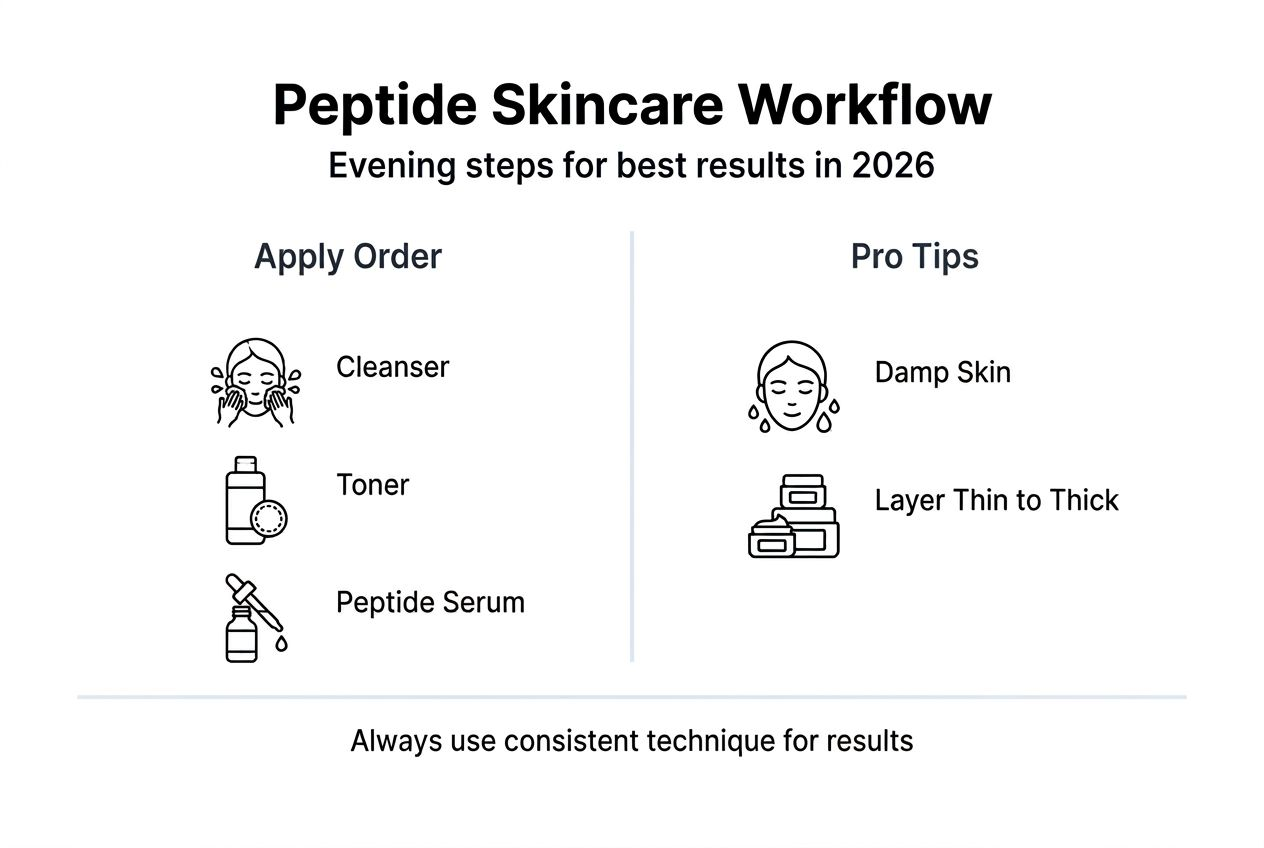
Consistent technique matters more than expensive formulations. Following this workflow with affordable peptide serums outperforms haphazard application of premium products.
Advanced tips and troubleshooting common peptide application mistakes
Even experienced skincare enthusiasts make peptide application errors that reduce effectiveness or cause unnecessary irritation. Recognising these pitfalls helps you adjust your routine for optimal results.
Avoid these common mistakes:
- Layering peptides immediately after acidic exfoliants without buffering
- Applying too many active ingredients simultaneously
- Skipping patch tests with new peptide formulations
- Using peptides sporadically instead of consistently
- Rubbing products vigorously instead of gentle patting
Mixing multiple active serums without understanding interactions reduces effectiveness or triggers sensitivity. When combining actives, separate acidic products (vitamin C, AHAs) by at least 30 minutes or use them during opposite routines (morning versus evening).
Transient stinging often indicates formulation preservatives or compromised barrier function, not peptide intolerance. Peptides are messengers rather than disruptors, so irritation typically arises from routine context. Check whether you recently introduced exfoliants, changed cleansers, or over-applied actives.
Pro tip: Create pH buffer zones by applying hydrating toner between acidic actives and peptide serums. This 5-minute gap with neutral-pH product allows skin to recover its natural acidity before peptides arrive.
Patch-testing prevents widespread reactions to new formulations. Apply a small amount behind your ear or on your inner forearm for 24 hours before full-face application. This simple step identifies potential sensitivities before they become problematic.
If experiencing persistent irritation, review your peptide safety practices and simplify your routine. Strip back to cleanser, single peptide serum, and moisturiser until skin calms, then gradually reintroduce other products.
Expected results and integrating peptides into long-term skincare
Realistic expectations prevent disappointment and support consistent application habits. Peptides deliver visible improvements gradually through cumulative cellular signalling rather than overnight transformation.
With consistent use, expect these timeline-based benefits:
- Weeks 1–4: Improved hydration and subtle texture refinement
- Weeks 4–8: Reduced fine lines and enhanced skin plumpness
- Weeks 8–12: Visible firmness gains and 30% collagen production increase
- Beyond 12 weeks: Continued wrinkle reduction and barrier strengthening
Advanced peptide formulations like Q-peptide accelerate healing after cosmetic procedures. Topical Q-peptide hydrogel improves patient satisfaction and reduces redness following treatments.
| Peptide type | Primary benefit | Visible results timeline |
|---|---|---|
| Argireline | Expression line reduction | 6–8 weeks |
| Matrixyl 3000 | Collagen rebuilding | 8–12 weeks |
| Copper peptides | Healing and firmness | 4–6 weeks |
| Q-peptide | Post-procedure recovery | 1–2 weeks |
Integrate peptides into a holistic skincare approach combining hydration, sun protection, and nutrient-rich nutrition. Peptides work synergistically with healthy lifestyle habits rather than replacing them. Daily SPF prevents UV damage that counteracts peptide benefits, whilst adequate water intake supports cellular communication.
Patience drives success with peptide skincare. Unlike harsh actives that force immediate visible peeling or redness, peptides work quietly at cellular level. Consistent application over months delivers recovery benefits and cumulative anti-aging effects that compound over time.
Consider peptides as long-term investments in skin health rather than quick fixes. The peptide therapy approach emphasises sustained use for lasting structural improvements.
Discover Northern Peptides’ solutions for advanced skincare
Ready to implement this peptide workflow with confidence? Northern Peptides provides high-quality research peptide formulations designed for anti-aging and recovery applications. Our educational resources help you understand amino acid sequences, dosing considerations, and optimal application techniques.

Explore detailed peptide product information explaining mechanisms, compatibility, and evidence-based benefits. Use our peptide concentration calculator to personalise product selection based on your specific skin concerns and goals. Browse the complete research peptide catalogue to discover formulations supporting your anti-aging journey with scientific backing and quality assurance.
Frequently asked questions
How do I know which peptides suit my skin?
Research the amino acid sequences and intended effects of peptides in products you’re considering. Match peptide functions to your primary concerns like firmness, expression lines, or barrier repair. Consult trusted resources about peptide structure to understand how different chains deliver specific benefits.
Can I use peptides with vitamin C or exfoliants?
Avoid mixing peptides with low-pH actives like vitamin C or glycolic acid in the same application layer. The acidic environment denatures peptide chains, destroying their signalling capacity. Separate these ingredients by 30 minutes or use during opposite routines (morning versus evening) to maintain peptide integrity.
How can I tell if my peptide serum is working?
Visible improvements in firmness, wrinkle depth, and texture typically appear after 8–12 weeks of consistent application. Reduced redness or accelerated healing may indicate advanced peptide benefits from specialised formulations. Patience and regular use are essential, as peptides work through cumulative cellular signalling rather than immediate dramatic changes.
Should I refrigerate peptide serums?
Most peptide serums remain stable at room temperature when stored properly away from direct sunlight and heat. Check manufacturer guidelines, as some formulations benefit from refrigeration to extend shelf life. Cool storage can feel refreshing during application but isn’t necessary for maintaining peptide effectiveness in most commercial products.
Can men benefit from peptide skincare routines?
Absolutely. Peptides function identically in male and female skin, targeting collagen synthesis, barrier repair, and inflammation reduction regardless of gender. Men often experience visible benefits sooner due to thicker dermal structure and higher collagen density, making peptides particularly effective for male anti-aging and recovery routines.