

Finding the line between effective muscle recovery and safe supplement use often leaves Canadian and American gym enthusiasts guessing. As peptides gain traction in gyms across North America, many overlook how different they are from steroids and how purity, quality, and regulation impact results. This guide breaks down what peptides actually do, clears up common misconceptions, and highlights the importance of choosing recovery tools that balance progress with long-term health.
Table of Contents
- Defining Peptides And Common Misconceptions
- Types Of Recovery Peptides And Their Uses
- Health Canada Regulations For Peptide Products
- Key Risks With Peptides In Recovery
- Safe Use, Alternatives And Mistakes To Avoid
Key Takeaways
| Point | Details |
|---|---|
| Understanding Peptides | Peptides are short chains of amino acids that aid in muscle repair and recovery, offering more specific benefits compared to whole proteins. |
| Misconceptions to Avoid | Key misunderstandings include the belief that peptides work like steroids, deliver immediate results, or that any peptide source is acceptable. |
| Health Risks | Injectable peptides carry risks of infections and hormonal side effects, necessitating caution and proper administration techniques. |
| Regulatory Considerations | In Canada, most peptides are classified as prescription drugs, and purchasing them without oversight poses legal and health risks. |
Defining Peptides and Common Misconceptions
Peptides are short chains of amino acids held together by chemical bonds. They’re the building blocks your body uses to repair and build muscle tissue after workouts.
Think of amino acids as LEGO blocks. Peptides stack a handful together, while proteins stack dozens or hundreds. This matters because peptides absorb faster and act more specifically than whole proteins.
Your body makes peptides naturally through digestion. When you eat chicken or whey protein, your stomach breaks it down into smaller peptide chains before absorption. The difference with research peptides is that they’re synthesised to target specific functions.
What Peptides Actually Do
Peptides signal your body to do specific things. Different sequences trigger different responses:
- Recovery and muscle repair after intense training
- Increased growth hormone production
- Joint and connective tissue support
- Fat loss and metabolic improvements
- Sleep quality enhancement
Each peptide type has a different structure, which determines its effect. Research peptide terminology helps you understand which peptide does what and why precision matters when sourcing.
The specific amino acid sequence in a peptide determines its entire function. Change the order, and you change the effect completely.
Common Misconceptions That Lead Gym-Goers Astray
Misunderstanding #1: Peptides work like steroids. They don’t. Peptides signal your body’s natural processes. Steroids replace hormones. Peptides stimulate your own production.
Misunderstanding #2: All peptides are the same. False. A peptide for recovery works completely differently than one for fat loss. Dosing, timing, and administration also vary significantly.
Misunderstanding #3: Peptides deliver overnight results. Your body needs time to respond. Most users see changes within 2-4 weeks of consistent use.
Misunderstanding #4: More peptides equals faster gains. Actually, exceeding optimal doses doesn’t increase benefits. It wastes product and creates unnecessary risk.
Misunderstanding #5: Any peptide source is fine. It’s not. Purity, sterility, and concentration directly affect your results and safety. Peptide purity explained shows why quality sourcing prevents wasted money and potential complications.
To clarify common misconceptions, here’s how peptides and steroids differ in their mechanisms and impact:
| Aspect | Peptides | Steroids |
|---|---|---|
| Mechanism | Signal natural processes | Replace or mimic hormones |
| Main Use | Enhance recovery signalling | Boost muscle via hormone elevation |
| Onset | Weeks for noticeable effects | Rapid gains, often visible in days |
| Risk Profile | Lower, with dosing control | Higher, with hormonal disruption |
| Long-term Consequence | Less studied, often reversible | Potential severe hormonal changes |
The Reality Check
Peptides work best when combined with proper training, nutrition, and sleep. They’re recovery tools, not magic shortcuts. Your gym effort and diet are still 80% of the equation.
Many people expect peptides to replace hard work. That’s the biggest misconception. They amplify your results when everything else is dialled in.
Pro tip: Before trying any peptide, establish solid training and nutrition habits first. Peptides enhance progress, but they won’t build muscle or burn fat without consistent effort in the gym and kitchen.
Types of Recovery Peptides and Their Uses
Not all recovery peptides work the same way. Each type targets different aspects of muscle repair, connective tissue healing, and overall recovery. Understanding which peptide does what helps you choose the right one for your specific goals.
The main recovery peptides fall into a few categories based on their function. Some accelerate tissue repair, others boost hormone production, and some improve overall recovery capacity. Your training style and recovery needs determine which makes sense for you.
Tissue Repair and Structural Support Peptides
BPC-157 is one of the most researched recovery peptides for gym enthusiasts. It promotes gut lining repair and musculoskeletal recovery by enhancing angiogenesis and fibroblast migration, which speeds up how your body rebuilds damaged tissue.
This peptide works on tendons, ligaments, and muscle tissue. Many lifters use it for nagging shoulder injuries, knee pain, or chronic joint issues that prevent heavy training. Results typically appear within 4-8 weeks of consistent use.

TB-500 supports cell motility and extracellular matrix remodeling, meaning it helps your body reorganise and strengthen connective tissue. Athletes recovering from intense training cycles often use this for overall joint health and flexibility improvement.
These two peptides work best together. They address different stages of the repair process, so stacking them speeds recovery compared to using either alone.
Growth Hormone Secretagogues
These peptides stimulate your body to release more of its own growth hormone naturally. They don’t replace hormones; they trigger your body’s production.
Common growth hormone secretagogues include:
- GHRP-6 – Increases appetite and growth hormone pulses
- Ipamorelin – Boosts growth hormone without affecting cortisol negatively
- Sermorelin – Longer-acting option for sustained hormone elevation
Growth hormone secretagogues support muscle growth, fat loss, and recovery speed. Most users see improved sleep quality and faster muscle soreness reduction within 2-3 weeks.
Growth hormone secretagogues work best when combined with proper sleep and nutrition. Your body needs raw materials and rest to respond to the hormonal signal.
Recovery Optimization Peptides
Some peptides don’t fit neatly into the above categories. They enhance overall recovery capacity by improving blood flow, reducing inflammation, or supporting immune function.
These peptides often appeal to athletes with demanding training schedules who need faster turnover between intense sessions. They’re particularly useful during competition seasons or high-volume training blocks.
Choosing the Right Peptide for Your Goals
If you have joint pain or tissue damage, tissue repair peptides like BPC-157 make sense. If you want faster muscle growth and strength gains, growth hormone secretagogues are your focus. If you’re chasing overall recovery speed, combination approaches work best.
Your training frequency, age, and recovery baseline all matter. Someone doing heavy deadlifts twice weekly has different needs than someone doing metabolic conditioning daily.
Pro tip: Start with one peptide type for 8-12 weeks before adding another. This lets you isolate what works for your body and avoid unnecessary stacking early on.
Health Canada Regulations for Peptide Products
Canadian regulations around peptides are strict and specific. Health Canada treats most peptides as prescription drugs, meaning they require approval before sale, distribution, or use in Canada.
This matters directly to you. If you’re ordering peptides online or considering peptide use in Canada, understanding these regulations protects you legally and health-wise.
What Health Canada Classifies as a Drug
Health Canada defines peptides used for recovery, muscle growth, or anti-aging as prescription drugs. This classification means:
- No legal over-the-counter sale in Canada
- No authorised online retailers selling to Canadian consumers
- Unapproved peptides cannot be marketed or distributed
- Possession for personal use exists in a legal grey area
This applies whether the peptide is injectable or oral. The regulatory status doesn’t change based on administration method.
Unauthorized Injectable Peptides and Health Risks
Health Canada has actively seized unauthorized injectable peptide drugs being sold online that lack safety assessment or quality verification. These products pose serious health risks including infections and adverse reactions.
Many sellers market these peptides for bodybuilding or anti-aging without any oversight. The peptides may contain contaminants, incorrect dosages, or entirely different substances than labelled.
Infections from non-sterile injections are the most common serious complication. Abscesses, systemic infections, and permanent tissue damage have been documented from unregulated peptide use.
Health Canada advises consumers to only use approved medicines under healthcare supervision. Unauthorised peptides carry unknown risks regardless of source reputation.
The Research vs. Personal Use Grey Area
Canadian law technically prohibits unauthorised peptide sale and distribution. However, enforcement around personal possession remains less clear than prescription enforcement.
Some online suppliers market peptides as “research chemicals” for laboratory use only. This labelling doesn’t change their legal status in Canada. Purchasing them for personal use still violates regulations, even if enforcement is inconsistent.
The liability falls on you as the consumer. If complications occur, you have no legal recourse against unregulated suppliers.
Approved Alternatives and Legitimate Options
Working with a healthcare provider is the only fully legal route. Some doctors will prescribe specific peptides like sermorelin under medical supervision, though this is uncommon for recovery purposes.
The reality: Most peptides used by athletes in Canada are technically unauthorised. Quality control and lab testing for these products remain unverified, creating genuine health uncertainty.
Pro tip: If you choose to use peptides despite regulatory restrictions, source from suppliers practising ethical peptide sourcing and providing third-party lab testing documentation. This minimises but doesn’t eliminate health risks.
Here’s a summary of key Canadian regulations and legal pathways for peptide access:
| Route | Legal Status | Oversight Required | Common Issues |
|---|---|---|---|
| Physician Prescription | Legal | Medical supervision | Rare for athletes |
| Online Retailers | Illegal for consumers | None | Quality/risk concerns |
| Research Chemical | Illegal for use | None | No legal protection |
| Cross-border Import | Not permitted | None | Risk of seizure |
Key Risks with Peptides in Recovery
Peptides aren’t risk-free. Understanding the real dangers helps you make informed decisions about whether peptide use aligns with your health priorities.
The risks vary by peptide type, dosage, source quality, and how you administer them. Some risks are mild and reversible. Others can cause serious, lasting complications.
Infection and Injection-Related Risks
Injectable peptides carry the highest immediate danger. Non-sterile needles, contaminated peptide solutions, or poor injection technique lead to infections ranging from minor abscesses to life-threatening sepsis.
Common injection complications include:
- Bacterial infections at injection sites
- Abscesses requiring medical drainage
- Systemic infections affecting organs
- Nerve or blood vessel damage from needle placement
- Allergic reactions to peptide compounds
These risks exist even with high-quality peptides if you lack proper injection training. Sharing needles or reusing equipment dramatically increases infection likelihood. And yes, I learned this the hard way through friends’ experiences.
Hormonal Side Effects
Peptides that boost growth hormone can trigger unwanted changes. Increased appetite is common and catches most users off guard. You’re suddenly hungry constantly, making fat loss difficult if that’s your goal.
Water retention develops in some users, masking fat loss progress on the scale. Carpal tunnel syndrome from swelling around the wrist occurs occasionally with growth hormone secretagogues.
More serious hormonal effects include joint pain, mood changes, and metabolic shifts. Long-term effects remain poorly documented because most research peptides lack extensive human studies.
Peptides alter your body’s hormone balance. These changes can persist weeks after stopping use, requiring careful monitoring.
Quality and Purity Concerns
Unauthorised peptide suppliers don’t guarantee purity, sterility, or even correct ingredients. You might receive contaminated products, wrong peptides, or products containing harmful additives.
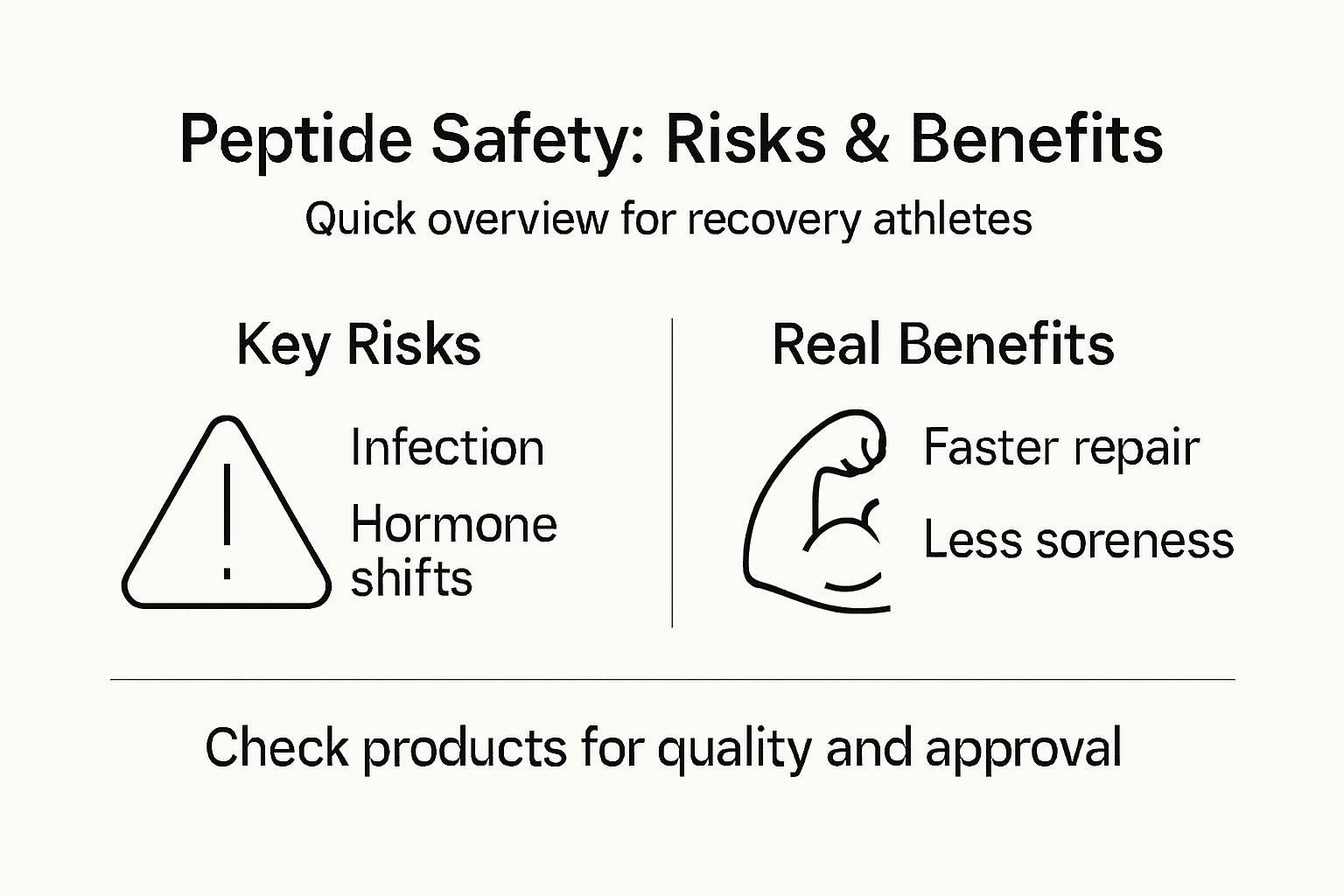
Without third-party lab testing, you’re essentially guessing what you’re injecting. Labs have found banned substances, bacteria, and heavy metals in unregulated peptide products.
Cardiovascular and Metabolic Risks
Some peptides increase heart rate and blood pressure, particularly growth hormone secretagogues. Users with existing heart conditions face genuine danger. Arrhythmias and chest discomfort have been reported.
Metabolic changes can affect blood sugar control, especially in users with diabetes or prediabetes. These risks intensify with higher doses or extended use.
Overlooked Psychological Risks
Dependency on peptides for recovery and performance creates psychological reliance. You start attributing all progress to peptides rather than your actual training effort. This mindset undermines sustainable habits.
Anxiety around sourcing quality peptides and avoiding detection adds mental stress. The uncertainty about long-term safety effects creates baseline anxiety many users don’t acknowledge.
Why Beginners Face Higher Risks
New users often underestimate doses, misuse administration, or stack peptides without understanding interactions. Understanding peptide science and safety before use significantly reduces preventable complications.
Pro tip: Start with the lowest effective dose and increase slowly over weeks. This approach identifies your individual tolerance and side effect threshold before complications develop.
Safe Use, Alternatives and Mistakes to Avoid
If you decide to use peptides despite the risks, harm reduction matters. Safe use protocols significantly lower your chance of serious complications.
Equally important: knowing when peptides aren’t the answer. Many fitness goals are achievable without them, and sometimes alternatives deliver better results with fewer risks.
Critical Safety Protocols for Peptide Use
If you’re using peptides, follow these non-negotiable rules:
- Use sterile, single-use needles every injection without exception
- Rotate injection sites to prevent tissue damage and infection
- Source from suppliers providing third-party lab testing documentation
- Start with the absolute lowest effective dose
- Never share needles or equipment with others
- Keep detailed records of doses, dates, and any side effects
Following a peptide safety checklist before starting minimises preventable errors. Most serious complications stem from skipping basic safety steps.
Refrigerating peptides properly and using them before expiration dates matters too. Degraded peptides lose efficacy and may harbour bacterial growth.
Legitimate Alternatives to Consider First
Optimised nutrition addresses 50 percent of recovery issues most lifters face. Adequate protein, carbohydrates, and micronutrients often eliminate the need for peptides entirely.
Sleep quality improvements rival peptide effects for many athletes. Targeting seven to nine hours nightly costs nothing and works reliably.
Training periodisation prevents overuse injuries that peptides supposedly fix. Smart programming reduces the need for recovery hacks.
Resistance training variations stimulate growth as effectively as peptides in most cases. Changing exercises, tempo, and rep ranges keeps progress moving.
Most fitness goals are achievable without peptides. Before starting, genuinely exhaust the basics: sleep, nutrition, and smart training.
The Biggest Mistakes Beginners Make
Mistake #1: Starting too high. Users chase results by exceeding recommended doses. Higher doses don’t accelerate results and multiply risks substantially.
Mistake #2: Stacking multiple peptides immediately. Combining peptides before understanding individual responses creates unpredictable side effects.
Mistake #3: Ignoring sourcing quality. Saving money on cheap, untested peptides wastes money and creates genuine danger.
Mistake #4: Expecting overnight results. Peptides take weeks to show effects. Impatient users often increase doses prematurely.
Mistake #5: Neglecting post-use recovery. Your body needs time to normalise hormone levels after stopping peptides. Abrupt cessation creates rebound effects.
Mistake #6: No baseline health screening. Users with undiagnosed heart conditions or metabolic issues face serious risks. Basic bloodwork before starting protects you.
When to Skip Peptides Entirely
Don’t use peptides if you’re under 25. Your natural hormones are optimally high. Peptides offer minimal additional benefit and interrupt your body’s natural development.
Avoid peptides if you have existing cardiovascular conditions, diabetes, or hormone-sensitive cancers. The risks outweigh potential benefits in these scenarios.
Skip them if you can’t access third-party lab testing. Using untested compounds is essentially Russian roulette with your health.
Pro tip: Spend 12 weeks optimising sleep, nutrition, and training before considering peptides. If results plateau after that foundation is solid, then evaluate peptides as a next step.
Prioritizing Safety and Knowledge in Your Peptide Recovery Journey
Understanding the risks and benefits of peptides is crucial before adding them to your recovery routine. This article highlights common challenges such as sourcing high-purity products, managing dosage safely, and knowing how peptides like BPC-157 and growth hormone secretagogues affect your body naturally. If you want to avoid pitfalls like infection risks and unreliable products, education and trusted suppliers must be your priority.

Ready to make informed decisions with confidence Explore our comprehensive resources and verified peptide supply at Uncategorized – Northern peptides. Our platform offers essential guides on peptide safety and ethical sourcing so you can navigate recovery peptides responsibly. Start your journey safely today by visiting Northern Peptides and access trusted research peptides designed with quality and your health in mind.
Frequently Asked Questions
What are peptides and how do they benefit recovery?
Peptides are short chains of amino acids that signal your body to perform specific functions, such as muscle repair, growth hormone production, and fat loss. They act more specifically and absorb faster than whole proteins, making them effective in recovery after intense workouts.
What are the main risks associated with peptide use?
The risks of using peptides include infection from injection-related complications, hormonal side effects such as increased appetite and water retention, purity concerns with unregulated sources, and potential cardiovascular and metabolic changes. Understanding these risks is crucial for making informed decisions about peptide use.
How do research peptides differ from steroids?
Unlike steroids, which replace hormones, research peptides stimulate your body’s natural processes to enhance recovery and growth. They do not provide immediate results like steroids and carry a lower risk profile when dosed properly.
What precautions should I take if I’m considering peptides?
If you choose to use peptides, ensure to follow strict safety protocols: use sterile, single-use needles, source peptides from reputable suppliers with third-party lab testing, start with the lowest effective dose, and keep detailed records of usage and any side effects. It’s also advisable to optimize nutrition and training before considering peptides.