Inadequate guidance on peptide recovery leaves health and fitness professionals navigating fragmented advice, raising risks and limiting potential benefits. Improper protocols can trigger adverse reactions, waste resources, and delay recovery goals. This comprehensive guide delivers a clear, step-by-step regimen for safe peptide recovery, empowering you to maximize muscle repair, accelerate anti-aging outcomes, and maintain safety through evidence-based practices.
Table of Contents
- Prerequisites And Safety Considerations
- Stepwise Peptide Administration Protocols
- Monitoring And Evaluation During Peptide Recovery
- Common Mistakes And Their Fixes In Peptide Recovery
- Expected Recovery Timelines And Measurable Outcomes
- Alternative Recovery Approaches And Tradeoffs
- Enhance Your Peptide Recovery With Northern Peptides
- Frequently Asked Questions About Step By Step Peptide Recovery
Key Takeaways
| Point | Details |
|---|---|
| Dose escalation and certified sourcing | Starting low and sourcing from GMP-certified suppliers minimizes adverse reactions and contamination risks. |
| Regular biomarker monitoring | Testing IGF-1 and inflammatory markers every 4 weeks guides safe therapy adjustments. |
| Common user errors | Skipping titration and ignoring side effects are frequent mistakes that compromise safety and outcomes. |
| Recovery time reduction | Peptide protocols can reduce post-exercise recovery time by up to 40% compared to traditional methods. |
| Alternative approaches | Natural supplements and physical therapy offer slower, less targeted recovery compared to peptides. |
Prerequisites and Safety Considerations
Before starting peptide recovery, you need a solid foundation to ensure safety and effectiveness. Proper preparation prevents serious complications and optimizes your outcomes.
Begin with comprehensive health screening to identify contraindications. Pregnancy, active cancer, and breastfeeding are absolute exclusions. Proper peptide recovery protocols include preparatory health screening and sourcing from certified suppliers to minimize risks. Your healthcare provider should review your medical history, current medications, and baseline biomarkers before you proceed.
Sourcing peptides from GMP-certified suppliers is non-negotiable. Contaminated or impure peptides carry risks ranging from infection to organ damage. Verify third-party testing certificates and supplier credentials before purchasing. Reputable providers maintain transparent quality documentation.
Understand the specific peptide types and their targeted effects. Some peptides focus on muscle repair, others on anti-aging or inflammation reduction. Matching peptide selection to your recovery goals prevents wasted effort. Research each compound’s mechanism, typical dose ranges, and reported side effects. The beginner peptide application workflow offers structured guidance for newcomers.
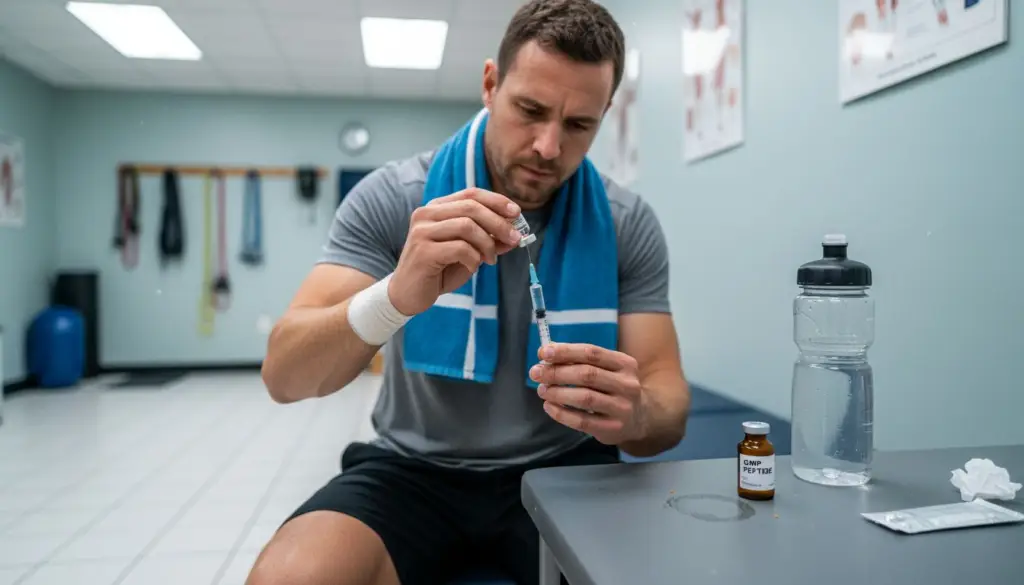
Prepare your administration equipment and ensure access to biomarker testing facilities. You need sterile supplies, proper storage solutions, and a reliable lab for regular monitoring. Missing these basics disrupts consistency and safety. Review the peptide safety checklist to confirm readiness.
Pro Tip: Schedule your first biomarker panel before starting therapy to establish baseline values. This makes tracking progress and spotting problems far easier.
Key preparation steps include:
- Complete health screening with your healthcare provider
- Verify supplier GMP certification and third-party testing
- Research peptide mechanisms and select compounds aligned with your goals
- Gather sterile administration supplies and storage equipment
- Arrange access to biomarker testing every 4 weeks
For deeper safety insights, explore resources on peptide safety in recovery and the safe peptide selection guide. These tools help you avoid common pitfalls and build confidence in your protocol.
Stepwise Peptide Administration Protocols
With safety foundations in place, you can implement a structured administration protocol. The stepwise approach minimizes side effects while maximizing recovery benefits.
Administering peptide therapies using stepwise dose escalation starting from low doses reduces adverse reactions and improves outcomes. Start at 25% of the target dose for the first week, then increase by 25% weekly over four weeks. This gradual escalation lets your body adapt and reveals tolerance issues early.
Timing matters as much as dosing. Align peptide administration with your training and recovery cycles. Post-workout administration supports muscle repair when your body is primed for recovery. Morning doses can support metabolic and anti-aging effects throughout the day. Consistency in timing maintains stable peptide levels and predictable outcomes.
Hydration and nutrition support peptide effectiveness. Dehydration reduces absorption and increases side effect risks. Balanced protein intake provides the building blocks peptides help deploy for muscle repair. Avoid alcohol and processed foods during therapy, as they interfere with recovery pathways.
Document everything. Record dose amounts, administration times, training intensity, sleep quality, and any symptoms. This log becomes your troubleshooting tool and progress tracker. Patterns emerge that guide adjustments and catch problems early. The peptide application workflow provides tracking templates.
Adjust or pause immediately if adverse symptoms appear. Mild headaches, fatigue, or injection site redness may resolve with dose reduction. Severe reactions like chest pain, breathing difficulty, or allergic symptoms require stopping therapy and seeking medical attention. Never push through concerning symptoms. Refer to peptide safety tips for guidance on when to pause.
Pro Tip: Use a dedicated journal or app to log doses and symptoms. Patterns you miss day to day become obvious when reviewed weekly.
Follow this sequence:
- Calculate your target maintenance dose based on research and professional guidance
- Start at 25% of target dose for week one
- Increase to 50% target dose in week two if no adverse effects
- Advance to 75% target dose in week three, monitoring closely
- Reach full target dose in week four if tolerance is confirmed
- Administer at consistent times aligned with training schedule
- Maintain detailed logs of doses, timing, and symptoms
- Adjust or pause immediately upon any concerning symptoms
For additional protocol details, consult peptide safety advice and the stepwise dose escalation study.
Monitoring and Evaluation During Peptide Recovery
Systematic monitoring transforms peptide therapy from guesswork into precision. Biomarker measurements and symptom tracking guide adjustments and ensure safety.
Monitoring biomarkers such as IGF-1 levels and inflammatory markers every 4 weeks tracks peptide recovery progress effectively. IGF-1 indicates growth hormone pathway activation, crucial for muscle repair and anti-aging effects. C-reactive protein (CRP) and other inflammatory markers reveal whether peptides are reducing exercise-induced inflammation as intended.

Schedule lab work at consistent intervals. Baseline testing before starting, then every 4 weeks during active therapy provides the data you need. Compare results against your baseline and reference ranges. Rising IGF-1 within normal limits suggests effective peptide action. Falling CRP indicates reduced inflammation and improved recovery.
Subjective recovery indicators complement objective biomarkers. Rate muscle soreness, energy levels, sleep quality, and workout performance on a 1-10 scale daily. Use the same scale consistently so trends are meaningful. These soft metrics often shift before biomarkers change, giving early signals for adjustments.
Combine biomarker and symptom data to guide dose changes. If IGF-1 plateaus while symptoms improve, your current dose may be optimal. If biomarkers rise but symptoms worsen, reduce the dose. If both stagnate, consider a small dose increase or peptide rotation. This integrated approach balances safety and effectiveness.
Report adverse effects immediately to your healthcare provider. Even mild symptoms deserve attention. Your provider can determine whether to continue, adjust, or stop therapy. Delayed reporting risks complications that early intervention prevents. Resources like peptide safety in recovery and the peptides safety checklist reinforce reporting protocols.
Pro Tip: Schedule lab appointments at the same time of day for consistency. Biomarker levels fluctuate throughout the day, so timing matters.
Key monitoring practices:
- Measure IGF-1 and CRP every 4 weeks via certified lab testing
- Record subjective recovery metrics (soreness, energy, sleep) daily on a 1-10 scale
- Review combined biomarker and symptom data weekly to identify trends
- Adjust doses based on integrated data, not isolated metrics
- Report any adverse effects to healthcare providers immediately
- Maintain detailed logs accessible for provider review
Typical biomarker tracking schedule:
| Week | IGF-1 Test | CRP Test | Symptom Review | Dose Adjustment |
|---|---|---|---|---|
| 0 (Baseline) | Yes | Yes | Initial | None |
| 4 | Yes | Yes | Weekly | Based on data |
| 8 | Yes | Yes | Weekly | Based on data |
| 12 | Yes | Yes | Weekly | Based on data |
For deeper monitoring insights, see the biomarker monitoring study.
Common Mistakes and Their Fixes in Peptide Recovery
Avoiding frequent errors accelerates your success and protects your health. These fixes address the most common pitfalls.
Skipping low dose titration is the top mistake. Jumping to full doses overwhelms your system, triggering side effects that could be avoided. Fix this by always following the four-week escalation protocol. Patience here pays off with safer, more sustainable results.
Using non-verified peptide sources exposes you to contamination, impurities, and ineffective products. Some suppliers cut corners or mislabel products. Fix this by purchasing only from GMP-certified suppliers with transparent third-party testing. Verify credentials before ordering. The cost difference is minor compared to health risks.
Ignoring mild adverse symptoms allows small problems to escalate. A mild headache might signal dehydration, or it could warn of rising intracranial pressure. Fix this by tracking all symptoms and reporting patterns to your provider. Early intervention prevents complications.
Not monitoring biomarkers leaves you flying blind. Without data, you cannot confirm effectiveness or catch brewing problems. Fix this by scheduling regular lab work every 4 weeks. Budget for testing as part of your therapy cost.
Combining multiple peptides without guidance risks dangerous interactions. Some peptides amplify each other, others interfere. Fix this by consulting a knowledgeable provider before stacking compounds. Start with single peptides, add others only with professional oversight. Review peptide safety tips and the peptide safety checklist for stacking protocols.
Common mistakes and solutions:
- Skipping titration: Always start at 25% dose and escalate over 4 weeks
- Non-verified sources: Purchase only from GMP-certified suppliers with testing certificates
- Ignoring symptoms: Track all symptoms daily and report patterns immediately
- No biomarker monitoring: Schedule lab tests every 4 weeks without exception
- Unsupervised stacking: Consult experts before combining peptides
Expected Recovery Timelines and Measurable Outcomes
Realistic expectations keep you motivated and help you assess whether your protocol is working. Peptide recovery follows predictable timelines with measurable benefits.
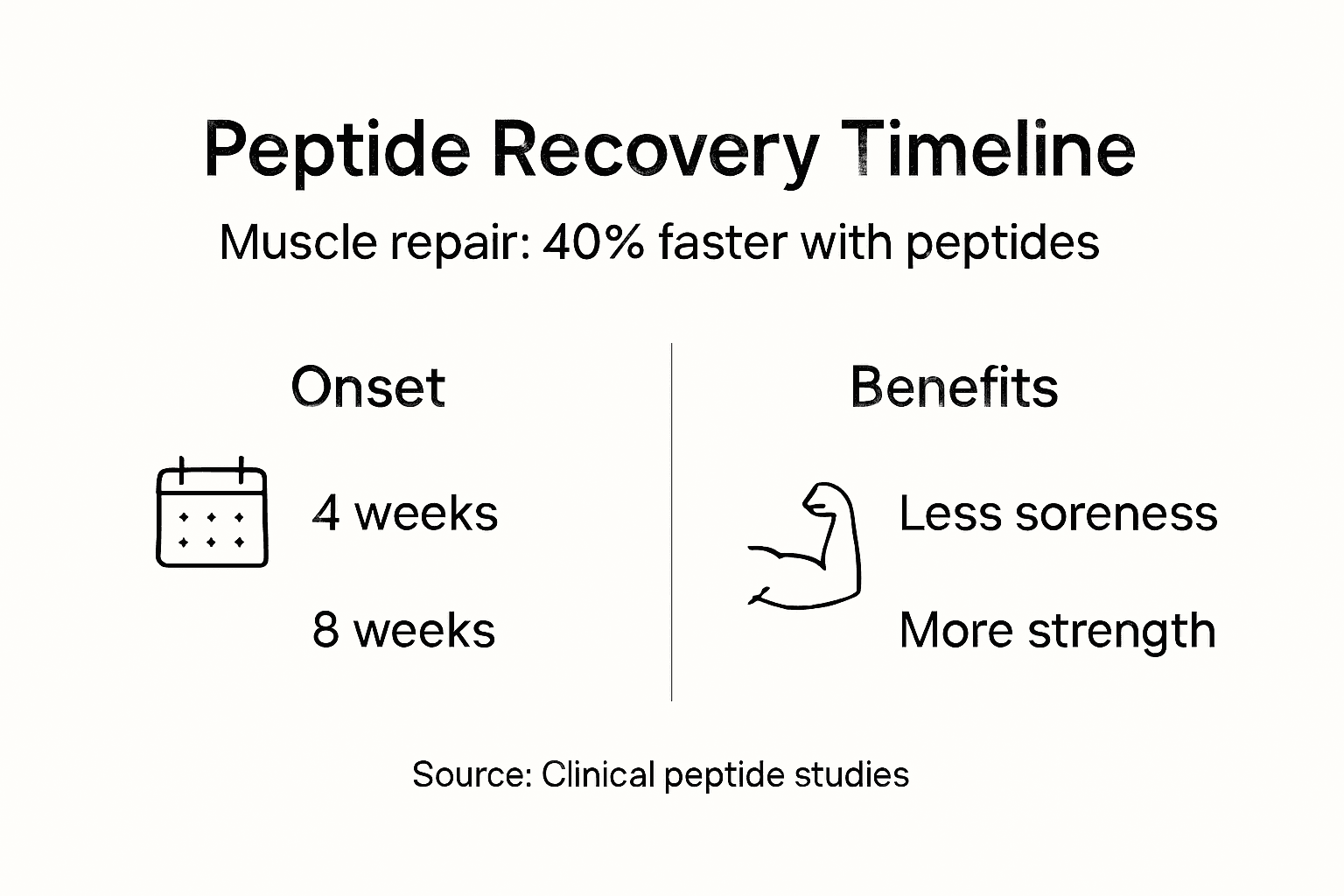
General recovery improvements appear within 4 to 12 weeks. Most users notice initial changes around week 4, with peak benefits emerging by week 8. These timelines vary based on peptide type, dose, individual response, and training intensity. Consistency matters more than speed.
Muscle repair improvements show as increased strength and reduced post-workout soreness. You should lift heavier or complete more reps at the same weight by week 6 to 8. Soreness that used to last 48 hours may resolve in 24 to 36 hours. Track workout performance metrics to quantify these gains.
Anti-aging effects like improved skin elasticity and texture become visible by 8 to 12 weeks. Fine lines may soften, skin tone may even out, and elasticity tests show measurable improvement. These changes result from collagen synthesis and cellular regeneration pathways peptides activate.
Recovery time post-exercise can reduce by up to 40% with peptides compared to traditional methods. If you previously needed 48 hours between intense sessions, you might recover fully in 28 to 30 hours. This faster recovery allows increased training volume and accelerated progress toward fitness goals.
Tracking these outcomes supports motivation and informed adjustments. When you see strength gains and faster recovery, you know your protocol works. If progress stalls, data guides troubleshooting. The research peptides recovery guide offers benchmarks for typical progress.
Expected outcome timeline:
- Weeks 1-3: Minimal noticeable changes, body adapting to peptides
- Weeks 4-6: Initial improvements in recovery time and energy levels
- Weeks 7-9: Measurable strength gains, reduced muscle soreness duration
- Weeks 10-12: Peak recovery benefits, visible anti-aging effects, up to 40% faster post-exercise recovery
Comparison of recovery methods:
| Method | Recovery Time Reduction | Onset of Benefits | Targeted Action | Cost Level |
|---|---|---|---|---|
| Peptides | Up to 40% | 4-8 weeks | High (molecular) | Moderate to High |
| Natural Supplements | 15-25% | 8-16 weeks | Low to Moderate | Low to Moderate |
| Physical Therapy | 20-30% | 2-6 weeks | Moderate (structural) | Moderate to High |
Alternative Recovery Approaches and Tradeoffs
Peptide recovery is powerful but not your only option. Understanding alternatives helps you make informed choices aligned with your goals and resources.
Natural supplements like creatine, omega-3s, and branched-chain amino acids support recovery through nutritional pathways. They provide slower benefits, typically taking 20% to 40% longer than peptides to produce comparable results. Benefits include lower cost, wider availability, and fewer regulatory constraints. Tradeoffs include less targeted action and variable product quality.
Physical therapy addresses recovery through manual techniques, therapeutic exercise, and modality treatments. It supports structural healing and biomechanical optimization but lacks the molecular targeting peptides offer. Alternatives to peptide recovery like natural supplements and physical therapy involve tradeoffs such as slower recovery and less targeted effects. Physical therapy shines for injury rehabilitation and movement pattern correction.
Peptides require medical monitoring, higher costs, and navigating regulatory considerations. They deliver more targeted molecular effects and faster recovery timelines. The investment makes sense for serious athletes, professionals managing heavy training loads, or individuals prioritizing anti-aging outcomes. Peptide protocols demand discipline, access to testing, and professional guidance.
Natural methods are more accessible and involve fewer regulatory constraints. You can start immediately without medical oversight. They suit individuals with moderate recovery needs, budget constraints, or preference for conservative approaches. The peptide synthesis benefits and select recovery peptides guide help you weigh options.
Your choice depends on goals, safety comfort level, and available resources. Competitive athletes may prioritize peptide speed and precision. Casual fitness enthusiasts might prefer natural supplements. Many users combine approaches, using peptides during peak training phases and natural methods for maintenance. For additional comparison, review peptides vs natural recovery.
Key considerations:
- Natural supplements: Lower cost, slower results (20-40% longer), minimal monitoring required
- Physical therapy: Addresses structural issues, lacks molecular targeting, moderate cost
- Peptides: Fastest targeted recovery, requires monitoring and higher investment, regulatory considerations
- Combination approaches: Use peptides during peak phases, natural methods for maintenance
Enhance Your Peptide Recovery with Northern Peptides
Now that you understand comprehensive peptide recovery protocols, Northern Peptides provides the tools and support to implement your plan safely and effectively.
Northern Peptides offers GMP-certified products tailored for recovery and anti-aging applications. Every batch undergoes rigorous third-party testing to ensure purity and potency. You gain access to the quality standards this guide emphasizes, reducing contamination risks and maximizing results.

Precision dosing drives success. The peptide concentration calculator helps you calculate exact doses based on your peptide concentration and target amount. This tool eliminates guesswork and dosing errors that compromise safety.
Explore comprehensive peptide information covering mechanisms, applications, and safety protocols. The extensive educational resources library expands your knowledge, empowering confident decisions throughout your recovery journey. From beginner guides to advanced protocols, Northern Peptides supports your evolving needs.
Frequently Asked Questions about Step by Step Peptide Recovery
What are the safest peptides to start recovery with?
BPC-157 and TB-500 are popular starting peptides due to their favorable safety profiles and targeted recovery effects. Both support tissue repair with minimal reported side effects when dosed properly. Always start at low doses and escalate gradually regardless of peptide type.
How often should I monitor my biomarkers during peptide therapy?
Monitor biomarkers every 4 weeks during active peptide therapy. This interval catches changes early while avoiding excessive testing costs. Baseline testing before starting and follow-up testing after completing therapy bookend your monitoring schedule.
Can peptides be combined safely for enhanced recovery?
Some peptide combinations are safe and synergistic, but stacking requires professional guidance. Certain peptides amplify each other while others may interact unpredictably. Start with single peptides, then add others only with expert consultation and close monitoring.
What are the signs that I should stop peptide therapy?
Stop immediately if you experience severe headaches, chest pain, difficulty breathing, allergic reactions, or unexplained swelling. Persistent mild symptoms like ongoing fatigue, mood changes, or injection site infections also warrant stopping and consulting your provider. Never ignore warning signs.
How do natural supplements compare to peptides for anti-aging?
Natural supplements like collagen, antioxidants, and resveratrol support anti-aging through nutritional pathways but take longer to show effects. Peptides deliver more targeted molecular action with faster visible results, typically within 8 to 12 weeks. Natural options cost less and require no medical monitoring, making them accessible for long-term maintenance.