
Many fitness enthusiasts mistakenly believe peptides function like anabolic steroids, artificially boosting muscle mass overnight. The reality is far more nuanced and scientifically grounded. Peptides act as biological messengers that modulate your body’s natural recovery processes, enhancing tissue repair, reducing inflammation, and supporting protein synthesis. This article unpacks how peptides work, which types benefit muscle recovery, and how to use them safely within your training regimen.
Table of Contents
- Introduction To Peptides And Muscle Recovery
- Biological Mechanisms Of Peptides In Muscle Recovery
- Types Of Peptides Relevant To Muscle Recovery And Their Functions
- Common Misconceptions About Peptides And Muscle Recovery
- Comparative Framework Of Peptides For Muscle Recovery
- Practical Application And Safety Considerations For Peptide Use
- Summary And Next Steps For Incorporating Peptides In Training
- Explore Peptide Solutions To Boost Your Recovery
- Frequently Asked Questions About Peptides And Muscle Recovery
Key takeaways
| Point | Details |
|---|---|
| Peptides signal natural recovery | They act as biological messengers that modulate inflammation, protein synthesis, and tissue repair rather than mimicking hormones artificially. |
| Different peptides serve distinct roles | Growth hormone releasing peptides, bioactive natural peptides, and repair peptides each target specific recovery pathways for muscle healing. |
| Evidence supports recovery benefits | Studies confirm peptides like BPC-157 and TB-500 accelerate healing, reduce soreness, and enhance strength recovery when used appropriately. |
| Safety requires informed use | Not all peptides are FDA-approved for athletic use; understanding legal status, proper dosing, and reputable sourcing protects your health. |
| Practical application maximises results | Matching peptide type to your recovery goals—injury repair, lean mass gain, or endurance—ensures effective integration into training. |
Introduction to peptides and muscle recovery
Peptides are short chains of amino acids, typically containing 2 to 50 amino acids linked by peptide bonds. Unlike proteins, which are longer chains, peptides function as signalling molecules that communicate instructions to cells throughout your body. In muscle recovery contexts, peptides influence critical processes such as inflammation control, protein synthesis activation, and tissue repair coordination.
When you train intensely, muscle fibres experience microscopic damage that triggers an inflammatory response. Your body must then orchestrate a complex repair sequence involving stem cell activation, protein synthesis, and tissue remodelling. Peptides such as BPC-157 and TB-500 promote muscle growth and accelerate recovery by enhancing tissue repair and reducing inflammation. This natural modulation helps you bounce back faster from tough workouts while reducing muscle soreness and stiffness.
Understanding peptides requires moving beyond supplement industry myths. Peptides don’t directly build muscle like steroids or provide instant energy like stimulants. Instead, they optimise the biological environment for recovery by:
- Accelerating the transition from inflammation to repair phases
- Enhancing collagen synthesis for connective tissue strength
- Supporting growth hormone release that drives protein synthesis
- Reducing excessive inflammation that delays healing
For athletes seeking evidence-based recovery tools, defining recovery peptides provides a foundation for informed decisions. The role of peptides in tissue repair extends beyond marketing claims to documented cellular mechanisms that fitness enthusiasts can leverage safely.
Biological mechanisms of peptides in muscle recovery
Muscle recovery operates through coordinated cellular phases that peptides can influence at multiple levels. After intense exercise or injury, muscle stem cells undergo a metabolic shift, temporarily reducing energy production to protect and repair tissue before muscle growth resumes. This metabolic reprogramming involves enzymes like PFKM that control the timing of repair processes. Peptides can modulate this timing, potentially shortening the protective phase and accelerating the transition to active tissue rebuilding.
Growth hormone plays a central role in muscle protein synthesis, and peptides marketed for muscle growth mostly act indirectly by stimulating the body’s own growth hormone production, which influences muscle protein synthesis and recovery. Rather than introducing external hormones, certain peptides signal your pituitary gland to release more growth hormone naturally. This approach maintains hormonal balance while supporting recovery through increased amino acid uptake and protein formation in muscle tissue.
Inflammation modulation represents another critical mechanism. While acute inflammation initiates healing, chronic or excessive inflammation delays recovery and impairs muscle function. Specific peptides regulate inflammatory cytokine production, ensuring inflammation resolves appropriately without suppressing the beneficial aspects needed for tissue repair. This balanced response optimises both healing speed and tissue quality.
Key biological mechanisms include:
- Stem cell activation and metabolic regulation during repair phases
- Natural growth hormone secretion enhancement supporting protein synthesis
- Inflammatory cytokine balance promoting optimal healing environment
- Collagen and connective tissue formation for structural integrity
Pro Tip: Peptide effects develop gradually over weeks as cellular processes adjust. Don’t expect overnight muscle gains. Instead, monitor recovery metrics like reduced soreness duration, faster strength return between sessions, and improved training consistency over 4 to 12 weeks.
Understanding how peptides work biologically helps you set realistic expectations and recognise genuine benefits. The muscle stem cell repair mechanism research reveals sophisticated timing controls that peptides can support when used appropriately.
Types of peptides relevant to muscle recovery and their functions
Peptides fall into distinct categories based on their mechanisms and recovery targets. Understanding these categories helps you select peptides aligned with your specific athletic goals.
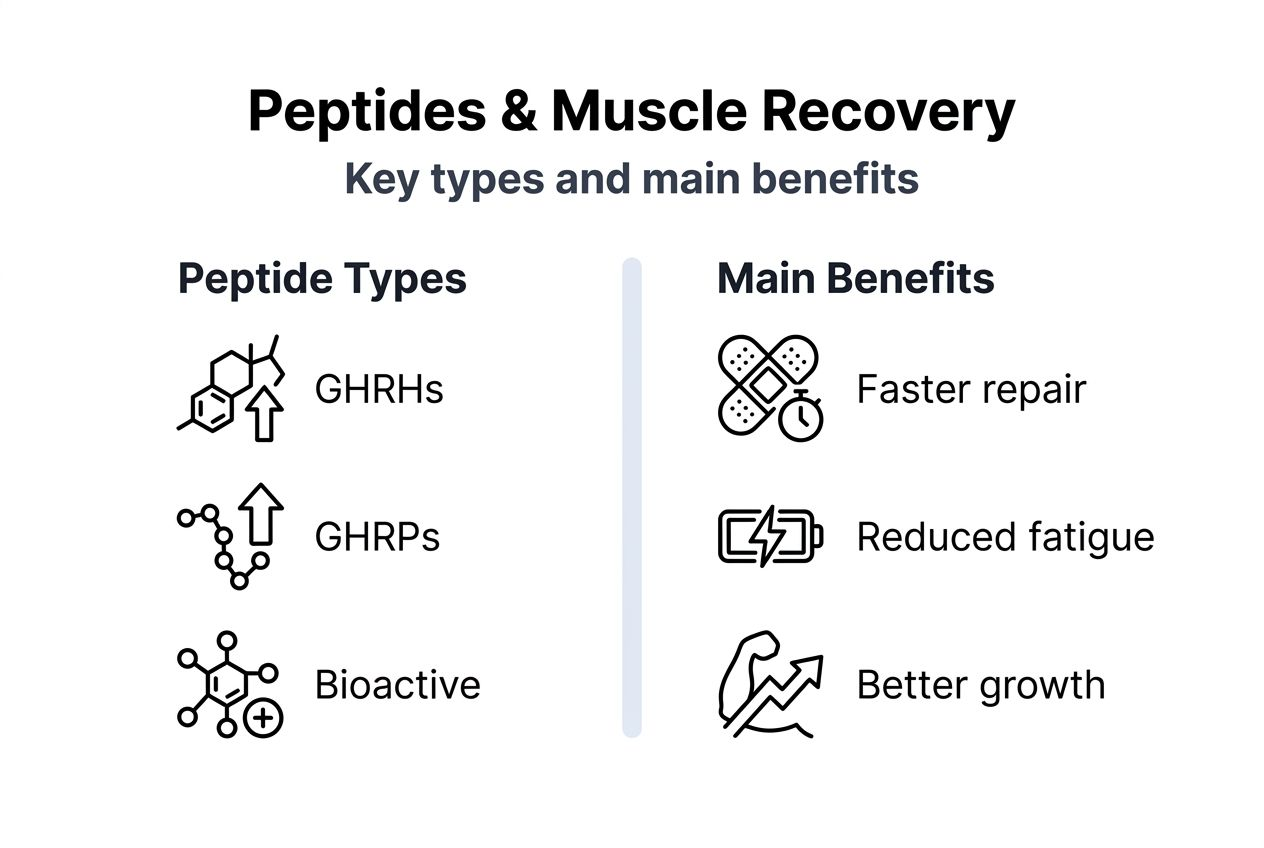
Growth Hormone Releasing Hormones (GHRHs) such as Sermorelin and CJC-1295 stimulate your pituitary gland to release growth hormone in a pulsatile pattern that mimics natural secretion. Growth Hormone Releasing Hormones and Peptides effectively enhance muscle protein synthesis and promote faster recovery by increasing endogenous growth hormone release. These peptides offer a longer half-life, providing sustained support for protein synthesis and gradual lean mass gains over months of consistent use.

Growth Hormone Releasing Peptides (GHRPs) like Ipamorelin and GHRP-6 mimic ghrelin, the hunger hormone, which also triggers growth hormone release. GHRPs induce quicker growth hormone surges compared to GHRHs and are often combined with GHRHs for synergistic effects. This combination can amplify natural growth hormone production beyond what either peptide achieves alone, supporting both recovery and body composition improvements.
Bioactive natural peptides represent an emerging category derived from food sources. Use of bioactive peptides derived from fava beans significantly improves muscle strength recovery and reduces muscle fatigue post-exercise. These plant-based peptides offer a natural alternative for athletes seeking recovery support without synthetic compounds. Their mechanisms involve antioxidant activity and direct muscle fibre support that reduces oxidative stress and fatigue markers.
Tissue repair peptides such as BPC-157 and TB-500 focus specifically on injury healing and inflammation reduction. BPC-157 enhances angiogenesis (blood vessel formation) and fibroblast activity, accelerating connective tissue repair. TB-500 promotes cell migration and tissue regeneration, particularly beneficial for tendon and ligament injuries common in intense training.
Key peptide categories:
- GHRHs for sustained growth hormone support and lean mass development
- GHRPs for rapid growth hormone surges and synergistic combinations
- Bioactive natural peptides for strength recovery and fatigue reduction
- Repair peptides for injury healing and inflammation control
Research shows bioactive peptides can reduce post-exercise muscle fatigue by up to 30% in trained athletes, supporting faster recovery between intense training sessions.
Exploring best peptides for muscle recovery helps you identify options matching your primary goals, whether that’s injury repair, hypertrophy support, or endurance enhancement. Understanding growth hormone releasing peptides clarifies how different mechanisms produce distinct recovery benefits.
Common misconceptions about peptides and muscle recovery
Several myths about peptides persist in fitness communities, often leading to unrealistic expectations or unsafe practices. Clearing these misconceptions promotes informed, responsible use.
The most prevalent myth equates peptides with anabolic steroids. Common misconceptions include beliefs that peptides act as steroids; in reality, peptides work by signalling natural hormone production rather than introducing artificial androgens. Steroids flood your body with synthetic hormones that directly bind to androgen receptors, producing rapid muscle growth alongside significant side effects. Peptides simply encourage your body to optimise its existing hormonal output, resulting in gradual, modest improvements that support natural physiology.
Another misconception involves FDA approval status. Many athletes assume peptides sold for recovery are FDA-approved and regulated like prescription medications. Not all peptides are FDA-approved for athletic use, and safety profiles vary widely depending on peptide type, purity, and dosing. Some peptides have FDA approval for specific medical conditions but not for athletic performance enhancement. This regulatory grey area requires careful research and sourcing from reputable suppliers who provide third-party testing documentation.
The expectation of immediate, dramatic muscle gains represents a third common myth. Peptides support recovery processes that unfold over weeks and months, not days. You won’t wake up with visibly larger muscles after a peptide cycle. Instead, you might notice reduced soreness duration, faster strength return between sessions, and improved training consistency that compounds into meaningful progress over time.
Key misconceptions to avoid:
- Peptides are not steroids and don’t produce steroid-like rapid hypertrophy
- Regulatory status varies; many peptides lack FDA approval for athletic use
- Effects are gradual and modest, supporting natural recovery rather than forcing growth
- Legal and health risks exist with unverified suppliers or unsupervised use
Pro Tip: Before purchasing peptides, verify third-party purity testing results and understand the legal status in your jurisdiction. Reputable suppliers provide certificates of analysis showing peptide purity above 98% and absence of contaminants.
Learning about peptide safety and myths equips you to evaluate claims critically. Reviewing common peptide misconceptions from medical sources helps separate marketing hype from scientific reality.
Comparative framework of peptides for muscle recovery
Comparing peptide categories side by side clarifies which options align best with your specific recovery and performance goals.
| Peptide Type | Primary Mechanism | Recovery Benefits | Typical Timeline | Best For |
|---|---|---|---|---|
| GHRHs | Stimulate pituitary growth hormone release | Enhanced protein synthesis, gradual lean mass gains, improved recovery between sessions | 8-12 weeks for noticeable effects | Athletes seeking sustained hypertrophy support and body composition improvement |
| GHRPs | Mimic ghrelin to trigger growth hormone surges | Rapid growth hormone spikes, synergistic with GHRHs, supports recovery and appetite | 4-8 weeks when combined with GHRHs | Athletes wanting amplified natural growth hormone production |
| Bioactive Natural Peptides | Antioxidant activity, direct muscle fibre support | Reduced muscle fatigue, improved strength recovery, oxidative stress reduction | 4-6 weeks for strength improvements | Endurance athletes and those preferring natural compound sources |
| Repair Peptides | Inflammation modulation, tissue regeneration | Accelerated injury healing, reduced inflammation, connective tissue repair | 2-8 weeks depending on injury severity | Athletes recovering from injuries or chronic overuse issues |
GHRHs offer sustained support for athletes focused on long-term body composition changes and consistent training adaptations. Their longer half-life means fewer daily administrations and stable growth hormone levels that support protein synthesis throughout recovery periods.
GHRPs provide flexibility for athletes wanting to maximise natural growth hormone output through strategic timing, such as post-workout or before sleep when growth hormone naturally peaks. Combining GHRPs with GHRHs creates synergistic effects that amplify both peak levels and duration of growth hormone elevation.
Bioactive natural peptides appeal to athletes seeking evidence-based recovery support from food-derived sources. Their safety profiles generally exceed synthetic peptides, though effects may be more subtle. These peptides particularly benefit endurance athletes dealing with oxidative stress and sustained muscle fatigue.
Repair peptides serve athletes with specific injury concerns or chronic inflammation limiting training capacity. BPC-157’s angiogenic effects support blood flow to injured areas, while TB-500’s cell migration properties aid tissue remodelling in tendons and ligaments stressed by repetitive motion.
Key selection factors:
- Primary goal: hypertrophy, strength, or injury recovery
- Preferred timeline: gradual adaptation or targeted intervention
- Natural versus synthetic compound preference
- Combination potential for synergistic effects
Reviewing best peptides comparison provides detailed profiles of top options within each category, helping you match peptide characteristics to your training phase and recovery needs.
Practical application and safety considerations for peptide use
Safely integrating peptides into your recovery regimen requires systematic planning, informed sourcing, and consistent monitoring.
-
Identify your recovery goals precisely. Are you addressing a specific injury, seeking to reduce general muscle soreness, supporting lean mass gains, or enhancing endurance recovery? Your primary goal determines which peptide category offers the most relevant mechanisms.
-
Follow recommended dosing guidelines based on research and expert protocols. Start with conservative doses to assess individual response. Typical GHRH doses range from 100 to 300 micrograms daily, while repair peptides like BPC-157 often use 200 to 500 micrograms daily. Never exceed recommended ranges without professional guidance.
-
Monitor your response systematically using objective metrics. Track recovery markers such as soreness duration, strength return between sessions, resting heart rate variability, and sleep quality. Document any adverse effects immediately. Adjust dosing or discontinue use if negative symptoms appear, including joint pain, water retention, or unusual fatigue.
-
Understand the regulatory landscape in the U.S. before purchasing peptides. Most recovery peptides exist in a legal grey area, neither explicitly approved nor banned for personal use. However, selling peptides with health claims violates FDA regulations. Purchase only for research purposes from suppliers providing certificates of analysis confirming purity and identity.
-
Source peptides exclusively from reputable suppliers who provide third-party testing documentation. Verify that purity exceeds 98% and that products are free from bacterial endotoxins and heavy metals. Underground or unverified sources risk contamination, incorrect peptide identity, or improper storage that degrades peptide stability.
Pro Tip: Peptides are sensitive to temperature and light. Store them in a refrigerator at 2 to 8 degrees Celsius after reconstitution. Use bacteriostatic water for mixing to extend shelf life. Discard any peptide solution showing cloudiness or particles, as this indicates degradation or contamination.
Practical application considerations:
- Consult healthcare professionals familiar with peptide therapy before starting
- Combine peptides with solid nutrition, adequate sleep, and progressive training
- Cycle peptide use rather than continuous year-round administration
- Keep detailed logs of dosing, timing, and observed effects
- Research potential interactions if using multiple peptides or supplements
Exploring how to select peptides walks through decision frameworks for choosing appropriate options. Following a structured peptide application workflow reduces risks and maximises benefits. Comprehensive peptide safety guidance addresses common concerns about side effects and contraindications.
Summary and next steps for incorporating peptides in training
Peptides offer science-backed tools for enhancing muscle recovery through natural biological signalling rather than artificial hormone replacement. They modulate inflammation, support protein synthesis, and accelerate tissue repair by optimising your body’s existing recovery mechanisms.
Evidence supports specific peptide types for distinct recovery goals. GHRHs and GHRPs enhance natural growth hormone production for sustained hypertrophy and recovery support. Bioactive natural peptides reduce muscle fatigue and support strength recovery through antioxidant mechanisms. Repair peptides like BPC-157 accelerate injury healing and reduce inflammation in connective tissues.
Understanding mechanisms and dispelling misconceptions enables safe, effective use. Peptides are not steroids, don’t produce overnight results, and vary widely in regulatory approval status. Responsible use requires informed sourcing, appropriate dosing, systematic monitoring, and professional consultation.
Practical integration involves matching peptide type to your primary goal, following evidence-based protocols, and tracking objective recovery metrics. Combine peptides with fundamental training principles: progressive overload, adequate nutrition, sufficient sleep, and strategic recovery periods.
Next steps for incorporating peptides:
- Assess your specific recovery challenges and performance goals
- Research peptide options matching your identified needs
- Consult healthcare professionals experienced in peptide therapy
- Source peptides from reputable suppliers with verified purity testing
- Implement systematic tracking to measure response and adjust protocols
- View peptides as tools supporting—not replacing—fundamental training and nutrition practices
The scientific foundation for peptide use in recovery continues expanding. Staying informed about emerging research, regulatory changes, and practical application refinements positions you to leverage these tools safely and effectively within your athletic development journey.
Explore peptide solutions to boost your recovery
Northern Peptides provides comprehensive resources to support your muscle recovery optimisation. Their educational materials explain peptide mechanisms, safety considerations, and application protocols grounded in current research.

Their peptide concentration calculator helps you accurately determine dosing based on peptide concentration and desired microgram amounts, reducing errors that compromise results or safety. For personalised guidance on selecting peptides matching your recovery goals, explore their curated best peptides for muscle recovery in 2026. The detailed peptide information page offers in-depth articles on specific peptides, application techniques, and safety protocols that empower informed decisions.
Frequently asked questions about peptides and muscle recovery
How quickly can peptides improve muscle recovery?
Peptide effects typically develop gradually over 4 to 12 weeks of consistent use, with initial changes often appearing around week 4. You might notice reduced soreness duration and faster strength return between training sessions before seeing measurable body composition changes. Immediate effects are limited because peptides work by modulating natural biological processes rather than forcing rapid changes.
Are peptides legal and approved for muscle recovery in the U.S.?
Most peptides used for muscle recovery lack FDA approval specifically for athletic performance enhancement. Some have approval for medical conditions but not for general fitness use. Legal status varies, with personal research use generally permitted but commercial sale with health claims prohibited. Always research current regulations and consult legal resources before purchasing or using peptides.
What safety precautions should I take when using peptides?
Source peptides exclusively from reputable suppliers providing third-party purity testing certificates. Start with conservative doses and monitor for adverse effects like joint pain, water retention, or fatigue. Store peptides properly in refrigeration and use bacteriostatic water for reconstitution. Never combine multiple peptides without professional guidance, as interactions may amplify risks.
How do peptides differ from anabolic steroids for muscle growth?
Peptides stimulate your body’s natural hormone production gradually through biological signalling, supporting recovery without disrupting hormonal balance. Steroids introduce synthetic androgens that directly mimic testosterone, producing rapid muscle growth alongside significant side effects including hormonal suppression and cardiovascular risks. Peptides offer a safer approach that works with your physiology rather than overriding it.